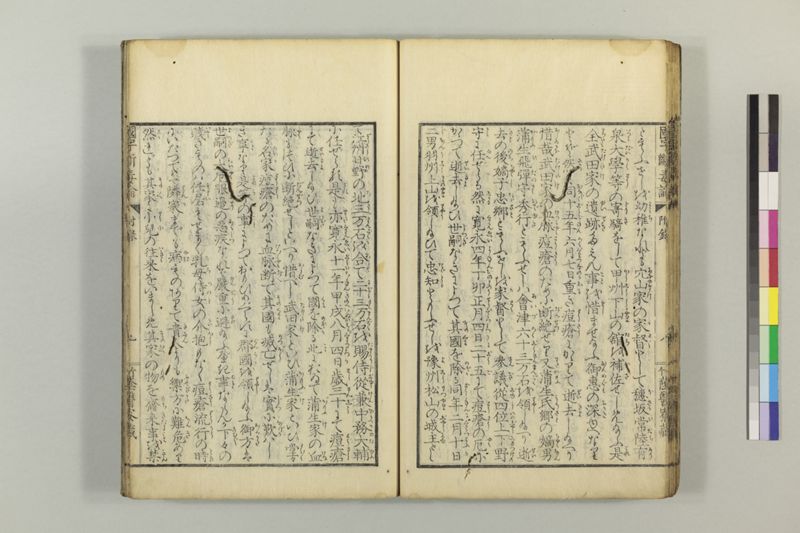
翻刻
【右頁】
ともふせしを幼稚(ようち)なれども穴山家(あなやまけ)の家督(かとく)として穂坂常陸(ほさかひたち)有(あり)
泉大學(いづみだいかく)等(とう)の寄騎(よりき)をして甲州下山(かうしうしもやま)の舘(たち)を補佐(ほさ)せしめ給ふ是(これ)
全(まつたく)武田家(たけたけ)の遺跡(ゆいせき)たえん事(こと)を惜(をし)ませ給ふ御惠(おんめぐみ)の深(ふかき)ゆへなり
とぞ然(しかる)に同(おなじく)十五年六月七日(じうごねんろくぐわつなのか)重(おも)き痘瘡(とうさう)にかゝりて逝去(せいきよ)し給へり
惜哉(おしゐかな)武田家(たけたけ)の血脉(けつみやく)痘瘡(とうさう)のために断絶(だんぜつ)せり又(また)蒲生氏郷(がもふうちさと)の嫡男(ちやくなん)
蒲生飛彈守秀行(がもふひだのかみひでゆき)ともふせしは会津六十三万石(あいづろくじうさんまんごく)を領(りやう)し給へり逝(せい)
去(きよ)の後(のち)嫡子(ちやくし)忠郷(たゞさと)ともふせしを家督(かとく)として参議従四位上下野(さんぎじゆしいのじやうしもつけの)
守(かみ)に任(にん)ぜらる然(しかる)に寛永四年丁卯正月四日(くわんゑいよねんひのとのうせうぐわつよつか)二十五(にじうご)にて痘瘡(とうさう)の厄(やく)に
かゝつて逝去(せいきよ)し給ひ世嗣(よつぎ)なきによつて其國(そのくに)を除(のぞか)る同年二月十日(どうねんにぐわつとふか)
二男(じなん)羽州上山(うしうかみのやま)を領(りやう)し給ひて忠知(たゞとも)ともふせしを豫洲松山(よしうまつやま)の城主(じやうしゆ)とし
【左頁】
て江州日野(ごうしうひの)の地(ち)三万石(さんまんごく)を合(あはせ)て二十三万石(にじうさんまんごく)を賜(たまはり)侍従(じじゆう)兼(けん)《振り仮名:中務大輔|なかつか#1のたゆふ》
に任ぜられ是(これ)も亦(また)寛永十一年甲戌八月四日(くわんゑいじういちねんきのへいぬのはちくわつよつか)歳三十(としさんじう)にて痘瘡(とうさう)
にて逝去(せいきよ)し給ひ世嗣(よつぎ)なきによつて國(くに)を除(のぞか)る此(こゝ)におゐて蒲生家(がもふけ)の血(けつ)
脉(みやく)もつひに断絶(だんぜつ)せしといへり惜(おしむ)べし武田家(たけたけ)といひ蒲生家(かもふけ)といひ堂々(とう〳〵 )
たる名家(めいか)痘瘡(とうさう)のために血脉(けつみやく)断(たへ)て其國(そのくに)も滅亡(めつぼう)せしは實(じつ)に歎(なげか)はし
き事(こと)なり是等(これら)の事(こと)によつておもひめぐらすに郡國(ぐんこく)を領(りやう)し給ふ御方(おんかた)は
世嗣(よつぎ)の大厄(たいやく)《振り仮名:眼邉|□□□たり#2》の惡疾(あくしつ)なれば嚴重(げんぢう)に避(さけ)給ふべき事(こと)ならんか下々(しも〴〵 )の
賤(いやし)きものは任居(すまい)#3もせまく乳母侍女(おちめのと)の介抱(かいほう)もなく痘瘡(とうさう)流行(りうかう)の時(とき)
にいたつては隣家(りんか)までも病(やむ)ものありて貴人(きにん)よりも禦方(ふせぎかた)に難危(なんき)あり
然(しか)れども其家(そのいへ)に小兒(せうに)の往来(いきゝ)をいましめ其家(そのいへ)の物(もの)を齎来事(もちきたること)を禁(きん)
現代語訳
【右頁】
とも言われたが、幼稚ではあったものの穴山家の家督として、穂坂常陸や泉大学等の寄騎を付けて甲州下山の館を補佐させた。これは全く武田家の遺跡が絶えることを惜しまれる御恵みの深いゆえである。
ところが同じく十五年六月七日、重い痘瘡にかかって逝去してしまった。
惜しいことに、武田家の血脈は痘瘡のために断絶した。また蒲生氏郷の嫡男蒲生飛騨守秀行と言われた人は会津六十三万石を領していた。逝去の後、嫡子忠郷と言われた人を家督として参議従四位上下野守に任ぜられた。しかるに寛永四年丁卯正月四日、二十五歳で痘瘡の厄にかかって逝去し、世継ぎがないためにその国を除かれた。同年二月十日、二男で羽州上山を領していた忠知と言われた人を予州松山の城主とし
【左頁】
て江州日野の地三万石を合わせて二十三万石を賜り、侍従兼中務大輔に任ぜられた。これもまた寛永十一年甲戌八月四日、歳三十で痘瘡にて逝去し、世継ぎがないために国を除かれた。ここにおいて蒲生家の血脈もついに断絶したと言われる。惜しむべきことである。武田家といい蒲生家といい、堂々たる名家が痘瘡のために血脈が絶えてその国も滅亡したのは実に嘆かわしいことである。これらの事によって思い巡らすに、郡国を領する御方は世継ぎの大厄で目前に迫る悪疾なので厳重に避けるべきことであろうか。下々の賤しい者は住まいも狭く乳母侍女の介抱もなく、痘瘡流行の時に至っては隣家までも病む者がいて貴人よりも防御方に難危がある。
しかしながらその家に小児の往来を戒め、その家の物を持ち来ることを禁じ
英語訳
【Right Page】
was said to be young, but as the heir to the Anayama house, retainers such as Hosaka Hitachi and Izumi Daigaku were assigned to assist him at the residence in Shimoyama, Kai province. This was entirely due to the deep benevolence of [the lord] who regretted that the legacy of the Takeda house might come to an end.
However, on the seventh day of the sixth month of the same fifteenth year, he contracted severe smallpox and passed away.
How regrettable! The bloodline of the Takeda house was severed due to smallpox. Also, the eldest son of Gamō Ujisato, called Gamō Hida-no-kami Hideyuki, held a domain of 630,000 koku in Aizu. After his death, his heir called Tadazato became the family head and was appointed to the positions of Sangi (court counselor) and Jūshii-no-jō Shimotsuke-no-kami (Senior Fourth Rank Upper, Governor of Shimotsuke). However, on the fourth day of the first month of Kan'ei 4, year of the Fire Rabbit (1627), at age twenty-five, he contracted the calamity of smallpox and passed away. Having no heir, his domain was confiscated. On the tenth day of the second month of the same year, his second son, who had held Kaminoyama in Ushū and was called Tadatomo, was made lord of Matsuyama castle in Yoshū,
【Left Page】
and was granted a total of 230,000 koku by combining it with 30,000 koku of land in Hino, Gōshū, and was appointed to the positions of Jijū (chamberlain) and Nakatsukasa-no-tayū. He too, on the fourth day of the eighth month of Kan'ei 11, year of the Wood Dog (1634), at age thirty, died of smallpox, and having no heir, his domain was confiscated. At this point, the bloodline of the Gamō house was also finally severed. How lamentable! Both the Takeda house and the Gamō house - such distinguished families - had their bloodlines severed due to smallpox and their domains perished, which is truly sorrowful. Reflecting on these matters, those who rule provinces and domains should strictly avoid this evil disease that represents a great calamity imminent for their heirs. The lowly common people have cramped dwellings and no wet nurses or ladies-in-waiting to care for them, and when smallpox epidemics occur, even neighboring houses have sick people, making prevention more difficult than for nobles.
However, by prohibiting children from visiting such houses and forbidding bringing items from those houses,