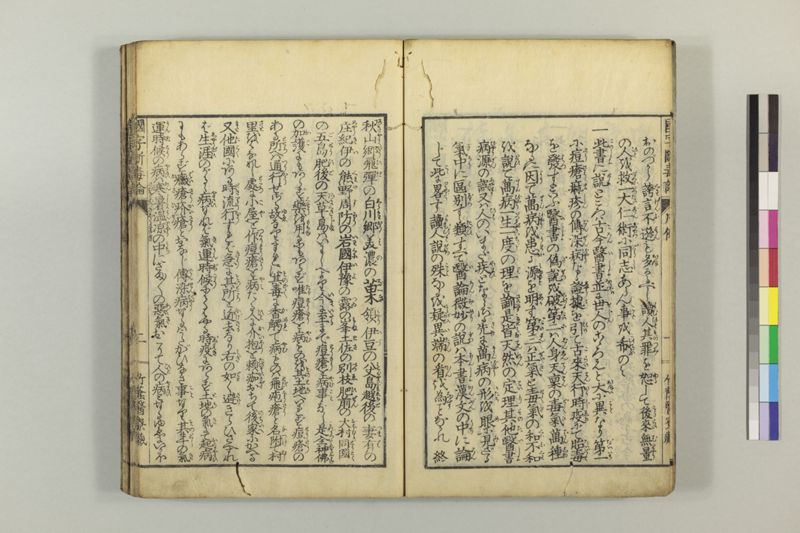
翻刻
【右頁】
おのづから誇言(くわげん)不遜(ふそん)も多(おほ)かるべし読人(よむひと)其罪(そのつみ)を恕(ゆる)して後来(こうらい)無量(むりやう)
の人(ひと)を救(すくふ)一大(いつたい)仁術(じんじゆつ)に同志(どうし)あらん事(こと)を希(こひねがふ)のみ
一/此書(このしよ)に説(とく)ところは古今(ここん)医書(いしよ)並(ならび)に世人(せじん)のこゝろえと大(おほい)に異(こと)なり第一(だいいち)
に痘瘡(とうさう)痲疹(ましん)の伝染病(でんぜんびやう)なる証拠(しやうこ)を引(ひい)て古来(こらい)天行(てんかう)時疫(じゑき)にて胎毒(だいどく)
を発(はつ)すといふ医書(いしよ)の偽説(ぎせつ)を破(やぶる)第二(だいに)は人身(じんしん)天稟(てんりん)の毒気(どくき)万種(ばんしゆ)
なるに因(より)て万病(まんびやう)を患(うれふ)る源(みなもと)を明(あか)す第三(だいさん)は生気(せいき)を毒気(とくき)の和(くは)不和(ふくわ)
を説(とひ)て万病(まんびやう)一生(いつしやう)一度(いちど)の理(り)を諭(さとす)是(これ)皆(みな)天然(てんねん)の定理(ていり)其他(そのた)医書(いしよ)
病源(びやうげん)の誤(あやまり)又は人(ひと)のいまだ疾(やまひ)とならざる先(さき)に万病(まんびやう)の形(かたち)を眼(め)に見(み)ざる
気中(きちう)に区別(くべつ)する類(たぐひ)すべて医論(いろん)微妙(みめう)の説(せつ)は本書(ほんしよ)漢文(かんぶん)の中(うち)に論(ろん)
じて此(こゝ)に略(りやく)す読人(よむひと)説(せつ)の殊(こと)なるを疑(うたがひ)異端(いたん)の看(かん)を為(なす)ことなかれ 終
【左頁】
秋山郷(あきやまがう)飛騨(ひだ)の白川郷(しらかわかう)美濃(みの)の苗木領(なへきりやう)伊豆(いづ)の八丈島(はちぢやうじま)越後(ゑちご)の妻有(つまり)の
庄(しやう)紀伊(きい)の熊野(くまの)周防(すほう)の岩国(いわくに)伊予(いよ)の露(つゆ)の峯(みね)土佐(とさ)の別枝(べつゑ)肥前(ひぜん)の大村(おほむら)同国(どうこく)
の五島(ごとう)肥後(ひご)の天草島(あまくさじま)はいにしへより今(いま)に至(いたる)まで痘瘡(とうさう)を病事(やむこと)なし是(これ)全(まつたく)神仏(かみほとけ)
の加護(かご)にもあらず薬(くすり)を用(もちゆ)るにもあらず唯(たゞ)痘瘡(とうさう)を病(やむ)ものを其(その)土地(とち)へいれず痘瘡(とうさう)の
ある所(ところ)へは通行(つうかう)せざる故(ゆゑ)なりまれに其毒(そのどく)に香触(かぶれ)て病(やむ)ものは飛疱瘡(とびほうさう)と名附(なつけ)て村(むら)
里(さと)をはなれし処(ところ)に小屋(こや)を作(つくり)痘瘡(とうさう)を病(やみ)たる人(ひと)に介抱(かいほう)を頼(たのみ)痂(かさぶた)おちて後(のち)家(いへ)にかへる
又(また)他国(たくに)にある時(とき)流行(りうかう)すれば急(きう)に其所(そのところ)を逃去(にげさる)なり右(みぎ)の如(ごと)く避(さけ)きらひさへすれ
ば生涯(しやうがひ)のがるゝ病(やまひ)なれば気運(きうん)時候(じこう)にてはやる時疫(じえき)にあらず土地(とち)の気(き)にて起病(おこるやまひ)
にもあらず黴瘡(ばいさう|か さ )疥瘡(かいさう|ひぜん )とおなじ伝染病(でんせんびやう)なるはうたがひなき事(こと)なり其年(そのとし)の気(き)
運(うん)時候(じこう)の病(やまひ)は寒暑(かんしよ|さむきあつき) 温涼(うんりやう|あたゝかすゞしき)の中(うち)にさま〳〵の悪気(あくき)おこりて人(ひと)の病(やまひ)となるゆゑにいかほ
現代語訳
【右頁】
自然と誇張した言葉や不遜な表現も多くなるであろう。読者はその罪を赦して、将来無数の人を救う一大仁術に同志となってくれることを願うばかりである。
一、この書で説くところは、古今の医書並びに世人の理解と大いに異なっている。第一に痘瘡・麻疹の伝染病である証拠を挙げて、古来「天行・時疫によって胎毒を発する」という医書の偽説を破る。第二は人身の天稟の毒気が万種あることにより万病を患う源を明らかにする。第三は生気と毒気の調和・不調和を説いて、万病が一生に一度という理を諭す。これらは皆天然の定理である。その他、医書の病源の誤りや、人がまだ疾病とならない先に万病の形を目に見えない気中に区別する類など、すべて医論微妙の説は本書の漢文の中に論じて、ここでは省略する。読者よ、説の異なることを疑い、異端の見方をしてはならない。終
【左頁】
秋山郷、飛騨の白川郷、美濃の苗木領、伊豆の八丈島、越後の妻有の庄、紀伊の熊野、周防の岩国、伊予の露の峯、土佐の別枝、肥前の大村、同国の五島、肥後の天草島は、いにしえより今に至るまで痘瘡を病むことがない。これは全く神仏の加護でもなく、薬を用いるのでもない。ただ痘瘡を病む者をその土地へ入れず、痘瘡のある所へは通行しないからである。稀にその毒に感染して病む者は「飛疱瘡」と名付けて、村里を離れた処に小屋を作り、痘瘡を病んだ人に介抱を頼み、瘡蓋が落ちて後に家に帰る。また他国にある時に流行すれば急にその所を逃げ去るのである。右の如く避け嫌いさえすれば生涯逃れる病であるから、気運・時候によって流行する時疫ではない。土地の気によって起こる病でもない。梅毒・疥癬と同じ伝染病であることは疑いない事実である。その年の気運・時候の病は、寒暑・温涼の中に様々な悪気が起こって人の病となるゆえに、どれほど
英語訳
【Right Page】
Naturally, there will be many boastful words and presumptuous expressions. I only hope that readers will forgive these faults and become allies in this great benevolent art of saving countless people in the future.
1. What is explained in this book differs greatly from ancient and modern medical texts as well as from common understanding. First, I present evidence that smallpox and measles are contagious diseases, thereby refuting the false theory in medical books that claims these are "heavenly epidemics and seasonal pestilences that trigger fetal toxins." Second, I clarify the source of myriad diseases arising from the ten thousand types of toxic qi inherent in the human body from birth. Third, I explain the harmony and discord between vital qi and toxic qi to elucidate the principle that myriad diseases occur once in a lifetime. These are all natural laws. Other subtle medical theories, such as errors regarding disease origins in medical texts, or methods of distinguishing the invisible forms of myriad diseases in the qi before they manifest as illness in humans, are all discussed in the Chinese text of the main work and are omitted here. Readers should not doubt these different explanations or regard them as heterodox views. End
【Left Page】
Akiyama-gō, Shirakawa-gō in Hida, Naegi domain in Mino, Hachijō Island in Izu, Tsumari-no-shō in Echigo, Kumano in Kii, Iwakuni in Suō, Tsuyu-no-mine in Iyo, Betsue in Tosa, Ōmura in Hizen, Gotō in the same province, and Amakusa Island in Higo have never suffered from smallpox from ancient times to the present. This is not due to the protection of gods and buddhas, nor from using medicines. It is simply because they do not allow those suffering from smallpox to enter their territories and do not travel to places where smallpox exists. On rare occasions when someone becomes infected with this poison, they call it "tobi-hōsō" (flying pox), build a hut in a place separated from the village, ask someone who has had smallpox to care for them, and return home after the scabs fall off. Also, when epidemics occur while they are in other provinces, they immediately flee from those places. Since this is a disease that can be avoided throughout one's lifetime simply by avoiding and shunning it, it is not a seasonal pestilence that spreads due to atmospheric conditions and timing. Nor is it a disease caused by local atmospheric conditions. It is undoubtedly a contagious disease like syphilis and scabies. Diseases of atmospheric conditions and seasonal timing arise when various malignant qi occur within cold, heat, warmth, and coolness, becoming human ailments, so no matter how much...