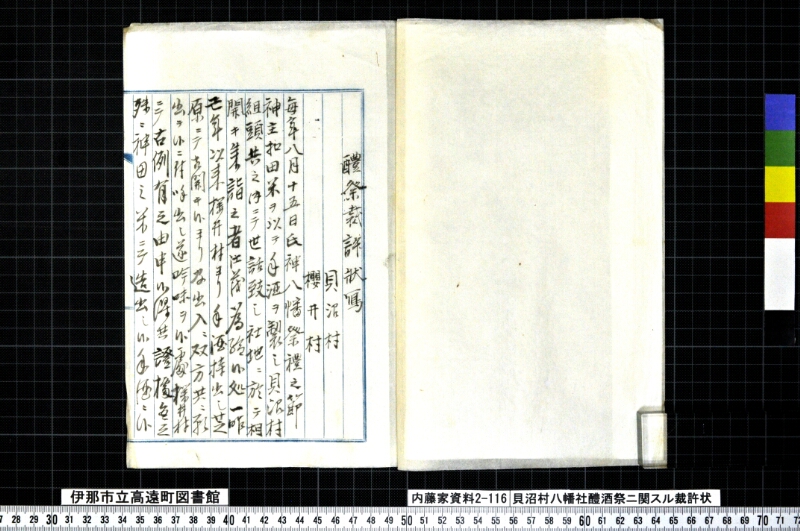
翻刻
醴祭裁許状写
貝沼村
桜井村
毎年八月十五日氏神八幡祭礼之節
神主扣田米ヲ以テ手酒ヲ製シ貝沼村
組頭共之内ニテ世話致シ社地ニ於テ相
開キ参詣之者江茂為給候処一昨
丑年以来桜井村ヨリ手酒持出シ芝
原ニテ相開キ候ヨリ及出入ニ双方共ニ願
出テ候ニ付呼出シ遂吟味ヲ候処桜井村
ニテ古例有之由申候得共証拠無之
殊ニ神田之米ニテ造出シ候手酒ニ候
現代語訳
醴祭裁許状の写し
貝沼村
桜井村
毎年八月十五日の氏神八幡の祭礼の際に、神主が控えの田の米を使って甘酒を製造し、貝沼村の組頭たちの中で世話をして、神社の境内で開催し、参詣者にも振る舞っていたところ、一昨年の丑年以来、桜井村が甘酒を持ち出して芝原で開催するようになったことから争いとなり、双方とも願い出てきたため呼び出して詳しく調査したところ、桜井村では古い慣例があると申し立てているが証拠がなく、特に神田の米で造り出した甘酒である
英語訳
Copy of the Judgment Document for the Sweet Sake Festival
Kainuma Village
Sakurai Village
Every year on August 15th, during the festival of the tutelary deity Hachiman, the shrine priest would make sweet sake using rice from the reserved rice fields, with the village group leaders (kumigashira) of Kainuma Village taking care of the arrangements. The festival was held on the shrine grounds and the sweet sake was also served to worshippers. However, since the year before last (the year of the Ox), Sakurai Village began taking the sweet sake out to hold their celebration at Shibahara, which led to a dispute. Both sides submitted petitions, so we summoned them and conducted a thorough investigation. Sakurai Village claimed they had ancient precedent, but they had no proof, and moreover, this sweet sake was made from rice from the sacred rice fields.