翻刻
【右丁】
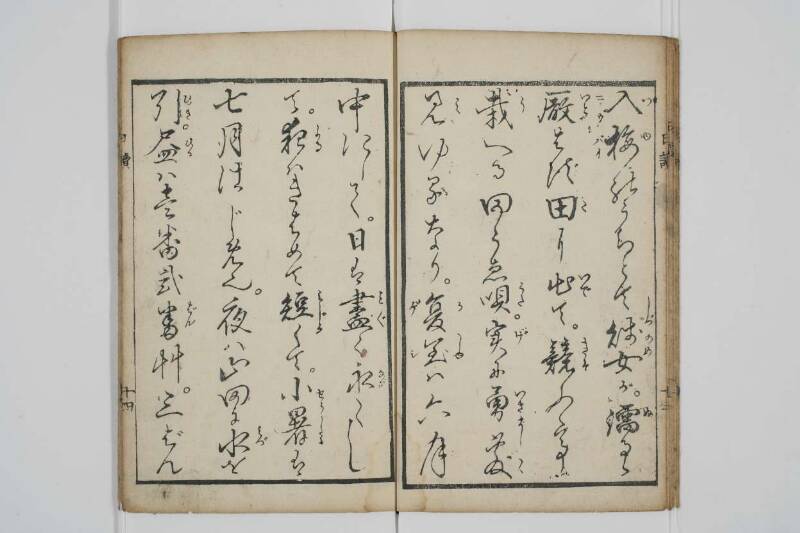
《振り仮名:入梅|つゆ|ニウバイ》のうちとて賤女(しづのめ)が。濡(ぬ)るゝ
厭(いと)はず田(た)に出(いで)て。競(きそ)ふて
栽(う)へる田うゑ唄(うた)。実(げ)に勇敷(いさましく)
見(み)ゆるなり。《振り仮名:夏至|かしゆ|ゲシ》は六月
【左丁】
中にして。日は尽(こと〴〵)く永(なが)くし
て。夜(よる)はきはめて短(みじか)くて。小暑(せうしよ)は
七月はじめ也。夜は山田に水(みづ)を
引(ひき)。昼(ひる)は壱番弐 番(ばん)草。三ばん
現代語訳
【右丁】
入梅の時期なので、農村の女性たちが雨に濡れることを厭わずに田んぼに出て、競い合うようにして苗を植える田植え歌は、実に勇ましく見えるものである。夏至は六月
【左丁】
中頃で、日はとても長くなり、夜は極めて短くなる。小暑は七月の初めである。夜は山間の田に水を引き、昼は一番草、二番草、三番草と
英語訳
[Right page]
During the rainy season (tsuyu), rural women go out to the rice fields without minding getting wet from the rain, and their rice planting songs as they compete to plant seedlings appear truly spirited. The summer solstice falls in the middle of the sixth month
[Left page]
when days become very long and nights extremely short. Lesser Heat (shōsho) is at the beginning of the seventh month. At night, water is drawn to mountain rice fields, and during the day, the first, second, and third weeding sessions