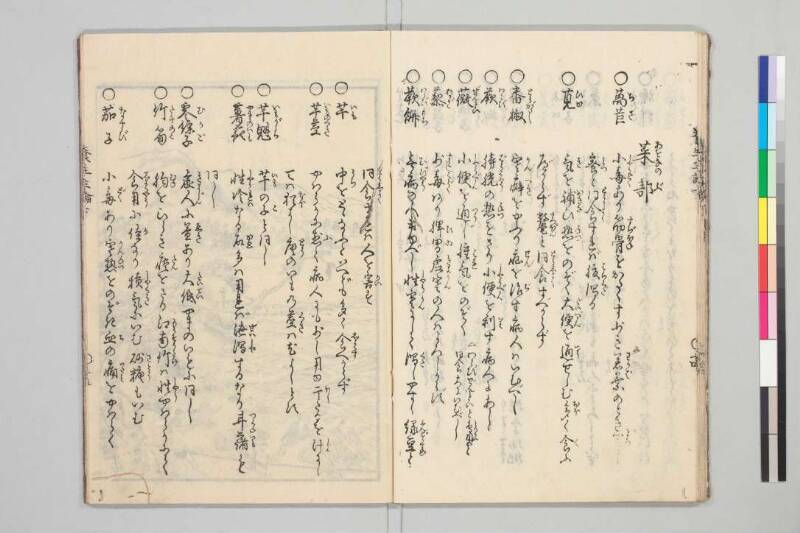
翻刻
菜部(あをなのぶ)
○萵苣(ちさ ) 小毒(しやうどく)あり筋骨(すぢほね)をかたくす少き若葉(わかば)のとき宜(よろ)し
蜜(みつ)と同食(どうしよく)すれば腹瀉(はらくだ)る
○莧(ひゆ) 気(き)を補(おきな)ひ熱(ねつ)をのぞく大便(だいべん)を通(つう)せしむ多(おほ)く食(く)ふ
べからず鼈(すつぽん)と同食(どうしよく)すべからず
○蕃椒(とうがらし) 寒(かん)癖(へき)をやぶり疝(せん)を治(ぢ)す病人はいむべし
○蕨(わらび) 膀胱(ばうくはう)の熱(ねつ)をさり小便(しやうべん)を利(り)す病人にあしゝ
○薇(ぜんまい) 小便(しやうべん)を通(つう)じ腫気(はれ)をのぞく《割書:△わらびぜんまいと鳥貝(とりかい)と| 同食大にいむべし》
○藜(あかざ) 少毒(すこしどく)あり脾胃(ひゐ)虚寒(きよかん)の人はよろしからず
○蕨餅(わらびもち) 無病(むびやう)の人用ゆべし性(しやう)寒(かん)にして瀉(くだ)しやすし緑豆(ふんどうまめ)と
同食(どうしよく)すれは人を害(かい)す
○芋(いも) 中(うち)をとゝなふといへども多く食(しよくす)へからず
○芋茎(いものくき) やはらかに煎(に)て病人にも少し用ゆ干(ほし)たるを汁(しる)にし
ては猶(なほ)よし唐(とう)のいもの茎(くき)は尤よしとす
○芋魁(いもがしら) 芋(いも)の子(こ)と同し
○薯蕷(やまのいも) 性(しやう)冷(れい)なる故(ゆゑ)多は用れば泄瀉(せいしや)するなり甘藷(つくねいも)も
同し
○零余子(むかご) 虚人(きよじん)に益(ゑき)あり大抵(たいてい)やまのいもに同し
○竹筍(たけのこ) 胸(むね)をひらき痰(たん)をさる江南竹(もうそうたけ)は性(しやう)やはらかにて
食用(しやくやう)に佳(か)なり積気(しやくき)にいむ砂糖(さとう)もいむ
○茄子(なすび) 小/毒(どく)あり寒熱(かんねつ)をのぞき血(ち)の痛(いたみ)をやはらく
現代語訳
菜部(野菜の部)
○萵苣(チシャ) 小毒がある。筋骨を硬くする。少し若葉の時が良い。蜜と一緒に食べると腹を下す。
○莧(ヒユ) 気を補い熱を除く。大便を通じさせる。多く食べてはならない。鼈(スッポン)と一緒に食べてはならない。
○蕃椒(トウガラシ) 寒癖を破り疝気を治す。病人は避けるべし。
○蕨(ワラビ) 膀胱の熱を去り小便を利する。病人には悪い。
○薇(ゼンマイ) 小便を通じ腫れ気を除く。《注記:ワラビ・ゼンマイと鳥貝を一緒に食べることは大いに避けるべし》
○藜(アカザ) 少し毒がある。脾胃虚寒の人には良くない。
○蕨餅(ワラビモチ) 無病の人が用いるべし。性質が寒で下しやすい。緑豆と一緒に食べれば人を害す。
○芋(イモ) 中を整えるといっても多く食べてはならない。
○芋茎(イモの茎) 柔らかく煮て病人にも少し用いる。干したものを汁にしてはなお良い。唐芋の茎は最も良いとする。
○芋魁(イモガシラ) 芋の子と同じ。
○薯蕷(ヤマノイモ) 性質が冷たい故、多く用いれば下痢する。甘藷(ツクネイモ)も同じ。
○零余子(ムカゴ) 虚弱な人に益がある。大抵はヤマノイモと同じ。
○竹筍(タケノコ) 胸を開き痰を去る。江南竹(モウソウチク)は性質が柔らかで食用に良い。積気には禁忌。砂糖も禁忌。
○茄子(ナスビ) 小毒がある。寒熱を除き血の痛みを和らげる。
英語訳
Vegetable Section
○Lettuce (Chisha) Has mild toxicity. Hardens muscles and bones. Good when young leaves are small. Eating together with honey causes diarrhea.
○Amaranth (Hiyu) Supplements qi and removes heat. Facilitates bowel movements. Should not eat much. Should not eat together with soft-shell turtle.
○Chili Pepper (Tōgarashi) Breaks cold accumulation and treats hernia. Sick people should avoid.
○Bracken (Warabi) Removes heat from the bladder and promotes urination. Bad for sick people.
○Royal Fern (Zenmai) Facilitates urination and removes swelling. 《Note: Eating bracken and royal fern together with bird shellfish should be greatly avoided》
○Goosefoot (Akaza) Has slight toxicity. Not good for people with spleen and stomach deficiency-cold.
○Bracken Starch Cake (Warabimochi) Should be used by people without illness. Cool in nature and causes diarrhea easily. Eating together with mung beans harms people.
○Taro (Imo) Though said to regulate the middle, should not eat much.
○Taro Stems (Imo no Kuki) Cook softly and use a little even for sick people. Dried ones made into soup are even better. Chinese taro stems are considered the best.
○Taro Head (Imogashira) Same as taro bulbs.
○Chinese Yam (Yamanoimo) Because its nature is cool, using too much causes diarrhea. Sweet potato (tsukuneimo) is the same.
○Bulbil (Mukago) Beneficial for weak people. Generally the same as Chinese yam.
○Bamboo Shoots (Takenoko) Opens the chest and removes phlegm. Mōsō bamboo has a gentle nature and is good for eating. Contraindicated for qi stagnation. Sugar is also contraindicated.
○Eggplant (Nasubi) Has mild toxicity. Removes cold and heat and soothes blood pain.