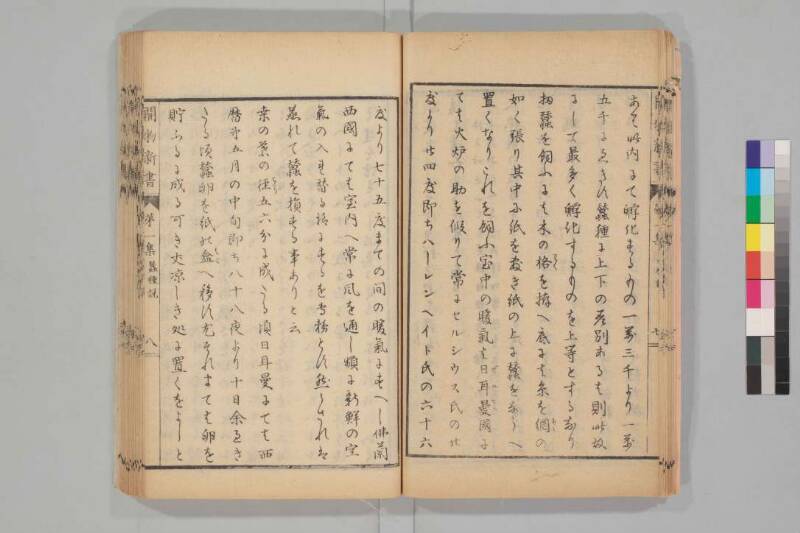
翻刻
あり此内にて孵化するもの一萬三千より一萬
五千に過きす蚕種に上下の差別あるは則此故
にして最多く孵化するものを上等とするなり
扨蚕を飼ふには木の格(わく)を拵へ底には糸を網(あみ)の
如く張り其中に紙を敷き紙の上に蚕をならへ
置くなりこれを飼ふ室中の暖気は日耳曼(ゼルマン)国に
ては火炉の助を仮りて常にセルシウス氏の廿
度より廿四度即ちハーレンヘイト氏の六十六
度より七十五度まての間の暖気にすへし仏蘭
西国にては室内へ常に風を通し頻に新鮮の空
気の入れ替る様にするを専務とす然らされは
蒸れて蚕を損する事ありと云
桑の葉の径(わたり)五六分に成たる頃日耳曼にては西
暦第五月の中旬即ち八十八夜より十日余過き
たる頃蚕卵を紙の盒(はこ)へ移す尤それまては卵を
貯ふるに成る可き丈涼しき処に置くをよしと
現代語訳
ある。この内で孵化するものは1万3千から1万5千に過ぎない。蚕種に上下の差別があるのは、すなわちこの故であって、最も多く孵化するものを上等とするのである。
さて蚕を飼うには、木の枠を作り、底には糸を網のように張り、その中に紙を敷き、紙の上に蚕を並べ置くのである。これを飼う室中の暖気は、ドイツ国では火炉の助けを借りて、常にセルシウス氏の20度から24度、すなわちファーレンハイト氏の66度から75度までの間の暖気にすべきである。
フランス国では室内へ常に風を通し、頻繁に新鮮な空気が入れ替わるようにすることを専務とする。そうでなければ蒸れて蚕を損することがあるという。
桑の葉の径が5、6分になった頃、ドイツでは西暦第5月の中旬、すなわち八十八夜より十日余り過ぎた頃、蚕卵を紙の箱へ移す。もっともそれまでは卵を貯えるために、なるべく涼しい処に置くのがよいとする。
英語訳
Among these, only 13,000 to 15,000 actually hatch. The reason there are distinctions between superior and inferior silkworm eggs is precisely this - those with the highest hatching rate are considered superior grade.
Now, to raise silkworms, one constructs wooden frames with threads stretched like a net at the bottom, spreads paper within, and arranges the silkworms on top of the paper. The temperature of the room where they are raised should be maintained, in Germany with the aid of furnaces, constantly between 20 to 24 degrees Celsius, or 66 to 75 degrees Fahrenheit.
In France, the primary concern is to constantly circulate air in the room and frequently refresh it with fresh air. Without this, it is said that the silkworms may suffer damage from stuffiness.
When mulberry leaves reach a diameter of 5 to 6 bu, in Germany around mid-May in the Western calendar - that is, about ten days after the 88th night - the silkworm eggs are transferred to paper boxes. Until then, it is best to store the eggs in as cool a place as possible.