翻刻
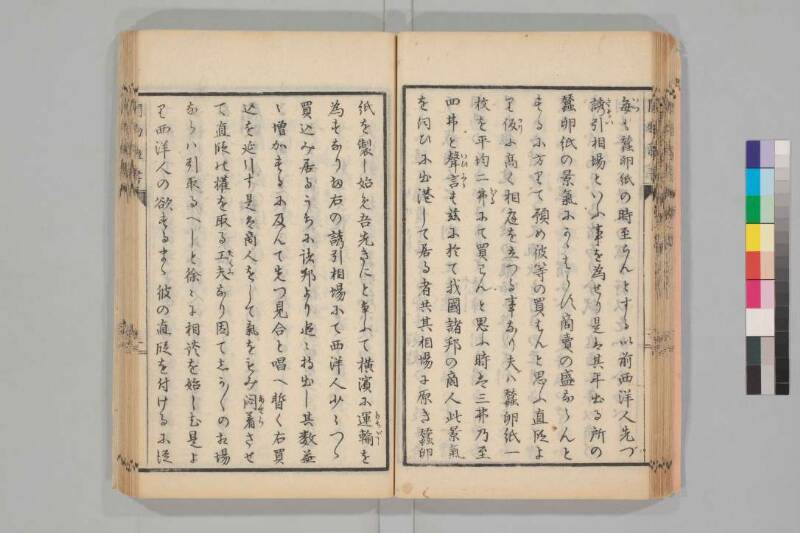
毎(いつ)も蚕卵紙の時至らんとする以前西洋人先づ
誘引(さそい)相場といふ事を為せり是は其年出る所の
蚕卵紙の景気にかゝはらす啇売の盛ならんと
するに方りて預め彼等の買はんと思ふ直段よ
り仮(かり)に高く相庭を立つる事なり夫は蚕卵紙一
枚を平均二/弗(どる)にて買わんと思ふ時は三弗乃至
四弗と声言(いひふら)す茲に於て我国諸邦の啇人此景気
を伺ひに出港して居る者共其相場に原き蚕卵
紙を製し始め吾先きにと争ふて横浜に運輸(もちだし)を
為すなり扨右の誘引相場にて西洋人少々つゝ
買込み居るうちに諸邦より追々持出し其数益
々増加するに及んて先つ見合と唱へ暫く右買
込を延引す是は啇人をして気をもみ悶着(あせら)させ
て直段の権を取る工夫(たくみ)なり因てしか〳〵の相場
ならは引取るへしと徐々に相談を始しむ是よ
り西洋人の欲するまゝ彼の直段を付けるに従
現代語訳
いつも蚕卵紙の時期が来ようとする以前に、西洋人はまず誘引相場ということを行った。これはその年に出る蚕卵紙の景気に関わらず、商売が盛んになろうとする際に、予め彼らが買おうと思う値段より仮に高く相場を立てることである。それは蚕卵紙一枚を平均二ドルで買おうと思う時は三ドルないし四ドルと言いふらすのである。ここにおいて我が国諸藩の商人で、この景気を伺いに出港している者たちは、その相場に惹かれて蚕卵紙を製し始め、我先にと争って横浜に運び出すのである。さてその誘引相場で西洋人が少しずつ買い込んでいるうちに、諸藩より追々持ち出され、その数がますます増加するに及んで、まず見合わせと唱え、しばらくその買い込みを延期する。これは商人をして気をもませ、焦らせて値段の主導権を取る工夫である。よってこれこれの相場ならば引き取るべしと徐々に相談を始めさせる。これより西洋人の欲するまま、彼らの値段を付けるに従って
英語訳
Whenever the silkworm egg paper season was about to arrive, the Westerners would first engage in what was called "enticement pricing." This was the practice of artificially setting market prices higher than what they actually intended to pay, regardless of that year's actual market conditions for silkworm egg papers, in anticipation of when trading would become active. For instance, when they intended to buy silkworm egg papers at an average of two dollars per sheet, they would announce prices of three to four dollars. Thereupon, merchants from various domains of our country who had come to port to observe market conditions would be drawn by these prices and begin producing silkworm egg papers, competing with each other to be first in transporting them to Yokohama. Now, while the Westerners were gradually buying small amounts at these enticement prices, as shipments continued to arrive from various domains and their numbers increased greatly, they would first declare a "wait-and-see" approach and temporarily postpone their purchasing. This was a strategy to make the merchants anxious and impatient, thereby gaining control over pricing. Consequently, they would gradually begin negotiations, saying they would accept goods only at such-and-such prices. From this point, following the Westerners' desires, they would set prices as they wished, and