翻刻
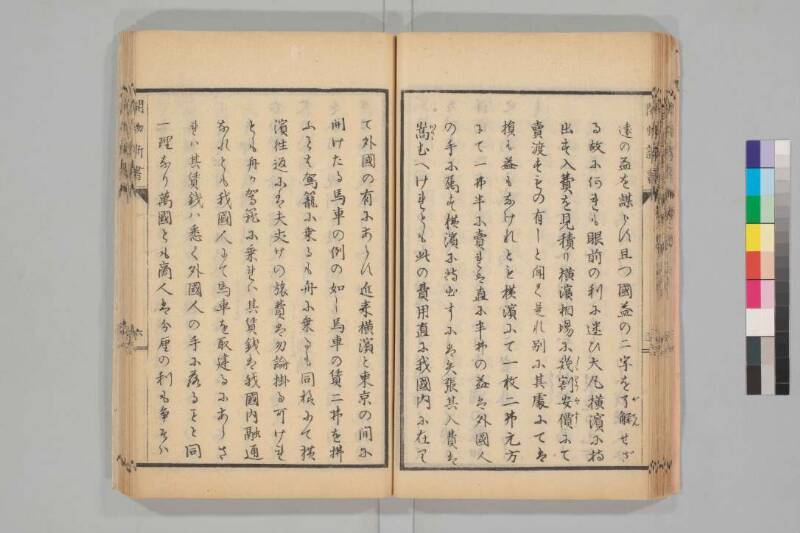
遠の益を謀らす且つ国益の二字を了解(がてん)せざ
る故に何れも眼前の利に迷ひ大凡横浜に持
出す入費を見積り横浜相場に幾割安価(いくわりやす)にて
売渡すもの有しと聞く是れ別に其処にては
損も益もなけれとも横浜にて一枚二弗元方
にて一弗半に売れは直に半弗の益は外国人
の手に属す横浜に持出すには矢張其入費は
嵩(かさ)むへけれとも此の費用直に我国内に在り
て外国の有にあらす近来横浜と東京の間に
開けたる馬車の例の如し馬車の賃二弗を払
ふことは駕籠に乗るも舟に乗るも同様にて横
浜往返には夫丈けの旅費は勿論掛る可けれ
とも舟か駕籠に乗れは其賃銭は我国内融通
なれとも我国人にて馬車を取建るにあらさ
れは其賃銭は悉く外国人の手に落ることと同
一理なり万国とも啇人は分厘の利も争そは
現代語訳
長期的な利益を考えず、かつ国益という二文字を理解しないため、いずれも目先の利益に迷い、おおよそ横浜に持ち出す費用を見積もって、横浜相場の何割か安い価格で売り渡す者があったと聞く。これは別にその場所では損も益もないけれども、横浜で一枚二ドル、元方で一ドル半に売れば、直ちに半ドルの利益は外国人の手に帰する。横浜に持ち出すにはやはりその費用はかかるであろうけれども、この費用は直ちに我が国内にあって、外国のものではない。
近来横浜と東京の間に開かれた馬車の例のようなものである。馬車賃二ドルを払うことは、駕籠に乗るのも舟に乗るのも同様で、横浜往復にはそれだけの旅費は当然かかるであろうけれども、舟か駕籠に乗ればその賃銭は我が国内での融通であるが、我が国人で馬車を取り建てるのでなければ、その賃銭はことごとく外国人の手に落ちることと同一の理である。万国とも商人は分厘の利も争うのは
英語訳
not planning for long-term benefits and not understanding the two characters meaning "national interest," they are all confused by immediate profits and, roughly estimating the costs of bringing goods to Yokohama, there are those who sell at prices several percent below the Yokohama market rate. While this may result in neither loss nor gain at that particular location, if something sells for two dollars per piece in Yokohama but only one and a half dollars at the source, immediately half a dollar of profit goes into foreign hands. Although there would naturally be expenses involved in bringing goods to Yokohama, these costs remain directly within our country and do not belong to foreign countries.
This is like the recent example of the horse-drawn carriages established between Yokohama and Tokyo. Paying two dollars for carriage fare is the same whether one rides in a palanquin or boat, and naturally such travel expenses would be required for a round trip to Yokohama. However, if one rides by boat or palanquin, that fare money circulates within our country, but unless our countrymen establish the carriage service, all that fare money falls into foreign hands - this is the same principle. In all countries, merchants compete for even the smallest profits, so