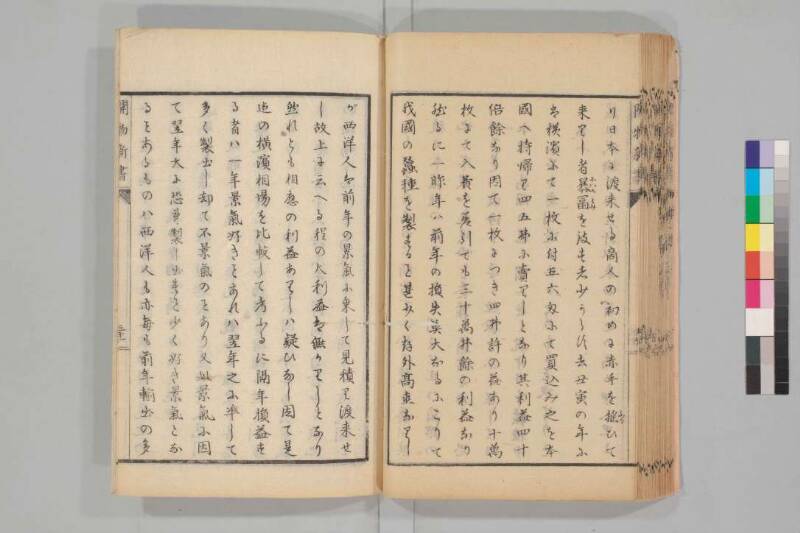
翻刻
り日本に渡来せる啇人の初めに赤手を揺(ふる)ひて
来りし者/暴富(にはかとみ)を致す者少からす去丑寅の年に
は横浜にて一枚に付五六匁にて買込み之を本
国へ持帰り四五弗に売りしとなり其利益四十
倍余なり因て一枚につき四弗許の益あり十万
枚にて入費を差引ても三十万弗余の利益なり
然るに一昨年は前年の損失莫大なるにこりて
我国の蚕種を製すること甚少く存外高直なりし
が西洋人は前年の景気に乗して見積り渡来せ
し故上に云へる程の大利益は無かりしとなり
然れとも相応の利益ありしは疑ひなし因て是
迄の横浜相場を比較して考ふるに隔年損益す
る者は一年景気好きことあれは翌年之に準して
多く製出し却て不景気のことあり又此景気に因
て翌年大に恐れ製し出すこと少く好き景気とな
ることあるものは西洋人も亦毎も前年輸出の多
現代語訳
日本に渡来した商人の初めに赤手(素手)を振るって来た者で、暴富(にわか富み)を致す者が少なからずいた。去る丑寅の年(明治元年・慶応4年、1868年)には横浜にて一枚につき五六匁にて買い込み、これを本国へ持ち帰り四五ドルに売ったとなり、その利益は四十倍余りなり。因って一枚につき四ドル許りの益があり、十万枚にて入費を差し引いても三十万ドル余りの利益なり。
然るに一昨年は前年の損失が莫大なるにこりて、我が国の蚕種を製することが甚だ少なく、存外高値なりしが、西洋人は前年の景気に乗じて見積もり渡来せし故、上に言えるほどの大利益は無かりしとなり。然れども相応の利益ありしは疑いなし。
因ってこれ迄の横浜相場を比較して考えるに、隔年損益する者は、一年景気好きことあれば翌年これに準じて多く製出し、却って不景気のことあり。また、この景気に因って翌年大いに恐れ製し出すこと少なく、好き景気となることあるものは、西洋人もまた毎年前年輸出の多...(続く)
英語訳
Among the merchants who initially came to Japan empty-handed and with nothing but their bare hands, there were quite a few who achieved sudden wealth. In the year of Ushi-Tora (1868, the first year of Meiji/fourth year of Keio), they purchased silkworm egg papers in Yokohama for five to six monme per sheet, brought them back to their home countries, and sold them for four to five dollars each. The profit was more than forty times the cost. Therefore, there was a profit of about four dollars per sheet, and even after deducting expenses for 100,000 sheets, the profit was over 300,000 dollars.
However, the year before last, having learned from the enormous losses of the previous year, the production of silkworm varieties in our country was extremely limited, making them unexpectedly expensive. Since Westerners came with estimates based on the previous year's favorable market conditions, they did not achieve the great profits mentioned above. Nevertheless, there is no doubt that they still made reasonable profits.
Therefore, when comparing the Yokohama market prices up to now, those who experience alternating profits and losses find that when business is good one year, they produce more the following year based on that precedent, which paradoxically leads to poor business. Also, due to such market conditions, they become greatly fearful the following year and produce less, sometimes resulting in favorable market conditions. Westerners also, based on the previous year's large exports... (continues)