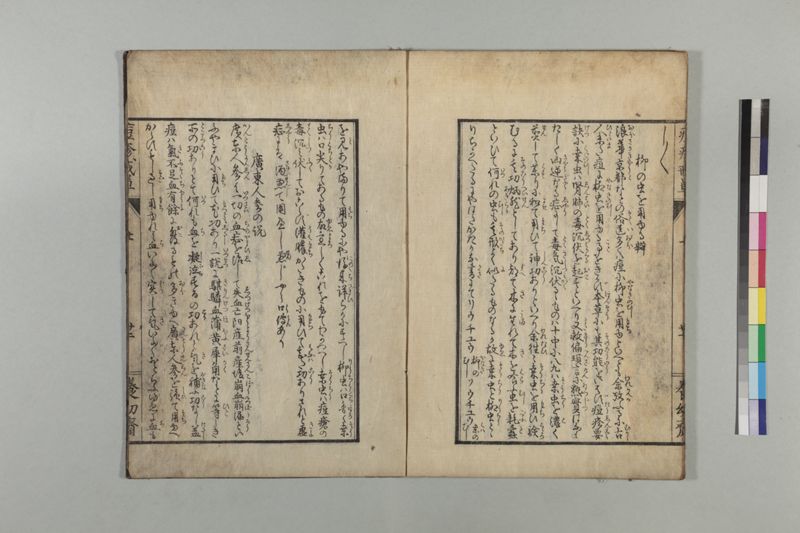
翻刻
【右丁】
し〳〵
柳の虫を用ゆる弁
浪華(おほさか)京都(きやうと)なとの俗医(そくい)多(おほ)くは痘に柳虫(やなきのむし)を用(もち)ゆといへとも余(われ)考(かんか)ふるに古(むかし)
人(ひと)未(いま)た痘に柳虫(やなきのむし)を用ゆる事(こと)をきかず本草(ほんそう)にも其(その)功能(こうのう)をいはず痘疹要(たうしんえう)
訣(けつ)に桑虫(くはのむし)は腎肺(しんはい)の毒(とく)沈伏(しつみかくる)を起(おこ)すといへり又(また)救偏瑣言(きうへんさけん)に熱実(ねつじつ)はなは
たしく凶逆(きやうぎゃく)なる症(しやう)にして毒気(とくき)沈伏(しつみかく)るゝものは十中に八九は桑虫(そうちう)を濃(こ)く
煎(せん)して薬(くす)りに和(ませ)て用(もち)ひて神功(しんこう)ありといへり余(われ)往(たひ)々/桑虫(そうちう)を用(もち)ひ験(こゝろ)
むるに其(その)功(こう)炳然(へいせん|あきらか)としてあり都(すへ)て木(き)に生(うま)れて木(き)を喰(くら)ふ虫(むし)を耗蠹(ごふと)
といひて何(いつ)れの虫(むし)も其(その)形(かたち)よく似(に)たるものなるか故(ゆゑ)に桑虫(そうちう)と柳虫(りうちう)とゝ
りちかへたるにやはたかたかな書(かき)にてリウチユウ《割書:柳(やなき)の|むし》ソウチユウ《割書:桑(くは)の|むし》
【左丁】
を見(み)あやまりて用(もち)ゆるにや後来(このゝち)詳(つまひ)らかにすへし柳虫(りうちう)は口(くち)円(まろ)く桑(そう)
虫(ちう)は口(くち)尖(とか)りてあるもの故(ゆゑ)宜(よろ)しくこれをもてわかつへし桑虫(そうちう)は痘瘡の
毒(とく)沈(しつ)み伏(ふく)しておこらず灌膿(うみもち)かたきものに用(もち)ひて甚(はなは)た功(こう)ありされと虚(きよ)
症(しやう)には酒(さけに)煎(せんじ)て用へし煎(せん)じやう口伝(くてん)あり
広東人参の説
広東人参(かんとうにんしん)は一切(いつさい)の血症(ちのやまひ)を治(し)して失血(しつけつ)亡陽(ほうよう)産前(さんせん)産後(さんこ)崩血(ぼうけつ)崩漏(ぼうろう)とい
ふやまひに用(もち)ひて尤(もつとも)功(しるし)あり一説(いつせつ)に騏驎血(きりんけつ)蒲黄(ほほふ)犀角(さいかく)なとに等(ひと)しき
所(ところ)の功(こう)ありとて何(いつ)れも血(ち)を凝泣(しふら)するの功(こう)あれと気(き)を補(おきな)ふ功(こう)なし蓋(けたし)
痘は気不足(きふそく)血有余(ちゆうよ)に発(おこ)るもの多(おほ)きゆへ広東人参(かんとうにんしん)を強(しひ)て用(もち)ゆへ
からすもし過(すご)し用(もち)ゆれは血(ち)いよ〳〵実(じつ)して気(き)いよ〳〵おとらふゆゑに血(ち)も
現代語訳
【右丁】
むべし
柳の虫を用いることについての弁明
大阪や京都などの俗医の多くは痘疹に柳虫を用いるというが、私が考えるに古の
人はまだ痘疹に柳虫を用いることを聞いたことがない。本草書にもその効能を言っていない。痘疹要
訣には「桑虫は腎肺の毒が沈伏するのを起こす」といっている。また救偏瑣言には「熱実が甚だ
しく凶逆な症状で毒気が沈伏するものは十のうち八九は桑虫を濃く
煎じて薬に混ぜて用いて神効がある」といっている。私がしばしば桑虫を用いて試
すに、その効果は明らかである。すべて木に生まれて木を食う虫を耗蠹
といい、どの虫もその形がよく似ているものであるがゆえに、桑虫と柳虫とを
取り違えたのであろうか。おそらく書物でリウチユウ《割書:柳の虫》とソウチユウ《割書:桑の虫》を
【左丁】
見誤って用いるのであろうか。後日詳しく調べるべきである。柳虫は口が丸く、桑
虫は口が尖っているものゆえ、よろしくこれによって区別すべきである。桑虫は痘瘡の
毒が沈み伏してあらわれず、膿を持ちにくいものに用いて甚だ効果があるが、虚
症には酒で煎じて用いるべきである。煎じ方に口伝がある。
広東人参の説
広東人参は一切の血症を治して、失血・亡陽・産前産後・崩血・崩漏とい
う病に用いて最も効果がある。一説には騏驎血・蒲黄・犀角などに等しい
効果があるとして、いずれも血を凝固させる効果はあるが気を補う効果はない。蓋し
痘疹は気不足で血有余に発するものが多いゆえ、広東人参を強いて用いては
ならない。もし過度に用いれば血がいよいよ実して気がいよいよ劣るゆえに血も
英語訳
【Right Page】
should be done.
Discussion on Using Willow Insects
Many folk doctors in Osaka and Kyoto use willow insects for smallpox, but when I consider this, ancient
people have never heard of using willow insects for smallpox. Medical texts do not mention their efficacy either. The Essential
Secrets of Smallpox states that "mulberry insects can raise kidney and lung toxins that have sunk and hidden." Also,救偏瑣言 states that "for extremely
severe and dangerous symptoms where toxic qi sinks and hides, eight or nine out of ten cases benefit from mulberry insects brewed strong
and mixed with medicine, showing divine efficacy." When I have often used mulberry insects to test
this, their effects are clearly evident. All insects that are born on trees and eat wood are called wood borers,
and since all these insects look very similar, perhaps mulberry insects and willow insects have been
confused? Perhaps people misread 柳虫《willow insects》 and 桑虫《mulberry insects》 in texts
【Left Page】
and use them mistakenly? This should be investigated thoroughly later. Willow insects have round mouths, while mulberry
insects have pointed mouths, so one should properly distinguish them by this. Mulberry insects are very effective for smallpox
toxins that sink and hide without emerging and are difficult to suppurate, but for deficiency
patterns they should be decocted with wine. There are oral traditions about the decoction method.
On Guangdong Ginseng
Guangdong ginseng treats all blood disorders and is most effective for diseases such as blood loss, yang collapse, prenatal and postpartum conditions, uterine bleeding, and metrorrhagia.
One theory states it has effects equal to qilin blood, cattail pollen, rhinoceros horn, and others.
While all of these have the function of coagulating blood, they lack the function of supplementing qi. Indeed,
smallpox often develops from qi deficiency and blood excess, so Guangdong ginseng should not be forcibly used.
If used excessively, the blood becomes increasingly excessive while qi becomes increasingly deficient, so even the blood