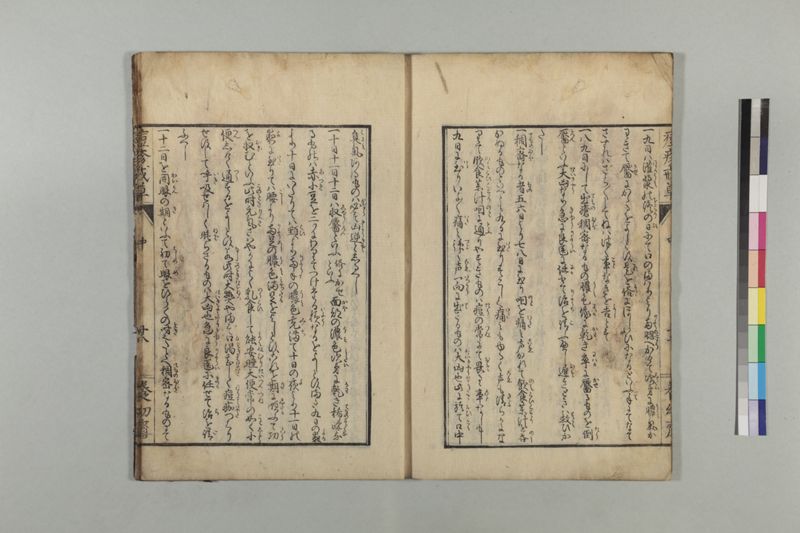
翻刻
【右丁】
一 九日は灌漿(ほんうみ)の終(をはり)の日(ひ)にて口のまはりより両腮(りようのほう)へかけて次第(したひ)に膿(うみ)気か
わきて靨(かせ)にかゝるをよしとす是(これ)を俗(そく)にほしいひになるといふ手(て)にてなて
さすれはざら〳〵してねはつく事(こと)なきを吉(よし)とす
一 八九日にして出瘡(てもの)稠(おほ)密なるもの膿(うみ)色/俄(にはか)に乾(かわ)き卒(にはか)に靨(かせ)るものを倒(たう)
靨(えん)といふ大凶(たいきやう)なり急(きゆう)に良医(りようい)に任(まか)せて治(りようち)を請(こ)ふへし遅(おそ)きときは救(すく)ひか
たし
一 稠密(てものおほ)なる者(もの)五六日より七八日に至り咽(のと)を痛(いた)み声(こゑ)かれて飲食(のみくひ)薬汁(くすり)を呑(のみ)
かぬるものといへとも九日に至(いた)りすこしく痛(いた)みもゆるく声(こゑ)も清(きよ)らかにな
りて飲食(のみくひ)薬汁(くすり)咽(のと)に通(とふ)りやすきものは痘(たう)の常(つね)にて畏(おそ)るゝ事(こと)なしもし
九日に至(いた)りいよ〳〵痛(いた)み強(つよ)く声(こゑ)一向(いつかう)に出(て)さるものは大凶(たいきやう)也(なり)此(こゝ)に於(おひ)て口(こう)中
【左丁】
臭気(くさみ)あるものは必(かなら)す凶逆(きようきやく)としるへし
一 十日十一日十二日は収靨(しゆうえん)といふ《割書:俗にかせ|といふ》面部(かほ)の濃(うみ)色/次第(したい)に乾(かわ)き稀疎(てものすくな)な
るものは赤小豆(あつき)を二ッにわりてつけたる様(いよう)なるをよしとすまた九日の夜(よる)
より十日にいたりては頸(くひ)より両手(りようて)の膿(うみ)色/充満(みち)て十日の夜(よ)より十一日の
夜(よ)に至(いた)りては腰(こし)より両足(りようあし)の膿(うみ)色/満足(みちたる)をよしとすこれを期(き)に順(したか)ふて功(こう)
を収(おさ)むといふ此時(このとき)元気(けんき)さはやかによく乳食(のみくひ)して能(よく)安睡(ねむり)大便(たいへん)常(つね)の如(こと)く小(しよう)
便(へん)しげく通(つう)するをよしとす若(もし)此時(このとき)大熱(たいねつ)やまず口/渇(かわき)甚(はなはた)しく痘痂(ほうさうふた)つくり
せすして呼吸(いき)せはしく眊(ねむ)らざるものは大凶(たいきよう)也(なり)急(きゆう)に良医(りようい)に任(まか)せて治(ち)を請(こ)
ふへし
一 十二日を開眼(かいかん)の期(き)といふて初(はしめ)て眼(め)をひらくの時(とき)也たとへ稠密(てものおほ)なるものにて
現代語訳
【右丁】
一、九日は灌漿(膿が充満すること)の終わりの日で、口の周りから両頬にかけて次第に膿気が乾いて痂(かさぶた)になり始めるのを良いとする。これを俗に「干し飯になる」という。手で撫でてみるとざらざらして粘つくことがないのを良いとする。
一、八九日にして発疹が密集している者で、膿色が急に乾き、急にかさぶたになるものを「倒靨(とうえん)」という。これは大凶である。急いで良医に任せて治療を請うべきである。遅れると救い難い。
一、発疹の密集した者は五六日から七八日に至り、咽頭を痛み声が嗄れて飲食や薬汁を飲み込めないものであっても、九日に至って少し痛みも緩み声も清らかになって飲食や薬汁が咽頭を通りやすいものは痘瘡の正常な経過であって恐れることはない。もし九日に至ってますます痛みが強く声が全く出ないものは大凶である。この際に口中に
【左丁】
臭気があるものは必ず凶逆(予後不良)と知るべきである。
一、十日・十一日・十二日は収靨(しゅうえん)という《俗にかさぶたという》。顔面の膿色が次第に乾き、発疹の少ないものは小豆を二つに割って付けたような状態になるのを良いとする。また九日の夜から十日に至っては首から両手の膿色が充満して、十日の夜から十一日の夜に至っては腰から両足の膿色が満ちるのを良いとする。これを期に従って功を収めるという。この時、元気が爽やかでよく乳食をして良く安眠し、大便が普通のように小便が頻繁に通じるのを良いとする。もしこの時に大熱が止まず口の渇きが甚だしく痘痂が作られずに呼吸が忙しく眠らないものは大凶である。急いで良医に任せて治療を請うべきである。
一、十二日を開眼の期といって初めて眼を開く時である。たとえ発疹の密集したものでも
英語訳
【Right Page】
1. The ninth day is the end of the pustulation period, and it is considered good when the purulent matter around the mouth and both cheeks gradually dries and begins to form scabs. This is commonly called "becoming like dried rice." It is considered good when touching it feels rough and not sticky.
1. On the eighth and ninth days, those with dense eruptions whose purulent color suddenly dries and rapidly forms scabs are called "inverted scabbing." This is very inauspicious. One should quickly entrust treatment to a good doctor and request treatment. If delayed, it will be difficult to save the patient.
1. Those with dense eruptions experience throat pain and hoarseness from the fifth-sixth days to the seventh-eighth days, being unable to swallow food, drink, or medicinal decoctions. However, if by the ninth day the pain somewhat eases, the voice becomes clearer, and food, drink, and medicines pass through the throat more easily, this is the normal course of smallpox and there is nothing to fear. But if by the ninth day the pain becomes increasingly severe and no voice emerges at all, this is very inauspicious. At this point, if there is
【Left Page】
a foul odor in the mouth, it should definitely be recognized as ominous and adverse.
1. The tenth, eleventh, and twelfth days are called "scab formation" (commonly called scabbing). When the purulent color on the face gradually dries, and those with sparse eruptions resemble split red beans attached to the skin, this is considered good. Also, from the night of the ninth day to the tenth day, the purulent color should be充满 from the neck to both hands, and from the night of the tenth day to the night of the eleventh day, the purulent color should be satisfied from the waist to both feet. This is called following the proper timing and achieving success. At this time, it is good when the vital energy is refreshed, the patient eats and drinks well, sleeps peacefully, has normal bowel movements, and frequent urination. If at this time the high fever does not subside, thirst is severe, smallpox scabs do not form, breathing is rapid, and there is no sleep, this is very inauspicious. One should quickly entrust treatment to a good doctor and request treatment.
1. The twelfth day is called the "eye-opening period," when the eyes first open. Even for those with dense eruptions,