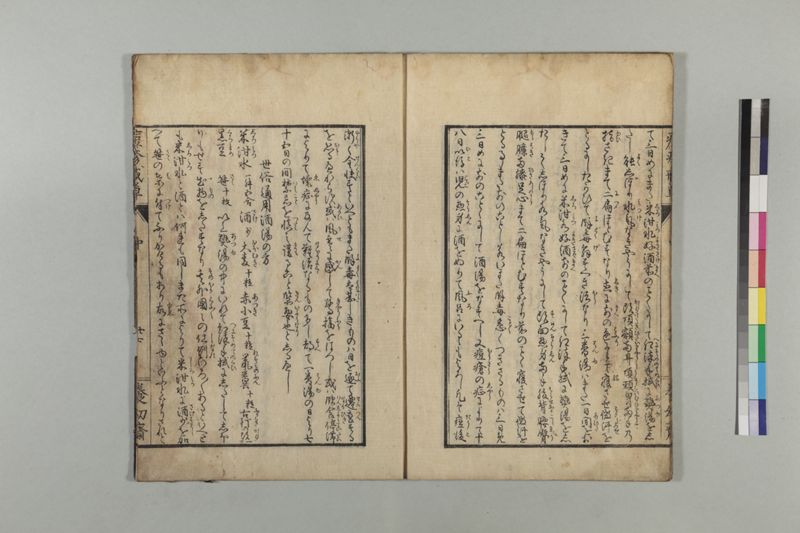
翻刻
【右丁】
て三日めにまた米泔水(しろみつ)好酒(よきさけ)前(まへ)のことくにして紅染手拭(へにそめのてぬくひ)に熱湯(あつゆ)をし
たし能(よく)しぼり水気(みつけ)なきやうにして頭(かしら)頂(いたゝき)額(ひたい)両耳(りやうみゝ)項(うなし)頸(くひ)胸(むね)両手(りやうて)の
指(ゆひ)さきまて二扁(にへん)ほとむすなり直(しき)に前(まへ)の通(とふり)にして寝(ね)させ微汗(すこしあせ)を
とるにしたかひて余毒(よどく)解(げ)すへき法(ほう)なり三/番(はん)湯(ゆ)はまた一日/間(あひた)をお
きて三日めに米泔水(しろみつ)好酒(よきさけ)前(まへ)のことくにして紅染手拭に熱湯をし
たしてしほり水気なきやうにして頭面(すめん)惣身(そうしん)両手/腹(はら)背(せなか)腰(こし)臀(しり)
腿(もゝ)臁(はき)両/膝(ひさ)足心(あしのうら)まて二扁ほとむすなり前のことく寝させて微汗を
とる事また前のことし若いまた余(よ)毒/悉(こと〳〵)くつきさるものは三日め
三日めに前のことくにして酒湯をなすへし又/痘瘡(ほうさう)の症(しやう)によりて十
八日/以後(いこ)は児(ちご)の惣身(そうしん)に酒をぬりて風呂(ふろ)にいるゝもよろし凡そ痘後(たうこ)
【左丁】
漸(やうや)く全快(せんくわい)すといへともまた余毒(よとく)/太甚(はなはた)しきものは日を逐(おふ)て遷変(せんへん|なかひき)する
を恐(おそ)るへからす或(あるひ)は風寒(かせ)に感(かん)して驚搐(きやうふう)をはつし或は飲食(いんしよく)停滞(ていたい)
によりて壊症(ゑしやう)に及んて難治(なほりにくゝ)なるもの多し都(すへ)て一/番湯(はんゆ)の日より七
十五日の間/禁忌(いみこと)を慎(つゝし)み護(まも)ること緊要(きんいよう)也(なり)としるへし
世俗通用酒湯の方
米泔水(しろみつ)《割書:一升五合|》酒(さけ)《割書:少|》大麦(おほむき)《割書:十粒|》赤小豆(あつき)《割書:十粒|》鼠糞(ねすみのふん)《割書:十粒|》古釘(ふるくき)の頭(かしら)《割書:一|ツ》
黒豆(くろまめ) 笹(さゝ)《割書:十枚|》以上/熱湯(あつゆ)の中にいれて紅染(へにそめ)手拭(てぬくひ)にしたしてしほ
りもせす出物(てもの)をしたすなり其外(そのほか)国々(くに〳〵)の仕例(しなれ)いろ〳〵あるといへと
も米泔水(しろみつ)と酒とは何れも同しまた所によりて米泔水(しろみつ)に酒(さけ)少(すこし)を加
へて笹(さゝ)の葉(は)に付(つけ)てふりかけるもあり故(ゆゑ)にさゝゆといふとなりされと
現代語訳
【右丁】
て三日目にまた米のとぎ汁と良い酒を前の通りにして、紅染めの手拭いに熱湯を浸してよく絞り水気がないようにして、頭頂、額、両耳、項、首、胸、両手の指先まで二面ほど蒸すのである。すぐに前の通りにして寝させ、微汗をとるに従って余毒を解くべき方法である。三番湯はまた一日間をおいて三日目に、米のとぎ汁と良い酒を前の通りにして紅染めの手拭いに熱湯を浸して絞り水気がないようにして、頭面、全身、両手、腹、背中、腰、臀部、腿、脛、両膝、足裏まで二面ほど蒸すのである。前の通り寝させて微汗をとることもまた前の通りである。もしまだ余毒がことごとく除去されないものは、三日目ごとに前の通りにして酒湯をなすべきである。また痘瘡の症状によって十八日以後は、児の全身に酒を塗って風呂に入るのもよろしい。おおよそ痘後は
【左丁】
ようやく全快するといってもまた余毒が甚だしいものは、日を追って変化することを恐れるべきではない。あるいは風寒に感じて驚搐を発し、あるいは飲食の停滞によって壊症に及んで治療困難になるものが多い。すべて一番湯の日から七十五日の間、禁忌を慎み守ることが緊要であると知るべきである。
世俗で一般的に用いられる酒湯の方法
米のとぎ汁《一升五合》、酒《少量》、大麦《十粒》、赤小豆《十粒》、鼠の糞《十粒》、古釘の頭《一つ》、黒豆、笹《十枚》
以上を熱湯の中に入れて紅染めの手拭いに浸して絞りもせずに発疹を湿らせるのである。その他、国々の慣例で色々あるといっても、米のとぎ汁と酒はいずれも同じである。また所によって米のとぎ汁に酒を少し加えて笹の葉に付けて振りかけるものもある。故に「笹湯」というのである。されど
英語訳
【Right Page】
On the third day, again prepare rice washing water and good sake as before, soak a red-dyed hand towel in hot water, wring it well so there is no excess water, and steam about two surfaces from the crown of the head, forehead, both ears, nape, neck, chest, to the fingertips of both hands. Immediately have the patient lie down as before and take a slight sweat - this is the method to neutralize residual toxins. For the third bath, again leave one day interval, and on the third day, prepare rice washing water and good sake as before, soak the red-dyed hand towel in hot water, wring it so there is no excess water, and steam about two surfaces covering the head and face, entire body, both hands, abdomen, back, waist, buttocks, thighs, shins, both knees, to the soles of the feet. Have them lie down as before and induce slight sweating, also as before. If residual toxins are not yet completely eliminated, sake decoction should be performed every three days as described above. Also, depending on the symptoms of smallpox, after the eighteenth day, it is good to apply sake to the child's entire body and have them enter a bath. Generally, after smallpox,
【Left Page】
although gradual complete recovery occurs, when residual toxins are severe, one should not fear day-by-day changes. Some may be affected by wind and cold and develop convulsions, or due to food stagnation may develop destructive symptoms that become difficult to treat. In all cases, one should know that it is essential to carefully observe taboos and maintain protection for seventy-five days from the day of the first bath.
Common Folk Method of Sake Decoction
Rice washing water 《1 shō 5 gō》, sake 《small amount》, barley 《10 grains》, red beans 《10 grains》, mouse droppings 《10 grains》, head of an old nail 《1 piece》, black beans, bamboo grass 《10 leaves》
Put all the above into hot water, soak a red-dyed hand towel in it without wringing, and moisten the eruptions. Besides this, there are various customs in different regions, but rice washing water and sake are common to all. Also, in some places, a small amount of sake is added to rice washing water and sprinkled using bamboo grass leaves. Hence it is called "bamboo grass decoction." However,