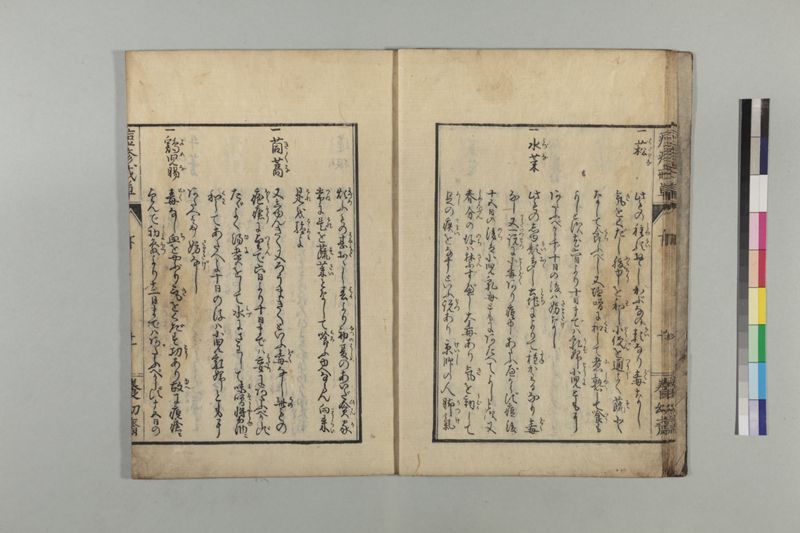
翻刻
【右丁】
一/菘(はたけな) 此もの種類(しゆるい)おゝしかぶなの類(るい)なり毒(どく)なし
気(き)をくだし腹中(ふくちう)を和(わ)し小便(せうべん)を通(つうず)よく蔬(そ)と
なして食(くら)ふべし又塩噌に和(くわ)して煮熟(にじゆく)して喰(くう)も
よしとす尤六日より十日までは乳婦(うば)小児(せうに)ともに
あたふべからず十日の後は妨(さまたげ)なし
一/水菜(みづな) 此ものしゆ類(るい)多(おゝ)し土地(とち)によりて種(たね)かわるなり毒(どく)
なし又(また)一説(いつせつ)に小毒(せうどく)あり痘中あたふべからず痘後
十五日の後(のち)は小児乳母ともにあたへてよしとす又
春分(しゆんぶん)の後(のち)は禁(きん)ずべし大毒あり気(き)を動(うごか)して
足(あし)の疾(やまい)をなすといふ説(せつ)あり京師(けいし)の人/脚気(かつけ)
【左丁】
煩(わづろ)ふもの甚(はなはだ)おゝし春(はる)より初夏(なつのはしめ)のあいだ貧家(ひんか)
常(つね)に是(これ)を蔬菜(そさい)となして喰(くろ)ふゆへならん向来(こうらい)
是(これ)を《振り仮名:驗|こゝろみ》よ
一/茼蒿(きくな) 又しゆんきく又ろうまきくといふ毒(どく)なし此(この)もの
疱瘡(ほうそう)に望(のそん)で六日より十日までは妄(みたり)にあたふべからず
たゞよく湯煮(ゆに)をして水(みづ)にさわして味噌(みそ)醤油(しやうゆ)に
和(くわ)してあたへよ十日の後は小児乳婦ともに
あたへて妨(さまたげ)なし
一/鶏児腸(よめな) 毒(どく)なし血(ち)をやぶり気(き)をくだす功(こう)あり故(ゆへ)に痘瘡に
望んで初発(しよほつ)より十二日まではあたふべからず十五日の
現代語訳
【右丁】
一 菘(はたけな) この植物は種類が多く、蕪菜の類である。毒はない。
気を下し、腹中を和らげ、小便を通す効果がある。よく野菜として
料理して食べるべきである。また塩味噌に和えて煮熟して食べても
よいとされる。ただし六日目から十日目までは乳母・小児ともに
与えてはならない。十日目の後は害はない。
一 水菜 この植物は種類が多い。土地によって種が変わる。毒は
ない。また一説には小毒がある。痘疹中は与えてはならない。痘疹後
十五日の後は小児・乳母ともに与えてよいとする。また
春分の後は禁じるべきである。大毒があり、気を動かして
足の病気を起こすという説がある。京都の人で脚気に
【左丁】
悩む者が非常に多い。春から初夏の間、貧しい家が
常にこれを野菜として食べているからであろう。今後は
これを試してみよ。
一 茼蒿(きくな) また春菊また狼牙菊という。毒はない。この植物は
天然痘において六日目から十日目まではみだりに与えてはならない。
ただよく湯で煮て水にさらして味噌・醤油に
和えて与えよ。十日目の後は小児・乳母ともに
与えて害はない。
一 嫁菜(よめな) 毒はない。血を破り気を下す効果がある。故に天然痘に
おいて初発から十二日までは与えてはならない。十五日目の
英語訳
【Right Page】
- Chinese cabbage (hatakena) This plant has many varieties and belongs to the turnip green family. It is non-toxic.
It moves qi downward, harmonizes the abdomen, and promotes urination. It should be well-prepared
as a vegetable for eating. Also, it may be mixed with salted miso and cooked well for eating,
which is considered good. However, from the sixth to tenth day, it should not be given to wet nurses or children.
After the tenth day, there is no harm.
- Mizuna (Japanese mustard greens) This plant has many varieties. The seeds vary depending on the region. It is non-
toxic. However, one theory states it has slight toxicity. It should not be given during smallpox. After smallpox,
after fifteen days, it may be given to both children and wet nurses. Also,
it should be prohibited after the spring equinox. There is a theory that it has great toxicity, disturbing qi and
causing leg diseases. Many people in Kyoto suffer from beriberi.
【Left Page】
This is probably because poor families
regularly eat this as a vegetable from spring to early summer. In the future,
test this theory.
- Garland chrysanthemum (kikuna) Also called spring chrysanthemum or wolf fang chrysanthemum. It is non-toxic. This plant
should not be given carelessly from the sixth to tenth day during smallpox.
Simply boil it well, rinse with water, and mix with miso and soy sauce
before giving. After the tenth day, it may be given to both children and wet nurses
without harm.
- Kalimeris (yomena) Non-toxic. It has the effect of breaking blood stasis and moving qi downward. Therefore, during smallpox,
it should not be given from initial outbreak until the twelfth day. On the fifteenth day...