翻刻
【右丁】
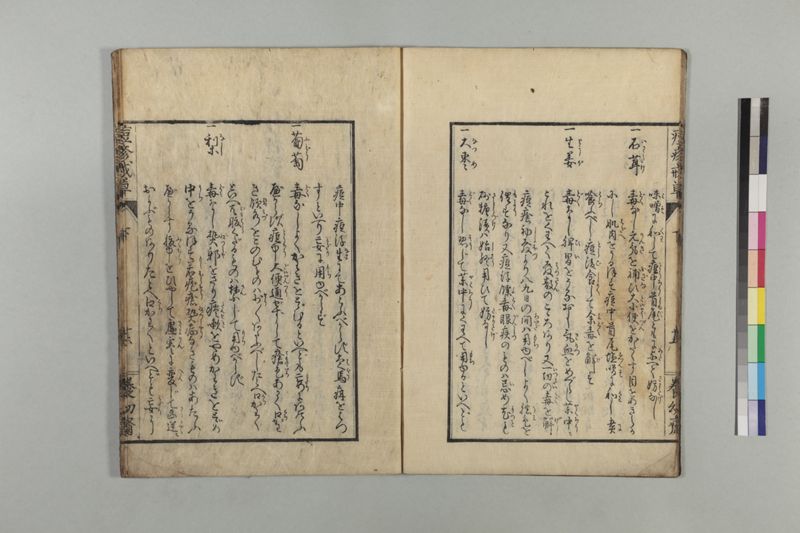
味噌(みそ)に和(くわ)して痘中(とうちう)首尾(しゆび)ともに与(あた)へて妨(さまたげ)なし
一/石茸(いわたけ) 毒(どく)なし元気(けんき)を補(おぎな)ひ大小便(たいせうべん)をかたくす目をあきらか
にし肌肉(はだへ)をうるほす痘中首尾/塩噌(ゑんそ)に和(くわ)し煮(に)
喰(くら)ふべし痘後(とうご)食(しよく)して余毒(よどく)を解(げ)す
一/生姜(せうが) 毒(どく)なし脾胃(ひい)をうるおし気血(きけつ)をめぐらし薬中(やくちう)に
これをくわへて発散(はつさん)のこゝろあり又/一切(いつさい)の毒(どく)を解(げし)
痘瘡/初発(しよほつ)より八九日の間(あいだ)は用(もち)ゆべしよく膿色(うみ)を
催(もよう)すなり又痘後/余毒(よとく)眼疾(がんしつ)のものは忌(い)め尤(もつと)も
砂糖漬(さとうづけ)は始終(ししう)用ひて妨(さまたげ)なし
一/大棗(なつめ) 毒(どく)なし惣(そう)じて薬中(やくちう)にくわへて用(もち)ゆるといへども
【左丁】
痘中痘後/生(なま)にてあとふべからず走馬(はぐさ)疳をはつ
すといへり妄(みだり)に用(もち)ゆべからず
一/葡萄(ふどう) 毒(どく)なしよくかわきをとゞむるといへども妄(みたり)にあたふ
べからず痘中(とうちう)大便(だいべん)通(つう)ぜずして瘡色(てものゝいろ)あかく口(くち)かわ
き飲水(ひやみづ)をこのむものは少(せう)〳〵あたふべしたとへ口(くち)かわく
といへ共(ども)腹(はら)くだるものは禁(きん)じて用(もち)ゆべからず
一/梨(なし) 毒(どく)なし熱邪(ねつじや)をさり痰嗽(たんせき)をやめかわきをとゞめ
中(うち)をうるほす若(もし)疱瘡(ほうそう)熱症(ねつしやう)なきものはあたふ
べからす腹中(ふくちう)をひやして虚寒(きよかん)に変(へん)じて《振り仮名:凶逆|きうきやく》#1に
およぶものありたとへ口(くち)かわくといへども妄(みだり)に
現代語訳
【右丁】
味噌に和えて痘疹中は最初から最後まで与えて問題ない。
一 石茸(いわたけ) 毒はない。元気を補い、大小便を固くし、目を明らかにし、
肌肉を潤す。痘疹中は最初から最後まで塩味噌に和えて煮て
食べるべきである。痘疹後に食べて余毒を解毒する。
一 生姜(しょうが) 毒はない。脾胃を潤し、気血を巡らし、薬の中に
これを加えて発散の効果がある。また一切の毒を解毒し、
痘瘡の初発より八、九日の間は用いるべきである。よく膿の色を
促進する。また痘疹後の余毒や眼疾のものは忌むべきである。最も
砂糖漬けは始終用いて問題ない。
一 大棗(なつめ) 毒はない。総じて薬の中に加えて用いるといえども
【左丁】
痘疹中・痘疹後は生で与えてはならない。走馬疳を発症
するといわれる。妄りに用いてはならない。
一 葡萄(ぶどう) 毒はない。よく渇きを止めるといえども妄りに与え
てはならない。痘疹中に大便が通じず、瘡の色が赤く、口が渇き、
冷水を好むものは少しずつ与えるべきである。たとえ口が渇く
といえども腹が下るものは禁じて用いてはならない。
一 梨(なし) 毒はない。熱邪を去り、痰咳を止め、渇きを止めて
中を潤す。もし疱瘡に熱症がないものは与えて
はならない。腹中を冷やして虚寒に変じて凶逆に
及ぶものがある。たとえ口が渇くといえども妄りに
英語訳
【Right Page】
mixed with miso and given throughout the course of smallpox from beginning to end without problem.
- Stone mushroom (iwatake) Non-toxic. It supplements vital energy, hardens bowel movements, clarifies the eyes,
and moistens the flesh. During smallpox, from beginning to end, it should be mixed with salted miso and boiled
for consumption. After smallpox, eating it detoxifies remaining toxins.
- Ginger (shōga) Non-toxic. It moistens the spleen and stomach, circulates qi and blood, and when
added to medicines, it has dispersing effects. It also detoxifies all poisons.
It should be used for eight to nine days from the initial outbreak of smallpox. It effectively promotes
pus formation. Also, for those with residual toxins after smallpox or eye diseases, it should be avoided. Most
importantly, candied ginger may be used throughout without problem.
- Chinese date (natsume) Non-toxic. Although generally added to medicines for use,
【Left Page】
during and after smallpox, it should not be given raw. It is said to cause
acute infantile malnutrition. It should not be used carelessly.
- Grapes (budō) Non-toxic. Although they effectively stop thirst, they should not be given
carelessly. During smallpox, when bowel movements are not regular, the lesion color is red, the mouth is dry,
and the patient prefers cold water, they should be given little by little. Even if the mouth is dry,
if the patient has diarrhea, they are forbidden and should not be used.
- Pear (nashi) Non-toxic. It removes heat pathogen, stops phlegm cough, stops thirst, and
moistens the interior. If smallpox cases have no heat symptoms, it should not
be given. It cools the abdomen and can transform into deficiency-cold, leading to malignant
conditions. Even if the mouth is dry, it should not be used carelessly.