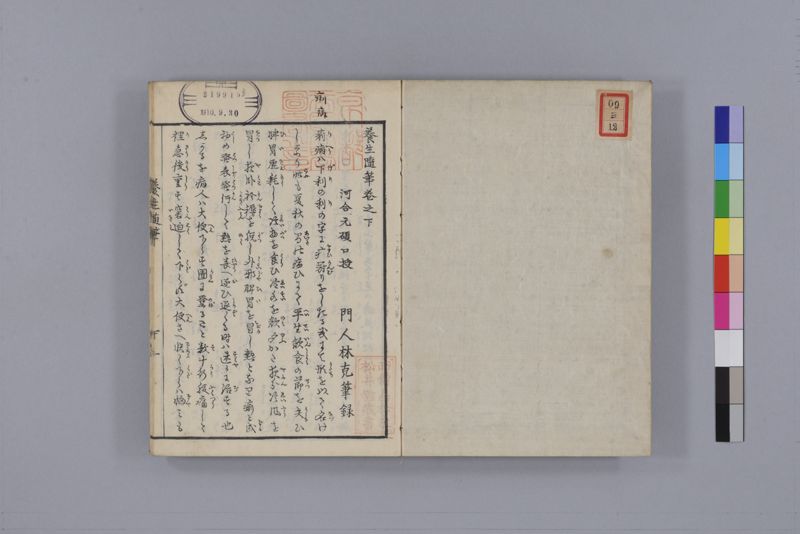
翻刻
【右丁】
白紙
【左丁】
養生随筆巻之下
河合元碩口授 門人林克筆録
痢病(りへう)は下痢(げり)の利(り)の字に疒(やまひ)冠(かんむ)りをしたる義にて形(かたち)を以て名(なづ)け
しなり此(これ)も夏秋の間(あいた)の病ひにて平生(へいせい)飲食(いんしよく)の節(せつ)を失(うしな)ひ
脾胃(ひい)虚耗(きよもう)して冷物(れいぶつ)を食(くら)ひ冷水(れいすい)を飲(のみ)夕(ゆふ)かた夜分(やふん)冷風(れいふう)を
冒(をか)し夜臥(やくわ)衿褥(きんしよく|よぎふとん))を脱(だつ|めく)し外邪(くわいじや)脾胃(ひい)を冒(をか)し熱となり痢と成(なる)
初(はし)め発表(はつしやう)発汗(はつかん)して熱を表(ひやう)へ遂(お)ひ退(しりぞ)くる時は速(すみや)かに治(ぢ)する也
しかるを病人は大 便(へん)下らす圊(かわや)に登(のぼ)ること数(す)十行(かう)腹痛(ふくつう)して
裡急後重(りきうかうしう)す窘迫(くんはく|いきみ)して下(くだ)らず大 便(へん)さへ快(こゝろよ)く下(くだ)らは悩(なや)みも
【三行目頭部欄外】
痢病
現代語訳
【右丁】
白紙
【左丁】
養生随筆巻之下
河合元碩口授 門人林克筆録
痢病(りびょう)は下痢(げり)の利(り)の字に疒(やまいだれ)を冠したもので、その形から名付けられたものである。これもまた夏から秋にかけての病気で、普段から飲食の節制を怠り、脾胃が虚弱になって冷たい物を食べ、冷水を飲み、夕方や夜中に冷たい風にあたり、夜寝る時に衿や褥(夜着や布団)を脱いでしまい、外邪が脾胃を侵して熱となり、痢となるのである。
初期に発表・発汗させて熱を体表へ追い出し退散させる時は速やかに治るものである。
しかし病人は大便が下り、便所に行くこと数十回、腹痛がして裡急後重(便意を催すが思うように排便できない状態)となり、いきんでも下らず、大便さえ気持ちよく下れば苦痛も
【三行目頭部欄外】
痢病
英語訳
[Right page]
Blank page
[Left page]
Yōjō Zuihitsu (Essays on Health Maintenance), Volume 3 (Lower)
Oral instruction by Kawai Genseki Transcribed by disciple Hayashi Katsu
Dysentery (ribyō) gets its name from the character "ri" (利) for diarrhea with the sickness radical (疒) added on top, thus named according to its form. This is also a disease of the summer and autumn seasons, caused when one loses moderation in daily eating and drinking habits, the spleen and stomach become weak and depleted, one consumes cold foods and drinks cold water, is exposed to cold wind in the evening and at night, removes one's collar and bedding while sleeping at night, and external pathogens invade the spleen and stomach, becoming heat and developing into dysentery.
When treated early with diaphoretic therapy to induce sweating and drive the heat to the surface and dispel it, recovery is swift.
However, the patient has diarrhea, goes to the toilet dozens of times, suffers abdominal pain and tenesmus (the feeling of incomplete evacuation), strains but cannot pass stool, and if only the bowel movement could pass comfortably, the suffering would also...
[Margin note at the beginning of the third line]
Dysentery