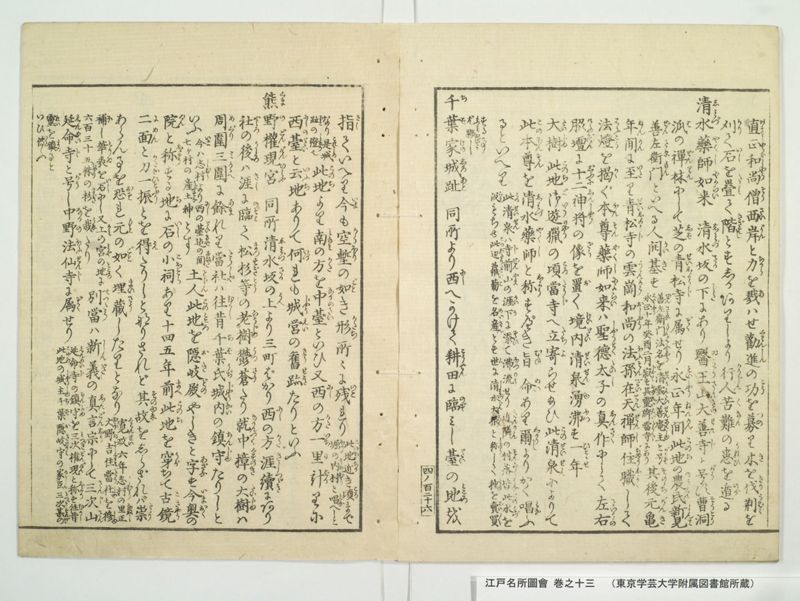
翻刻
【右丁】
直正和尚(ぢきしやうおしやう)僧(そう)西岸(さいがん)と力(ちから)を戮(あ)はせ勧進(くわんしん)の功(こう)を募(つの)り木(き)を伐(きり)荊(うばら)を
刈(かり)て石(いし)を畳(たゝみ)て階(きざはし)とすしかありしより行人(かうじん)苦難(くなん)の患(うれひ)を遁(のが)る
清水薬師如来(しみづやくしによらい) 清水坂(しみづさか)の下(した)にあり医王山(ゐわうさん)大善寺(たいせんじ)と号(がう)す曹洞(そうとう)
派(は)の禅林(ぜんりん)にして芝(しば)の青松寺(せいしようじ)に属(ぞく)せり永正年間(えいしやうねんかん)此地(このち)の農民(のうみん)新見(しんみ)
善左衛門(ぜんさゑもん)といへる人 開基(かいき)す《割書:善左衛門(ぜんさゑもん)法名(はふみやう)を清雲大善庵主(せいうんたいせんあんしゆ)と号(がうす)|永正(えいしやう)十年癸酉二月 寂(じやく)す其(その)霊牌(れいはい)当寺(たうじ)にあり》其後(そのゝち)元亀(げんき)
年間(ねんかん)に至(いた)り青松寺(せいしようじ)雲崗和尚(うんかうおしやう)の法孫(ほふそん)在天禅師(ざいてんぜんし)住職(ぢゆうしよく)して
法燈(はふとう)を掲(かゝ)ぐ本尊(ほんそん)薬師如来(やくしによらい)は聖徳太子(しやうとくたいし)の真作(しんさく)にして左右(さいうの)
脇壇(けふだん)に十二神将(じふにしんしやう)の像(ざう)を置(お)く境内(けいだい)清泉(せいせん)湧沸(ゆふつ)す一年(ひとゝせ)
大樹(たいじゆ)此地(このち)御遊猟(ごいうりやう)の頃(ころ)当寺(たうじ)へ立寄(たちよ)らせ給ひ此(この)清泉(せいせん)によりて
此(この)本尊(ほんそん)を清水薬師(しみづやくし)と称(しよう)すべき旨(むね) 命(めい)あり爾(しかりし)よりかく唱(とな)ふ
るといへり《割書:此(この)清泉(せいせん)は寺前(じぜん)山(やま)の涯下(かいか)に添(そひ)て拂流(ふつりう)せり近隣(きんりん)の村落(そんらく)皆(みな)此水(このみづ)を|汲(くみ)もちゆ此辺(このあたり)《振り仮名:蘿葡|だいこ#1》を名産(めいさん)とす世(よ)に清水大根(しみづだいこん)と称(しよう)して種(たね)を売買(ばい〳〵) 》
《割書:する事|尤(もつとも)夥(おびたゝ)し》
千葉家城趾(ちばけのしろあと) 同所より西(にし)へかけて耕田(こうでん)に臨(のぞ)みし台(だい)の地(ところ)を
【左丁】
指(さし)ていへり今(いま)も空塹(からほり)の如(ごと)き形(かたち)所々に残(のこ)れり《割書:此地(このち)近(ちか)き頃(ころ)まで|《振り仮名:堀の内村|ほり うちむら》と唱(とな)へしと》
《割書:なり是(これ)城(しろ)|趾(あと)の証(しよう)也》此地(このち)より南(みなみ)の方(かた)を中台(なかのたい)といひ又 西(にし)の方(かた)一里計(いちりばか)りに
西台(にしのだい)と云地(いふち)ありて何(いづ)れも城営(じやうえい)の旧跡(きうせき)たりといふ
熊野権現宮(くまのごんげんのみや) 同所 清水坂(しみづさか)の上(うへ)より三町ばかり西(にし)の方(かた)涯続(きしつゞき)にあり
社(やしろ)の後(うしろ)は涯(きし)に臨(のぞみ)て松杉等(まつすぎとう)の老樹(らうじゆ)鬱蒼(うつさう)たり就中(なかんつく)樟(くすのき)の大樹(たいじゆ)は
周圍(めぐり)三圍(みかゝへ)に余(あま)れり当社(たうしや)は往昔(むかし)千葉氏(ちばうぢ)城内(じやうない)の鎮守(ちんじゆ)たりしと
いふ《割書:今(いま)は志村(しむら)より《振り仮名:西の台|にし だい》迄(まで)の間(あひだ)|七ヶ村の産土神(うぶすな)とす》土人(とじん)此地(このところ)を《振り仮名:隠岐殿やしき|おきどの 》と字(あざな)す今(いま)《振り仮名:奥の|おく 》
院(ゐん)と称(しよう)する地(ち)に石(いし)の小祠(こほこら)あり十四五年 前(まへ)此地(このち)を穿(うが)ちて古鏡(こきやう)
二面(にめん)と刀(かたな)一振(ひとふり)とを得(え)たりしとなりされど其故(そのゆゑ)をしらざれば祟(たゝり)
あらん事を恐(おそ)れ元(もと)の如(ごと)く埋蔵(まいさう)したりとなり《割書:寛政(くわんせい)六年 志村(しむら)の里正(なぬし) |大野吉住(おほのよしすみ)当社(たうしや)を修(しゆ)》
《割書:補(ほ)し華表(とりゐ)を石(いし)にし又 上(かみ)の宮(みや)の地(ところ)に|六百三十五 株(ちやう)の杉(すぎ)を栽(うゑ)たり》別当(べつたう)は新義(しんぎ)の真言宗(しんごんしう)にして三次山(さんじさん)
延命寺(えんめいじ)と号(がう)し中野(なかの)法仙寺(ほふせんじ)に属(ぞく)せり《割書:延命寺(えんめいじ)の鎮守(ちんじゆ)を三次権現(みつぎごんげん)と称(しよう)す往昔(むかし)|此地(このち)の城主(じやうしゆ)千葉隠岐守(ちばおきのかみ)の家臣(かしん)三次(みつぎ)某(それがし)の》
《割書:霊(れい)を鎮(まつ)ると|いひ伝(つた)ふ》
現代語訳
【右丁】
直正和尚は僧・西岸とともに力を合わせ、勧進によって資金を集め、木を切り、茨を刈り払い、石を積んで石段を造った。それ以来、通行人は難儀する苦労から解放された。
**清水薬師如来** 清水坂の下にある。医王山大善寺と号する。曹洞派の禅寺であり、芝の青松寺に属する。永正年間(1504〜1521)に、この地の農民・新見善左衛門という人物が開基した。《割書:善左衛門の法名を清雲大善庵主と号し、永正十年(1513)癸酉二月に示寂した。その霊牌は当寺にある。》その後、元亀年間(1570〜1573)に至り、青松寺・雲崗和尚の法孫である在天禅師が住職となり、法灯を掲げた。本尊の薬師如来は聖徳太子の真作であり、左右の脇壇に十二神将の像を安置している。境内には清らかな泉が湧き出ている。ある年、将軍がこの地にご遊猟においでになった際、当寺にお立ち寄りになり、この清泉にちなんで、この本尊を「清水薬師」と称するべき旨のご命令があった。それ以来、このように呼ぶようになったという。《割書:この清泉は寺の前、山の崖下に沿って流れ出ている。近隣の村落はみなこの水を汲んで使用する。この辺りでは大根を名産とし、世に「清水大根」と称して種の売買が非常に盛んである。》
**千葉家城跡** 同所より西にかけて、耕田に臨んだ台地の場所を
【左丁】
指していう。今も空堀のような形が所々に残っている。《割書:この地は近い頃まで「堀の内村」と呼ばれていたという。これが城跡の証である。》この地より南の方を「中台」といい、また西の方一里ほどに「西台」という地があり、いずれも城営の旧跡であるという。
**熊野権現宮** 同所、清水坂の上より三町ほど西の方、崖続きにある。社の後ろは崖に臨み、松・杉などの老樹が鬱蒼と茂っている。なかでも楠の大樹は、幹の周囲が三抱え余りある。当社は往昔、千葉氏の城内の鎮守であったという。《割書:今は志村から西の台までの間の七か村の産土神としている。》土地の人はこの場所を「隠岐殿屋敷」と字(あざ)に呼ぶ。今「奥の院」と称する地に石の小祠がある。十四、五年前にこの地を掘り起こしたところ、古鏡二面と刀一振りを得たという。しかし、その由来がわからないため、祟りがあることを恐れ、元のように埋め戻したという。《割書:寛政六年(1794)、志村の名主・大野吉住が当社を修補し、鳥居を石造りにし、また上の宮の地に六百三十五株の杉を植えた。》別当は新義の真言宗であり、三次山延命寺と号し、中野の法仙寺に属する。《割書:延命寺の鎮守を「三次権現」と称する。往昔、この地の城主・千葉隠岐守の家臣・三次某の霊を祀ると言い伝える。》
英語訳
【Right Page】
The Venerable Chikusshō (Jikishō) joined forces with the monk Saigan to raise funds through religious solicitation (kanjin), felling trees, clearing away thorny undergrowth, and laying stones to construct stone steps. From that time on, travelers were spared the hardship of a difficult passage.
**Shimizu Yakushi Nyorai (Shimizu Yakushi)** Located at the foot of Shimizu-zaka slope. It bears the temple name Iōzan Daisenj. It is a Zen temple of the Sōtō school, affiliated with Seishōji temple in Shiba. During the Eishō era (1504–1521), a farmer of this land named Niimi Zen'zaemon established the temple as its founding patron. 《Marginal note: Zen'zaemon took the posthumous Buddhist name "Seiun Taisen Anshu," and passed away in the second month of the tenth year of Eishō (1513, the year of Kiyūtori). His memorial tablet remains at this temple.》 Thereafter, during the Genki era (1570–1573), Zaiten Zenji, a dharma-grandson of the Venerable Unkō of Seishōji, took up residence as head priest and raised high the lamp of the dharma. The principal image, Yakushi Nyorai (the Medicine Buddha), is said to be an original work by Prince Shōtoku, and statues of the Twelve Divine Generals are enshrined on the altar flanking it on both sides. Within the temple grounds, a pure spring wells up constantly. One year, when the Shogun visited this area for a hunting excursion, he stopped at this temple and, in reference to this pure spring, issued a command that this principal image should be called "Shimizu Yakushi" (Pure Water Yakushi). It has been called thus ever since. 《Marginal note: This pure spring flows along the base of the cliff in front of the temple. The surrounding villages all draw water from it for daily use. This area is famous for its daikon radishes, known throughout the region as "Shimizu daikon," and the trade in their seeds is exceedingly brisk.》
**Ruins of the Chiba Clan Castle** Referring to the area of raised ground overlooking the cultivated fields, extending westward from the same location,
【Left Page】
even now, remnants resembling dry moats can be seen in various places. 《Marginal note: Until relatively recently, this area was called "Horinouchi-mura" (Village Inside the Moat) — evidence that this is indeed a castle site.》 The area to the south of this location is called "Nakanotai," and approximately one ri to the west there is a place called "Nishinodai," both of which are said to be former sites of castle installations.
**Kumano Gongen Shrine** Located approximately three chō to the west of Shimizu-zaka in the same area, along the ridge of the bluffs. Behind the shrine, overlooking the cliff, aged trees of pine, cedar, and others grow in dense profusion. Most notably, a great camphor tree (kusunoki) has a girth exceeding three arm-spans. This shrine is said to have formerly served as the tutelary deity of the Chiba clan's castle. 《Marginal note: Today it serves as the guardian deity (ubusuna) of seven villages between Shimura and Nishinodai.》 The local people refer to this place by the place name "Okidono Yashiki" (The Oki Lord's Residence). In the area now called the "Oku-no-in" (Inner Sanctuary), there is a small stone shrine. Some fourteen or fifteen years ago, when the ground here was excavated, two ancient bronze mirrors and one sword were discovered. However, as their origins were unknown and fearing divine retribution, they were reburied exactly as they had been found. 《Marginal note: In the sixth year of Kansei (1794), Ōno Yoshizumi, the village headman (nanushi) of Shimura, repaired the shrine, replaced the torii gate with one of stone, and planted 635 cedar trees at the site of the upper shrine.》 The bettō (administrative temple) belongs to the Shingi branch of the Shingon sect, bearing the name Sanjisan Enmyōji, affiliated with Hōsenji temple in Nakano. 《Marginal note: The tutelary deity of Enmyōji is called "Mitsugigongen." It is said to enshrine the spirit of a retainer named Mitsugi, who served under Chiba Okinokami, the former lord of this castle.》