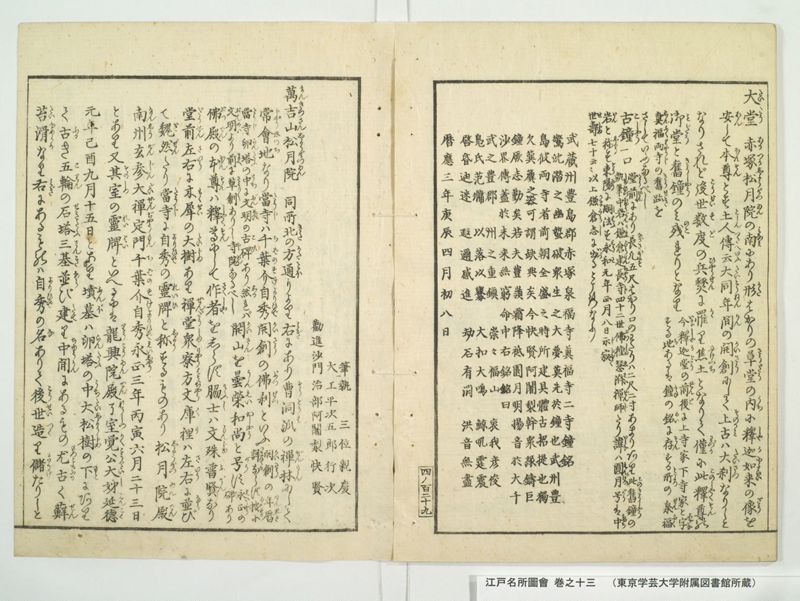
翻刻
【右丁】
大堂(たいたう) 赤塚(あかつか)松月院(しようげつゐん)の南(みなみ)にあり形(かた)はかりの草堂(さうだう)の内(うち)に釈迦如来(しやかによらい)の像(ざう)を
安(あん)して本尊(ほんそん)とす土人(としん)伝云(つたへいふ)大同年間(たいとうねんかん)の開創(かいさう)にして上古(そのかみ)は大刹(たいさつ)なりしと
なりされど後世(こうせい)数度(すど)の兵燹(ひやうせん)に罹(かゝ)り焦土(やけつち)となりて僅(わづか)に此(この)釈尊(しやくそんん)の
御堂(みだう)と旧鐘(きうしやう)のみ残(のこ)れりとなり《割書:今(いま)釈迦堂(しやかだう)の前後(ぜんご)に上寺家下寺家と字(あざな)|する地(ち)あるは鐘(かね)の銘(めい)に存(そん)する所(ところ)の泉福(せんふく) 》
《割書:真福(しんふく)両寺(りやうじ)の旧跡(きうせき)を|さしていふなるべし》
古鐘(こしやう)一口《割書:堂前(たうぜん)にあり長(なかさ)凡(およそ)五尺はかり口のわたりは二尺二寸あまりあり此(この)旧鐘(きうしやう)の|執筆(しゆひつ)中岩(ちゆうがん)は鎌倉(かまくら)建長寺(けんちやうじ)四十二世 仏種慧済禅師(ぶつしゆゑさいぜんじ)たり諱(いみな)は円月(えんげつ)号(がう)は中(ちゆう)》
《割書:岩(がん)と称(しよう)す東陽(とうよう)に嗣法(しはふ)す永和(えうわ)元年正月八日 示寂(じじやく) |世寿(せじゆ)七十云々以上 鎌倉志(かまくらし)に出(いづ)るところなり》
武蔵州豊島郡赤塚泉福寺真福寺二寺鐘銘
驚沈潜之幽蟄破衆生之大夢莫先於鐘也武州豊
島彼両寺者前朝全盛之時所建具體古招提也独
欠簨簾之器可謂缼典矣今快賢阿闍梨幹衆縁鋳巨
鐘厥志勤矣若夫豊嶺霜降祇園月明揚音於大千
沙界伝蓋於未来無窮命中右銘銘曰
武之豊郡 州之重鎮 崇々福山 哀我彦俊
鳧氏范牅 以落以釁 大扣大鳴 鯨吼霆震
啓昏迪迷 遐邇感進 劫石有消 洪音無尽
暦応三年庚辰四月初八日
【左丁】
筆執 三位親慶
大工平次五郎行次
勧進沙門治部阿闍梨快賢
万吉山(まんきつさん)松月院(しようげつゐん) 同所 北(きた)の方(かた)通(とほ)りより右(みぎ)にあり曹洞派(そうとうは)の禅林(ぜんりん)にして
常会地(じやうゑのち)なり当寺(たうじ)は千葉介自秀(ちばのすけよりひで)開創(かいさう)の仏刹(ぶつせつ)といふ《割書:開創(かいさう)の年暦(ねんれき)|詳(つまひらか)ならず按(あんする)に》
《割書:当寺(たうじ)卵塔(らんたふ)の中(うち)に文明(ぶんめい)の古碑(こひ)あり然(しか)れば|文明(ぶんめい)より前(まへ)に草創(さう〳〵)ありし寺院(じゐん)なるべし》開山(かいさん)を雲栄和尚(うんえいおしやう)と号(がう)す《割書:永正(えいしやう)の|碑(ひ)あり》
仏殿(ぶつでん)の本尊(ほんそん)は釈尊(しやくそん)にして作者(さくしや)をしらず脇士(けふし)は文殊(もんじゆ)普賢(ふげん)なり
堂前(だうぜん)左右(さいう)に木犀(もくせい)の大樹(たいじゆ)あり禅堂(ぜんだう)衆寮(しゆりやう)方丈(はうぢやう)庫裡(くり)は左右(さいう)に並(なら)び
て魏然(ぎぜん)たり当寺(たうじ)に自秀(よりひで)の霊牌(れいひ)と称(しよう)するものあり松月院殿(しようげつゐんでん)
南州玄参大禅定門(なんしうげんじんたいぜんぢやうもん)千葉介自秀(ちばのすけよりひで)永正(えいしやう)三年丙寅六月二十三日
とあり又 其室(そのしつ)の霊牌(れいはい)といへるには龍興院殿了室覚公大姉(りうこうゐんでんれうしつかくこうだいし)延徳(えんとく)
元年己酉九月十五日とあり墳墓(ふんぼ)は卵塔(らんたう)の中(うち)大松樹(たいしようじゆ)の下(もと)にあり
て古(ふる)き五輪(こりん)の石塔(せきたう)三基(さんき)並(なら)び建(たて)り中間(ちゆうかん)にあるもの尤(もつとも)古(ふる)く蘚(せん)
苔(たい)滑(なめらか)なり右(みぎ)にあるものは自秀(よりひで)の名(な)ありて後世(こうせい)造(つく)り儲(まうけ)たりしと
現代語訳
## 【右丁】
### 大堂(たいどう)
赤塚・松月院の南にある。形ばかりの粗末な草堂(仮の堂)の中に釈迦如来の像を安置して本尊としている。地元の人々の伝えによれば、大同年間(806〜810年)の開創であり、往古は大きな寺院(大刹)であったという。しかしながら、後世に幾度もの戦火(兵燹)に遭って焼け野原となり、わずかにこの釈尊の御堂と旧来の梵鐘のみが残ったという。
> 【割書】今、釈迦堂の前後に「上寺家」・「下寺家」と呼ばれる地名があるが、これは鐘の銘文に記されている泉福寺・真福寺という両寺の旧跡を指していうのであろう。
---
**古鐘(こしょう)一口**
> 【割書】堂前にある。長さはおよそ五尺ほど、口の直径は二尺二寸余りある。この旧鐘の銘文を執筆した中岩(ちゅうがん)は、鎌倉・建長寺第四十二世の仏種慧済禅師(ぶっしゅえさいぜんじ)である。諱(いみな)は円月(えんげつ)、号は中岩と称し、東陽(とうよう)の法を嗣いだ。永和元年(1375年)正月八日に示寂し、世寿七十云々。以上は『鎌倉志』に記されるところである。
---
**鐘銘(原文漢文)**
> 武蔵州豊島郡赤塚泉福寺・真福寺二寺鐘銘
>
> 沈み潜む幽蟄(ゆうちつ)を驚かし、衆生の大夢を破るには、鐘に先立つものはない。武州豊島の彼の両寺は、前朝(鎌倉幕府)全盛の時に建立された、完備した古い大寺院である。ただ、鐘架(簨簾〔さんれん〕)の器だけが欠けており、典儀を欠くものと言うべきであった。今、快賢阿闍梨が衆縁を取りまとめて巨鐘を鋳造した。その志は勤勉なるかな。豊嶺(ほうれい)に霜が降り、祇園に月明かりが照るとき、その音を大千沙界(三千大千世界)に揚げ、未来永劫に伝わることを命じて、ここに銘を刻む。銘に曰く、
>
> 武の豊郡 州の重鎮 崇々たる福山 哀れなる我が彦俊
> 鳧氏范牅(ふしはんゆう) 以って落とし以って釁(ちぬ)る 大いに扣(たた)けば大いに鳴る 鯨吼(げいこう)し霆(らいてい)震う
> 昏(こん)を啓き迷いを迪(みちび)く 遐邇(かじ)ともに感じ進む 劫石は消えることあれど 洪音(こうおん)は尽きることなし
>
> 暦応三年庚辰(1340年)四月初八日
## 【左丁】
> 筆執 三位親慶
> 大工 平次五郎行次
> 勧進沙門 治部阿闍梨快賢
---
### 万吉山(まんきちさん)松月院(しょうげついん)
同所(赤塚)の、北の通りより右手(東側)にある。曹洞派の禅林(禅宗寺院)であり、常会地(定期的な法会を行う地)でもある。当寺は千葉介自秀(よりひで)が開創した仏刹(寺院)であるという。
> 【割書】開創の年代は詳らかでない。考えるに、当寺の卵塔(墓地)の中に文明年間(1469〜1487年)の古碑があるので、文明より以前に草創された寺院であろう。
開山を雲栄和尚(うんえいおしょう)と号する。
> 【割書】永正年間(1504〜1521年)の碑がある。
仏殿の本尊は釈尊(釈迦如来)であり、作者は不明。脇侍(わきじ)は文殊菩薩・普賢菩薩である。
堂の前の左右に木犀(もくせい)の大木がある。禅堂・衆寮・方丈・庫裡は左右に並んで、威風堂々としている。当寺に自秀の霊牌と称するものがある。
> 「松月院殿 南州玄参大禅定門 千葉介自秀 永正三年丙寅六月二十三日」とある。
また、その室(妻)の霊牌と言われるものには、
> 「龍興院殿了室覚公大姉 延徳元年己酉九月十五日」とある。
墳墓は卵塔(墓地)の中の大きな松の木の下にあり、古い五輪の石塔が三基並んで建てられている。中央にあるものが最も古く、苔が滑らかに生えている。右にあるものは自秀の名があるが、後世に(あらためて)造り設けたものであるという。
英語訳
## 【Right Page】
### Daidō (Great Hall)
This hall is located to the south of Shōgetsu-in in Akatsuka. Inside a humble, makeshift thatched hall, a statue of Śākyamuni Tathāgata (the Buddha) is enshrined as the principal object of worship. According to local tradition, the hall was founded during the Daidō era (806–810), and in ancient times it was a great temple complex (daisatsu). However, in later ages it suffered repeated destruction by the fires of war (heisen), and was reduced to scorched earth; only this hall of the Śākyamuni Buddha and the old temple bell survived.
> [Interlinear note] Today, to the front and rear of the Śākyamuni Hall, there are place names called "Kami-Teraike" (Upper Temple Quarter) and "Shimo-Teraike" (Lower Temple Quarter). These likely refer to the former sites of Senfuku-ji and Shinpuku-ji, the two temples recorded in the bell's inscription.
---
**One Ancient Temple Bell**
> [Interlinear note] Located in front of the hall. Its length is approximately five shaku (ca. 150 cm), and the diameter of its mouth is over two shaku two sun (ca. 67 cm). The author of the inscription on this old bell, Chūgan, was the 42nd abbot of Kenchō-ji in Kamakura, known by the title Busshu Esai Zenji (禅師). His personal name (imina) was Engetsu, and his honorific name (gō) was Chūgan. He inherited the Dharma from Tōyō. He passed away (jijaku) on the eighth day of the first month of Eiwa 1 (1375), at the age of seventy-odd years. The foregoing is recorded in the Kamakurashi (Guide to Kamakura).
---
**Bell Inscription (Original Classical Chinese Text)**
> **Inscription for the Bell of Senfuku-ji and Shinpuku-ji, Two Temples in Akatsuka, Toshima District, Musashi Province**
>
> Nothing surpasses the bell in rousing those who lie dormant in deep slumber and shattering the great dream of all sentient beings. The two temples of Toshima in Musashi Province were built in the height of the previous dynasty (the Kamakura shogunate) and were complete, ancient establishments of great renown. Only the bell frame (sanren) was lacking, which may be said to have been a deficiency in ritual propriety. Now, Ajari Kaiken has gathered support from the community and cast a great bell. How diligent his aspirations! When frost falls upon the fertile peaks and moonlight illuminates the Gion quarter, may its sound resound throughout the three-thousand great-thousand worlds and be transmitted through all future ages without end. Hereupon I am commanded to compose the right inscription. The inscription reads:
>
> The fertile district of Musashi Province — a great bastion of the land — the soaring blessed mountain — lamenting our beloved Hikotoshi.
> Cast by the bell-founder's art, consecrated and dedicated — strike it greatly and it sounds greatly — roaring like a whale, thundering like lightning.
> Enlightening the benighted and guiding the lost — those near and far alike are moved and inspired — though the kalpic stone may wear away — this great sound shall never be exhausted.
>
> The eighth day of the fourth month of Kōryaku 3, the year Kōshin (1340)
## 【Left Page】
> Scribe: Sanmi Chikakei (三位親慶)
> Master Craftsman: Heijirō Yukitsugu (平次五郎行次)
> Soliciting Monk: Jibū Ajari Kaiken (治部阿闍梨快賢)
---
### Mankichi-zan Shōgetsu-in (万吉山 松月院)
Located in the same area (Akatsuka), to the right (east) of the road from the north. It is a Zen temple of the Sōtō sect (Sōtō-ha), and serves as a regular assembly ground (jōe-no-chi). The temple is said to have been founded by Chiba-no-suke Yorihide.
> [Interlinear note] The exact year of founding is not known with certainty. Upon investigation, there is an ancient stone monument from the Bunmei era (1469–1487) within the temple's burial ground (rantō), suggesting that the temple was established before the Bunmei era.
The founder-monk (kaisan) is known by the name Priest Un'ei (Uneī Oshō).
> [Interlinear note] There is a stone monument from the Eishō era (1504–1521).
The principal image in the main hall is Śākyamuni Buddha; the sculptor is unknown. The flanking attendant bodhisattvas (kyōji) are Mañjuśrī (Monju) and Samantabhadra (Fugen).
To the left and right in front of the hall stand large osmanthus trees (mokusei). The meditation hall (zendō), monks' quarters (shūryō), abbot's quarters (hōjō), and kitchen quarters (kuri) stand side by side in an imposing manner. Within the temple there is a memorial tablet (reihai) said to belong to Yorihide:
> "Shōgetsu-in-dono Nanshū Genjin Daizenjōmon, Chiba-no-suke Yorihide, the twenty-third day of the sixth month of Eishō 3, the year Hinoe-Tora (1506)."
There is also a memorial tablet said to belong to his wife:
> "Ryūkō-in-dono Ryōshitsu Kakukō Daishi, the fifteenth day of the ninth month of Entoku 1, the year Tsuchinoto-Tori (1489)."
The graves are located beneath a great pine tree within the burial ground (rantō), where three ancient five-tiered stone stupas (gorin no sekitō) stand in a row. The one in the center is the oldest, smoothly covered in moss. The one on the right bears Yorihide's name, but it is said to have been newly erected in later times.