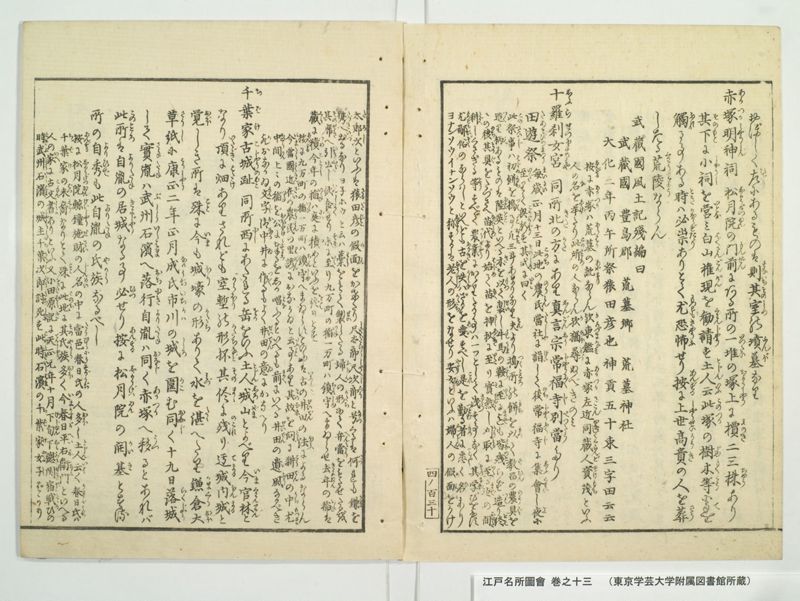
翻刻
【右丁】
おぼしく左(ひだり)にあるものは則(すなはち)其室(そのしつ)の墳墓(ふんぼ)なり
赤塚明神祠(あかつかみやうじん ) 松月院(しようげつゐん)の門前(もんぜん)にある所の一堆(いつたい)の塚土(ちようしやう)に檟(えのき)二三株( ちゆう)あり
其下(そのもと)に小祠(しようし)を営(いとな)み白山権現(はくさんごんげん)を勧請(くわんじやう)す土人云(とじんいふ)此塚(このつか)の樹木(じゆもく)等(とう)に手(て)を
触(ふれ)る事ある時(とき)は必(かならず)祟(たゝり)ありとて尤(もつとも)恐怖(きやうふ)せり按(あんずる)に上世(しやうせい)高貴(かうき)の人を葬(さう)
したる荒陵(くわうりよう)ならん
武蔵国風土記残編曰
武蔵国 豊島郡 荒墓郷 荒墓神社
大化二年丙午所祭猿田彦也神貢五十束三字田云云
《割書:按(あんずる)に赤塚(あかつか)は荒墓(あらはか)の訛(あやまり)ならん欤(か)東鑑(あづまかゞみ)に赤塚左近(あかつかさこん)同(おなじく)蔵人資茂(くらんどすけもち)といふ|人の名(な)を挙(あげ)たり此所(このところ)の人ならん欤(か)猶(なほ)尋(たづ)ぬべきのみ》
十羅刹女宮(しふらせつによのみや) 同所 北(きた)の方(かた)にあり真言宗(しんごんしう)常福寺(じやうふくじ)別当(べつたう)たり
田遊祭(たあそびのまつり)《割書:毎歳(まいさい)正月十三日 此地(このち)の農民(のうみん)当社(たうしや)に詣(けい)して後(のち)常福寺(じやうふくじ)に集会(しふくわい)し夜(よ)に|至(いた)りて興行(こうぎやう)す其式(そのしき)に曰(いは)く》
《割書:此(この)祭事(さいじ)は初(はじめ)餅(もち)を搗(つく)事(こと)凡(およそ)三斗あまりなり夫(それ)より搗所(つくところ)の餅(もち)を以(もつ)て数品(すひん)の農具(のうぐ)を|造(つく)り柄(え)あるものは陸英(にはとこ)といへる木(き)を以(もつ)て製(せい)し牛馬(うしうま)の鞍(くら)に至(いた)る迄(まで)も皆(みな)残(のこ)らず造(つく)り終(をえ)》
《割書:□#1の後(のち)其具(そのぐ)をたづさへ苗代(なはしろ)より始(はじめ)て苗(なへ)を挿(さし)秋(あき)に至(いた)り実(み)熟(じゆく)し刈取(かりとる)に至(いた)る迄(まで)の間(あいた)|耕(たがへ)しくさぎる等(とう)すべて農業(のうぎやう)にかゝりたる事は一ッとして洩(もら)す事なく其(その)学(まな)びをなす》
《割書:尤(もつとも)鄙俗(ひぞく)のならはしといへども古(ふるき)を失(うしな)はざるを愛(あい)すべし是(これ)を勤(つとむ)る者(もの)に悉(こと〴〵)く名(な)あり|ヨナンソウイナンソウと称(しよう)するは老人(らうじん)の形(かたち)をなせり安女(やすめ)といふは婦人(ふじん)の假面(めん)をかけ》
【左丁】
《割書:太郎次(たろじ)といふは猿田彦(さるだひこ)の假面(めん)をかけたり尺太郎(しやくたらう)尺次郎(しやくじらう)と号(なつ)くるも何(いづ)れも鎌(かま)を|携(たづさ)へ出(いづ)るなりヨネホウと云は藁(わら)をもて製(せい)したる婦人(ふじん)の形(かたち)にて弁当(べんたう)をもたせたるを》
《割書:其席(そのせき)へ引出(ひきいだ)し飲食(いんしよく)せり末(すゑ)に至(いた)り九万町の稲(いね)一万町は鎮守(ちんしゆ)へまゐらせ去年(きよねん)の稲(いね)は|蔵(くら)に積(つめ)今年(ことし)の稲(いね)は庭(には)に積(つ)めといふを終(をは)りとす》
《割書:按(あんする)に九万町の稲(いね)一万町は鎮守(ちんしゆ)へまゐらすといふは古(いにしへ)の井田(せいでん)の法(ほふ)によるならん|今(いま)当国(たうこく)近在(きんざい)の農民(のうみん)の里諺(りげん)におなかゐと云事(いふこと)あり其故(そのゆゑ)を問(とふ)に耕田(こうでん)の中(うち)尤(もつとも)》
《割書:中間(ちゆうかん)上々の稲(いね)を公(おほやけ)に奉(たてまつ)るをしか唱(とな)ふるといへるも前(まえ)にいへる井田(せいでん)の遺風(いふう)なるべき|欤(か)おなかゐ文字(もんじ)御中井(おなかゐ)に作(つく)るもよく井田(せいでん)の意(ゐ)にかなへり》
千葉家古城趾(ちばけこじやうのあと)同所 西(にし)にあたれる岳(をか)をいふ土人(とじん)城山(しろやま)とよべり今(いま)官林(くわんりん)と
なり頂(いたゞき)に畑(はたけ)ありされども空塹(からほり)の形(かたち)抔(など)其侭(そのまゝ)に残(のこれ)り迃城(てまる)内城(ほんまる)と
覚(おぼ)しき所は殊(こと)に今(いま)も城壕(ほり)の形(かたち)ありて水(みづ)を湛(たゝ)へたり鎌倉大(かまくらおほ)
草紙(さうし)に康正(こうしやう)二年正月 成氏(なりうぢ)市川(いちかは)の城(しろ)を圍(かこ)む同(おなじ)く十九日 落城(らくじやう)
して実胤(さねたね)は武州(ぶしう)石浜(いしはま)へ落行(おちゆき)自胤(よりたね)は同(おなじ)く赤塚(あかつか)へ移(うつ)るとあれば
此所(このところ)は自胤(よりたね)の居城(きよじやう)なる事 必(ひつ)せり按(あんずる)に松月院(しようげつゐん)の開基(かいき)とする
所の自秀(よりひで)も此 自胤(よりたね)の氏族(やから)なるべし
《割書:按(あんずる)に松月院(しようげつゐん)鯨鐘(けいしやう)施財(せさい)の人名(じんめい)の中に当邑(たうむら)春日氏(かすがうぢ)の人 多(おほ)し土人(とじん)云(いは)く春日氏(かすがうち)は|千葉家(ちばけ)の末裔(ばつえう)なりとて殊(こと)に此地(このち)に其(その)氏族(やから)多(おほ)く今(いま)春日平右衛門(かすがへいゑもん)といへる》
《割書:人の家(いへ)に古文書(こもんしよ)ありといふ又 小田原記(をだはらき)に天正(てんしやう)元年十月 下旬(げじゆん)下総(しもふさ)関宿(せきやど)戦(たゝか)ひの|時(とき)武州(ぶしう)石浜(いしはま)の城主(じやうしゆ)千葉次郎(ちはじらう)討死(うちしに)す此時(このとき)石浜(いしはま)の千葉家(ちばけ)女子(によし)ばかり》
現代語訳
## 【右丁】
(前ページより続き)…と思われる。左にあるものは、則ち其の室(妻)の墳墓である。
---
### 赤塚明神祠(あかつかみょうじん)
松月院の門前にある一つの塚(土盛り)に、エノキが二、三株ある。その根元に小さな祠を設けて、白山権現を勧請している。地元の人々が言うには、この塚の樹木などに手を触れることがあると、必ず祟りがあるとして、非常に恐れている。考えるに、往古に高貴な人物を葬った古墳(荒陵)であろう。
**『武蔵国風土記残編』に曰く:**
> 武蔵国 豊島郡 荒墓郷 荒墓神社
> 大化二年丙午に祭るところは猿田彦なり。神貢五十束、三字田、云々。
> 【割書】考えるに、「赤塚(あかつか)」は「荒墓(あらはか)」の訛りであろうか。『吾妻鏡』に「赤塚左近」、同じく「蔵人資茂(くらんどすけもち)」という人の名が挙げられている。この地の人であろうか。なお、調べるべきことである。
---
### 十羅刹女宮(じゅうらせつにょのみや)
同所(赤塚)の北の方にある。真言宗・常福寺が別当を務める。
**田遊び祭(たあそびのまつり)**
> 【割書】毎年正月十三日、この地の農民が当社に参詣した後、常福寺に集まり、夜に至って行事が催される。その式次第は以下の通りである。
> 【割書】この祭事では、まず餅を搗くことおよそ三斗あまりである。それより搗いた餅をもって、数種類の農具を作る。柄のあるものはニワトコという木をもって製し、牛馬の鞍に至るまでも、皆残らず作り終える。
> 【割書】その後、その農具を携えて、苗代より始まり、苗を挿し、秋に至って実が熟し刈り取るに至るまでの間、耕すこと・草を刈ること等、すべて農業に関わることは一つとして漏らすことなく、その学び(所作の模倣)を行う。
> 【割書】誠に田舎の素朴な風習とはいえ、古い習わしを失わないことは愛でるべきことである。これを務める者にはそれぞれ名前がある。「ヨナンソウ・イナンソウ」と称するのは老人の姿をする役である。「安女(やすめ)」というのは婦人の仮面をかけ、
## 【左丁】
> 【割書】「太郎次(たろじ)」というのは猿田彦の仮面をかける。「尺太郎(しゃくたろう)・尺次郎(しゃくじろう)」と名乗る者も何れも鎌を携えて出る。「ヨネホウ」というのは藁をもって製した婦人の形で、弁当を持たせたものを
> 【割書】その席へ引き出し飲食する。終わりに至り、「九万町の稲、一万町は鎮守へ参らせ、去年の稲は蔵に積め、今年の稲は庭に積め」と言うのを終わりとする。
> 【割書】考えるに、「九万町の稲、一万町は鎮守へ参らせる」というのは、古代の井田(せいでん)の法によるものであろう。今、当国近在の農民の里諺に「おなかゐ」という言葉がある。その理由を問えば、耕田の中でもっとも中間で上々の稲を公に奉るのをそう唱えるというが、これも前に述べた井田の遺風であろうか。「おなかゐ」の文字を「御中井(おなかゐ)」と書くことも、よく井田の意にかなっている。
---
### 千葉家古城趾(ちばけこじょうのあと)
同所(赤塚)の西にあたる丘(岡)のことをいう。地元の人々は「城山(しろやま)」と呼んでいる。今は官林となっており、頂上に畑がある。しかしながら、空堀(からほり)の形などはそのままに残っており、出丸・本丸と思われる所は特に今も城壕(堀)の形があって水をたたえている。
『鎌倉大草紙』に、康正二年(1456年)正月、成氏が市川の城を囲み、同じく十九日に落城して、実胤(さねたね)は武州・石浜へ落ち行き、自胤(よりたね)は同じく赤塚へ移ったとあるので、この所は自胤の居城であることは間違いない。考えるに、松月院の開基とする所の自秀(よりひで)も、この自胤の一族であろう。
> 【割書】考えるに、松月院の梵鐘施財の人名の中に当村の春日氏の人が多い。地元の人々が言うには、春日氏は千葉家の末裔であるとして、特にこの地にその一族が多く、今、春日平右衛門という人の家に古文書があるという。また、『小田原記』に、天正元年(1573年)十月下旬、下総・関宿の合戦の時、武州・石浜の城主・千葉次郎が討ち死にした。この時、石浜の千葉家は女子ばかり(で)
英語訳
## 【Right Page】
(Continued from previous page) …it appears to be so. The one on the left is then the grave of his wife.
---
### Akatsuka Myōjin Shrine (赤塚明神祠)
In front of the gate of Shōgetsu-in, there is a mound of earth upon which two or three hackberry trees (enoki) stand. At the base of these trees, a small shrine has been established, and Hakusan Gongen has been enshrined therein. The local people say that if anyone should touch the trees or other vegetation of this mound, a divine curse (tatari) will certainly befall them, and thus they hold it in great dread. Upon reflection, this is likely an ancient burial mound (kōryō) in which a person of high rank was interred in antiquity.
**As recorded in the "Musashi no Kuni Fudoki Zanpen" (Remaining Fragments of the Musashi Provincial Gazetteer):**
> Musashi Province, Toshima District, Aramaka Township, Aramaka Shrine.
> In the second year of Taika (646), the year Hinoe-Uma, the deity enshrined was Saruta-hiko. Divine tribute: fifty bundles, three-character field (田), et cetera.
> [Interlinear note] Upon reflection, "Akatsuka" (赤塚) may be a corruption of "Aramaka" (荒墓, "rough tomb"). In the Azuma Kagami, the names "Akatsuka Sakon" and "Kurando Sukemochi" are mentioned; these may have been people from this area. The matter warrants further investigation.
---
### Jūrasetsunyō-no-miya (十羅刹女宮, Shrine of the Ten Rākṣasī)
Located to the north of the same area (Akatsuka). The Shingon-sect temple Jōfuku-ji serves as its bettō (administrative temple).
**Ta-asobi Festival (田遊び祭, Agricultural Ritual)**
> [Interlinear note] Each year on the thirteenth day of the first month, the farmers of this area first visit the shrine, then gather at Jōfuku-ji, and perform the ceremony into the night. The procedure is as follows:
> [Interlinear note] This festival begins with the pounding of approximately three to (roughly 54 liters) of rice cakes (mochi). From these pounded cakes, a variety of farming implements are fashioned. Those requiring handles are made using elderwood (niwatoko). Even saddles for cattle and horses are made in their entirety, without exception.
> [Interlinear note] After this, carrying the implements, the participants reenact every stage of the agricultural cycle from start to finish — beginning with the seedbed, transplanting seedlings, through to the autumn ripening and harvest — including all tasks such as plowing, weeding, and every other agricultural activity, omitting not a single one.
> [Interlinear note] Though it is a rustic rural custom, it is admirable that the old traditions have not been lost. Each performer has a name. Those called "Yonan-sō" and "Inan-sō" play the role of elderly persons. The one called "Yasume" wears a woman's mask;
## 【Left Page】
> [Interlinear note] the one called "Taroji" wears the mask of Saruta-hiko. Those named "Shaku-tarō" and "Shaku-jirō" each carry a sickle as they appear. "Yonehō" is a figure of a woman fashioned from straw, made to carry a lunch box (bentō), which is
> [Interlinear note] brought out to the gathering and shared in eating and drinking. At the conclusion, the following words are spoken as the finale: "Of ninety thousand chō of rice, ten thousand chō shall be offered to the guardian shrine; last year's rice, pile it in the storehouse; this year's rice, pile it in the garden."
> [Interlinear note] Upon reflection, the saying "of ninety thousand chō of rice, ten thousand chō shall be offered to the guardian shrine" likely derives from the ancient well-field system (seiden no hō). Today, among the farmers of the nearby villages of this province, there is a saying in local parlance called "onakawi." When asked its origin, it is said that the finest grain harvested from the central portion of the cultivated fields is offered to the authorities, and this is what the saying refers to — which also suggests it is a surviving custom from the well-field system mentioned above. Writing the word "onakawi" as "御中井" (Honorable Central Well) also fits well with the meaning of the well-field (seiden) system.
---
### Former Castle Site of the Chiba Clan (千葉家古城趾)
This refers to the hill (oka) to the west of the same area (Akatsuka). The local people call it "Shiroyama" (Castle Mountain). It is now government-managed forest, and there are fields on its summit. Nevertheless, the forms of the dry moats (karahori) remain as they were, and the areas that appear to have been the outer enclosure (demaru) and main keep (honmaru) still retain the form of castle ditches (hori) even today, holding water within them.
In the Kamakura Ōsōshi (鎌倉大草紙, "Great Kamakura Miscellany"), it is recorded that in the first month of Kōshō 2 (1456), Shigeuji (成氏) besieged the castle at Ichikawa; on the nineteenth of the same month, the castle fell; Sanetane (実胤) fled to Ishibama in Musashi Province, and Yoritane (自胤) likewise moved to Akatsuka. It is therefore certain that this location was Yoritane's residential castle. Upon reflection, Yorihide (自秀), said to be the founder of Shōgetsu-in, must also have been a member of Yoritane's clan.
> [Interlinear note] Upon reflection, among the names of those who donated to the casting of the bell at Shōgetsu-in, there are many people of the Kasuga clan from this village. The local people say that the Kasuga clan are descendants of the Chiba family, and indeed many of their kin reside in this area. It is said that a man named Kasuga Heiemon currently holds ancient documents in his home. Furthermore, in the Odawara-ki (小田原記, "Record of Odawara"), it is recorded that in the tenth month of Tenshō 1 (1573), during the Battle of Sekiyado in Shimousa Province, Chiba Jirō, the lord of Ishibama Castle in Musashi Province, was killed in battle. At this time, the Chiba clan of Ishibama was left with only women…