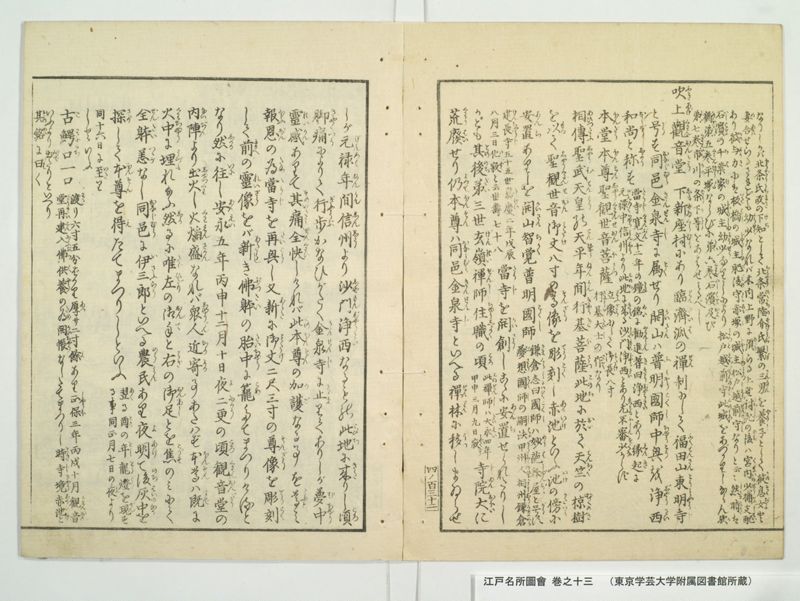
翻刻
【右丁】
《割書:なりしかば北条氏政(ほうでううぢまさ)の下知(けぢ)として北条常陸介氏繁(ほうでうひたちのすけうぢしげ)の三男(さんなん)を養子(やうし)として彼(かの)息女(そくぢよ)と|妻合(めあは)せらるされども幼少(ようせう)なれば木内上野に預(あつけ)らる上野 討死(うちしに)の後(のち)は宮内少輔(くないのせういふ)支配(しはい)》
《割書:あり彼(かの)与力(よりき)には板橋(いたはし)の城主(じやうしゆ)肥後守(ひごのかみ)赤塚(あかつか)の城主(じやうしゆ)松戸越前守(まつとえちぜんのかみ)なりと云々 然時(しかるとき)は|石浜(いしはま)の千葉家(ちはけ)の城主(じやうしゆ)幼少(ようせう)なりしにより松戸越前守(まつとえちぜんのかみ)此城(このしろ)をあづかりしならん欤(か)》
《割書:猶(なほ)弟五巻(だい くわん)平塚(ひらつか)ならびに弟六巻(だい くわん)石浜(いしはま)及(およ)び|弟七巻(だい くわん)市川(いちかは)の条下(でうか)等(とう)をあはせみるべし》
吹上観音堂(ふきあげくわんおんだう) 下新座村(しもにゐくらむら)にあり臨済派(りんざいは)の禅刹(せん )にして福田山(ふくてんさん)東明寺(とうみやうじ)
と号(がう)す同邑(おなじむら)金泉寺(きんせんじ)に属(そく)せり開山(かいさん)は普明国師(ふみやうこくし)中興(ちゆうこう)を浄西(じやうさい)
和尚(おしやう)と称(しよう)す《割書:当寺(たうじ)寛文(くわんぶん)十二年の鐘(かね)の銘(めい)に勧進(くわんしん)耆旧(ききう)浄西(じやうさい)とあり縁起(えんき)に|元禄中(げんろくちゆう)信州(しんしう)より此地(このち)に来(きた)る沙門(しやもん)浄西(じやうさい)とあり尤(もつとも)不審(ふしん)少(すくな)からず》
本堂本尊(ほんだうほんそん)聖観世音菩薩(しやうくわんせおんほさつ)《割書:立像(りふざう)にして御長(みたけ)八寸|行基大士(ぎやうきたいし)の作(さく)なり》
相伝(あひつたふ)聖武天皇(しやうむてんわう)の天平年間(てんひやうねんかん)行基菩薩(きやうきほさつ)此地(このち)に於(おい)て天竺(てんちく)の椋樹(むくのき)
を以(もつ)て聖観世音(しやうくわんせおん)御丈(みたけ)八寸の尊像(そんざう)を彫刻(てうこく)し赤池(あかいけ)といふ池(いけ)の傍(かたはら)に
安置(あんち)ありしを開山(かいさん)智覚普明国師(ちかく こくし)《割書:鎌倉志曰(かまくらしにいはく)国師(こくし)は妙葩春屋(めうはしゆんおく)と号(がう)す|夢想国師(むさうこくし)の嗣法(しはふ)甲州人(かうしうのひと)相州(さうしう)鎌倉(かまくら)》
《割書:建長寺(けんちやうじ)五十五世 嘉慶(かけい)二年戊辰|八月三日 化寂(けしやく)と云世寿七十八》当寺(たうじ)を開創(かいさう)しこゝに安置(あんち)せられたりし
かども其後(そののち)弟三世(だい )玄嶺禅師(げんれいぜんし)住職(ちゆうしよく)の頃(ころ)《割書:此(この)禅師(せんし)は大永(たいえい)四年|甲申三月九日 寂(しやくす)》寺院(じゐん)大(おほい)に
荒廃(くわうはい)せり仍(よつて)本尊(ほんそん)は同邑(おなしむら)金泉寺(きんせんじ)といへる禅林(せんりん)に移(うつ)しまゐらせ
【左丁】
しが元禄年間(げんろくねんかん)信州(しんしう)より沙門(しやもん)浄西(じやうさい)なるもの此地(このち)に来(きた)りし頃(ころ)
脚痛(きやくつう)によりて行歩(ぎやうぶ)かなひがたく金泉寺(きんせんじ)に止(とゞま)りてありしが夢中(むちゆう)
霊感(れいかん)ありて其痛(そのいたみ)全快(ぜんくわい)しければ此(この)本尊(ほんそん)の加護(かご)なる事を尊(たふと)み
報恩(ほふおん)の為(ため)当寺(たうじ)を再興(さいこう)し又 新(あらた)に御丈(みたけ)二尺三寸の尊像(そんざう)を彫刻(てうこく)
して前(まへ)の霊像(れいざう)をば新(あたらし)き仏体(ぶつたい)の胎中(たいちゆう)に籠(こめ)たてまつりけると
なり然(しかる)に往(いに)し安永(あんえい)五年丙申十二月十日 夜(よ)二更(にかう)の頃(ころ)観音堂(くわんおんだう)の
内陣(ないぢん)より出火(しゆつくわ)し火焔(くわえん)盛(さかん)なれば衆人(しゆうじん)近寄(ちかよる)事あたはず本尊(ほんそん)は既(すで)に
火中(くわちゆう)に埋(うづも)れ給ふ然(しか)るに唯(たゞ)左(ひだり)の御手(おんて)と右(みぎ)の御足(おんあし)とを焦(こがす)のみにて
全体(ぜんたい)恙(つゝが)なし同邑(おなじむら)に伊三郎(いさふらう)といへる農民(のうみん)あり夜明(よあけ)て後(のち)灰中(はいのなか)を
探(さが)して本尊(ほんそん)を得(え)たてまつりしといふ《割書:翌(あく)る酉(とり)の年(とし)龍燈(りうたう)を現(げん)す|る事同正月七日の夜(よ)より》
《割書:同十六日に至(いた)り|しといふ》
古鰐口(こわにくち)一口《割書:渡(わた)り六寸五分ばかり厚(あつ)さ二寸余( よ)あり正保(しやうほ)三年丙戌十月 観音(くわんおん)|堂(だう)再建(さいこん)入仏(にふぶつ)供養(くやう)の為(ため)開帳(かいちやう)なしたてまつりし時(とき)寺境(じきやう)赤池(あかいけ)と》
《割書:いふより出(いで)たりといへり|其銘(そのめい)に曰(いは)く》
現代語訳
## 【右丁】
*(前ページからの割注の続き)*
> 〔北条氏政の下知により、北条常陸介氏繁の三男を養子として、その息女と妻合わせられた。しかしながら幼少であったため、木内上野介に預けられた。上野介が討死した後は、宮内少輔の支配となった。〕
> 〔その与力(配下の武将)には、板橋の城主・肥後守、赤塚の城主・松戸越前守がいたと伝えられる。そのような事情から、石浜の千葉家の城主が幼少であったため、松戸越前守がこの城を預かっていたのであろうか。〕
> 〔なお、第五巻の平塚、ならびに第六巻の石浜、および第七巻の市川の条項などを合わせてご覧いただきたい。〕
---
### 吹上観音堂
下新座村にある。臨済派の禅刹であり、福田山東明寺と号する。同じ村の金泉寺に属している。開山は普明国師、中興を浄西和尚と称する。
> 〔当寺の寛文十二年(1672)の鐘の銘には「勧進耆旧浄西」とある。また縁起には「元禄年中、信州よりこの地に来る沙門浄西」とある。大いに不審な点が少なくない。〕
本堂の本尊は聖観世音菩薩である。
> 〔立像にして御丈八寸、行基大士の作である。〕
伝えによれば、聖武天皇の天平年間(729〜749)に、行基菩薩がこの地において天竺(インド)の椋樹(むくのき)をもって聖観世音・御丈八寸の尊像を彫刻し、赤池という池のほとりに安置された。その後、開山・智覚普明国師が
> 〔『鎌倉志』にいう:国師は妙葩春屋と号す。夢窓国師の嗣法、甲州の人。相州鎌倉・建長寺五十五世。嘉慶二年(1388)戊辰八月三日化寂。世寿七十八歳。〕
当寺を開創し、ここに安置された。しかしその後、第三世・玄嶺禅師が住職の頃
> 〔この禅師は大永四年(1524)甲申三月九日に入寂した。〕
寺院は大いに荒廃した。そのため本尊は、同じ村の金泉寺という禅林に移し申し上げた。
---
## 【左丁】
ところが元禄年間(1688〜1704)に、信州より浄西という沙門がこの地に来た頃、脚の痛みにより歩行がままならず、金泉寺に留まっていたところ、夢の中で霊感があり、その痛みが全快した。そこで、この本尊の加護によるものと尊び、報恩のために当寺を再興し、また新たに御丈二尺三寸の尊像を彫刻して、以前の霊像を新しい仏体の胎内に籠め奉ったということである。
ところが、昔の安永五年(1776)丙申十二月十日、夜の二更(午後10時頃)の頃、観音堂の内陣より出火し、火焔が盛んであったため、人々は近寄ることができなかった。本尊はすでに火の中に埋もれてしまわれた。しかるに、ただ左の御手と右の御足を焦がすのみで、全体は恙なく無事であった。同じ村に伊三郎という農民がいて、夜が明けた後、灰の中を探して本尊を得たてまつったという。
> 〔翌る酉の年(安永六年・1777)、龍燈が現れること、同年正月七日の夜より同十六日に至るまでのことであったという。〕
---
**古鰐口(こわにぐち)一口**
> 〔渡り六寸五分ほど、厚さ二寸余りあり。正保三年(1646)丙戌十月、観音堂再建・入仏供養のために開帳が行われた際、寺境内の赤池というところより出たと伝えられる。その銘にいう:〕
英語訳
## 【Right Page】
*(Continuation of the split annotations from the previous page)*
> [By order of Hōjō Ujimasa, the third son of Hōjō Hitachi-no-suke Ujishige was taken as an adopted son and wed to the daughter of the Chiba clan. However, as he was still young, he was placed in the care of Kiuchi Kōzuke-no-suke. After Kōzuke-no-suke died in battle, the domain came under the control of Kunai-no-shōyu.]
> [Among his yoriki (subordinate warriors) were said to be the lord of Itabashi Castle, Higo-no-kami, and the lord of Akatsuka Castle, Matsudo Echizen-no-kami. Given these circumstances, since the lord of the Chiba clan's castle at Ishihama was still a child, it was likely Matsudo Echizen-no-kami who held the castle in trust.]
> [For further reference, please also consult the entries on Hiratsuka in Volume 5, Ishihama in Volume 6, and Ichikawa in Volume 7.]
---
### Fukiage Kannon-dō (Fukiage Kannon Hall)
Located in Shimo-Niikura Village. It is a Zen temple of the Rinzai sect, known as Fukudenzan Tōmyō-ji. It is affiliated with Kinsenji Temple in the same village. The founding priest (kaisan) is Fumyō Kokushi; the priest who restored it (chūkō) is known as Jōsai Oshō.
> [The inscription on the bell of this temple, dated Kanbun 12 (1672), reads "Kanjin Kikyū Jōsai." The temple's engi (founding legend), however, states "Samon Jōsai, who came to this place from Shinshū Province during the Genroku era." This is not without considerable suspicion.]
The principal image (honzon) of the main hall is the Shō Kanzeon Bosatsu (Holy Kannon Bodhisattva).
> [A standing image (ryūzō) of eight sun (approx. 24 cm) in height, the work of the Great Bodhisattva Gyōki.]
According to tradition, during the Tenpyō era (729–749) of Emperor Shōmu's reign, the Bodhisattva Gyōki carved a standing image of the Holy Kannon, eight sun in height, from a muku tree (Japanese hackberry) said to originate from Tenjiku (India), and enshrined it beside a pond called Akaike. Later, the founding priest, Chikaku Fumyō Kokushi,
> [According to the *Kamakurashi* (Record of Kamakura): The Kokushi was also known by the name Myōha Shun'oku. He was a dharma successor of Musō Kokushi, a native of Kōshū Province. He served as the 55th abbot of Kenchōji Temple in Kamakura, Sōshū Province. He passed away on the third day of the eighth month of Kakei 2 (1388), the year of Tsuchinoto-tatsu. His age at death was seventy-eight.]
founded this temple and enshrined the image here. However, during the tenure of the third-generation head priest, Zen Master Genrei,
> [This Zen master passed away on the ninth day of the third month of Daiei 4 (1524), the year of Kinoe-saru.]
the temple fell into great disrepair. Consequently, the principal image was transferred to Kinsenji, a Zen temple in the same village.
---
## 【Left Page】
During the Genroku era (1688–1704), a Buddhist monk named Jōsai came to this place from Shinshū Province. Suffering from pain in his legs, he was unable to walk properly and stayed at Kinsenji. While there, he received a spiritual revelation in a dream, and his pain was completely healed. Moved by this as evidence of the principal image's divine protection, he revered it deeply and, out of gratitude, restored the temple. He also newly carved a standing image of two shaku three sun (approx. 70 cm) in height, and enshrined the original sacred image within the body (taichū) of the new statue.
However, on the night of the tenth day of the twelfth month of An'ei 5 (1776), the year of Hinoe-saru, around the second watch of the night (approximately 10 p.m.), a fire broke out from the inner sanctuary (naijin) of the Kannon Hall. The flames were so fierce that no one could approach. The principal image was already engulfed in the fire. Yet miraculously, only the left hand and the right foot were scorched; the rest of the statue was entirely unharmed. A farmer in the same village named Isaburo searched through the ashes after dawn and recovered the principal image.
> [In the following year of the Rooster (An'ei 6, 1777), a "dragon lantern" (ryūtō — a mysterious light associated with divine manifestation) appeared, from the night of the seventh day of the first month of that year continuing through to the sixteenth day, it is said.]
---
**One ancient waniuchi (鰐口, temple gong disc)**
> [Approximately six sun five bu (approx. 20 cm) across, over two sun (approx. 6 cm) thick. It is said that when the Kannon Hall was rebuilt and an opening ceremony (kaicho) was held for the enshrinement of the Buddha in the tenth month of Shōho 3 (1646), the year of Hinoe-inu, this gong emerged from the Akaike pond within the temple grounds. Its inscription reads:]