翻刻
【右丁】
無量山(むりやうさん)伝通院(でんつうゐん) 寿経寺(じゆきやうじ)と号(がう)す小石川(こいしかは)牛天神(うしてんしん)乾(いぬゐ)の方(かた)二町ばかりに
あり浄家(じやうけ)十八檀林(しふはちだんりん)の一員(いちゐん)なり本尊(ほんぞん)阿弥陀如来(あみだによらい)は恵心僧都(ゑしんそうづ)の作(さく)
にして当寺(たうじ)は明徳年間(めいとくねんかん)了誉上人(れうよ )開創(かいさう)せられし梵刹(ぼんせつ)たり《割書:寮舎(りやうしや)百余(ひやくよ) |宇(う)あり》
御霊屋( れいや) 《割書:伝通院殿(でんつうゐんてん)の御霊屋( れいや)なり御遺言(ごゆゐげん)に依(よつ)て 御廟(ごびやう)を建(たて)られ|御法号(ごはふがう)をとりて寺(てら)の号(がう)に呼(よば)せらる 御尊骸(ごそんがい)は同所(どうしよ)宗慶寺(そうけいじ)に納(をさ)め》
《割書:奉(たてまつ)る和漢三才図会(わかんさんさいづゑ)に慶長(けいちやう)|七年壬寅八月二十九日 逝去(せいきよ)とあり》 開山堂(かいさんだう) 《割書:本堂(ほんたう)の右|にあり》八幡宮(はちまんぐう)《割書:同所にあり天正年間(てんしやう )一老( らう)|翁(をう)夢想(むさう)に依(よつ)て八幡宮(はちまんくう)の》
《割書:文字(もんじ)ある石(いし)の額(がく)を得(え)たり|別当(べつたう)は景久院(けいきうゐん)と号(がう)す》弁財天祠(べんさいてんのほこら)《割書:当社(たうしや)はもと白山御殿(はくさんごてん)の地(ち)にありて白山(はくさん)氷川(ひかは)と|共(とも)にならびてありしが女体権現(によたいごんげん)の宮(みや)は此地(このち)にうつ》
《割書:して弁天(べんてん)に勧請(くわんじやう)|なし奉るといへり》多久蔵主稲荷社(たくざうすいなりのやしろ)《割書:境内(けいだい)裏門(うらもん)の方にあり往古(そのかみ)狐(きつね)僧(そう)に化(け)し自(みづか)ら|多久蔵主(たくざうす)と称(しよう)して夜(よ)な〳〵学寮(かくりやう)に来(きた)り法(はふ)を》
《割書:論(ろん)すといへり後(のち)に稲荷(いなり)に勧請(くわんじやう)|して当寺(たうじ)の護法神(ごはふしん)とせり》常念仏堂(じやうねんぶつたう)《割書:塔中(たつちゆう)真珠院(しんじゆゐん) |の持(もち)なり》新念仏堂(しんねんぶつだう)《割書:同じく瑞真院(ずゐしんゐん)|の持(もち)なり》
大黒天(たいこくてん)《割書:寺中(じちゆう)福聚院(ふくじゆゐん)にあり菊岡沾凉(きくをかせんりやう)云く初(はじめ)井(ゐ)を掘(ほる)とて其(その)土中(とちゆう)より此(この)尊像(そんざう)を得(え)たる|故(ゆゑ)に其井(そのゐ)を《振り仮名:御福の井|おふく ゐ 》と号(なづ)くむかしは伝通院(でんつうゐん)の境内(けいだい)なりしが今(いま)は其井(そのゐ)松平(まつたいら)》
《割書:播磨侯(はりまこう)の構(かまへ)の内(うち)となれりといふ按(あんする)に極楽水(こくらくみづ)に混(こん)せしならん彼井(かのゐ)も又同し屋敷(やしき)の|中(うち)にありわづかの所に井泉(せいせん)ふたつあるも恐(おそ)らくは其(その)一ツならん》
《割書:縁起(えんきに)云(いは)く当寺(たうじ)に安置(あんち)の大黒天(たいこくてん)は三国伝来(さんこくてんらい)の霊像(れいざう)にして大黒(たいこく)多門(たもん)弁天(べんてん)等(とう)の三神|一体( たい)の尊影(そんえい)なり 孝徳天皇(かうとくてんわう)の御宇(ぎよう)高麗国(かうらいこく)の大臣(たいしん)録来(ろくらい)の土古(とこ)といへる人 本邦(ほんはう)に》
《割書:携来(たづさへきた)りて近江国(あふみのくに)蒲生郡(かまふこほり)にありしを明和(めいわ)年間 豊誉霊応上人(ほうよれいおう )感得(かんとく)してこゝに|安置(あんち)せらる甲子日 参詣(さんけい)群集(くんしふ)せり堂(だう)の額(がく)は福聚殿(ふくじゆでん)とあり当山(たうさん)弟(だい)二十三世 如空師(によくうし)》
《割書:の筆(ふで)|なり》経堂(きやうだう)《割書:正面(しやうめん)に聖教窟(しやうけうくつ)の額(がく)をかけ内(うち)に明本(みんほん)の一代蔵経(いちたいさうきやう)|全部を収(をさ)む故(ゆゑ)ありて当山(たうさん)の法宝(はふほう)とあふぎ貴(たつとぶ)とあり》無縁塚(むえんつか)《割書:享保(きやうほ)六|年辛丑》
【左丁 絵図】
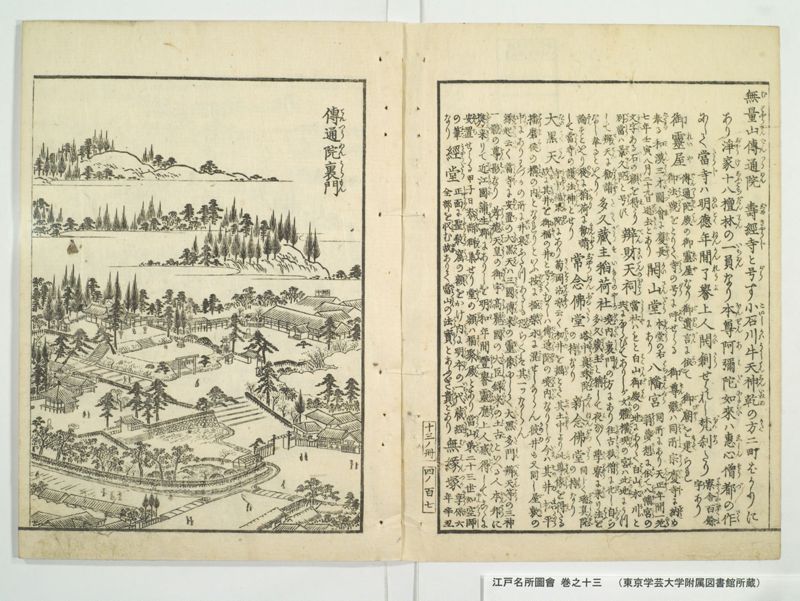
伝通院裏門(てんつうゐんうらもん)
塔中
地蔵
八幡
常念仏堂
現代語訳
【右丁】
**無量山 伝通院 寿経寺**
小石川の牛天神の北西(乾の方角)へ二町ほどのところにある。浄土宗十八檀林のひとつである。本尊の阿弥陀如来は恵心僧都(源信)の作であり、当寺は明徳年間(1390〜1394年)に了誉上人が開創された寺院である。〔割注:寮舎が百余棟ある。〕
**御霊屋** 〔割注:伝通院殿(徳川家康の生母・於大の方)の御霊屋である。御遺言によって御廟が建てられ、その法号をとって寺の名とされた。御遺骸は同所の宗慶寺に納め奉る。『和漢三才図会』には慶長七年壬寅(1602年)八月二十九日に逝去とある。〕
**開山堂** 〔割注:本堂の右にある。〕
**八幡宮** 〔割注:同所にある。天正年間(1573〜1592年)、ある老翁が夢のお告げによって「八幡宮」の文字が刻まれた石の額を得た。別当は景久院と号す。〕
**弁財天祠** 〔割注:この社はもと白山御殿の地にあって、白山・氷川とともに並んでいたが、女体権現の宮はこの地に移され、弁天として勧請されたと言われる。〕
**多久蔵主稲荷社** 〔割注:境内の裏門の方にある。昔、狐が僧に化けて自ら「多久蔵主」と名乗り、夜な夜な学寮に来て仏法を論じたと言われる。後に稲荷として勧請し、当寺の護法神とされた。〕
**常念仏堂** 〔割注:塔中・真珠院の管理である。〕
**新念仏堂** 〔割注:同じく瑞真院の管理である。〕
**大黒天** 〔割注:寺中の福聚院にある。菊岡沾涼が言うには、初めて井戸を掘ったとき、その土中からこの尊像を得たため、その井戸を「御福の井(おふくのい)」と名づけた。昔は伝通院の境内であったが、今はその井戸も松平播磨侯の屋敷の敷地内となったという。考えるに、(かの)極楽水と混同されたものであろう。あの井戸も同じ屋敷の中にあり、わずかな土地に井泉がふたつあることも、おそらくそのうちのひとつであろう。縁起に言うには、当寺に安置の大黒天は三国伝来の霊像であり、大黒・多聞・弁天等の三神一体の尊影である。孝徳天皇の御代に、高麗国の大臣・録来の土古という人が本邦(日本)に携えてきて、近江国蒲生郡に置かれていたものを、明和年間(1764〜1772年)に豊誉霊応上人が感得してここに安置された。甲子の日には参詣者が群集する。堂の額は「福聚殿」とあり、当山第二十三世・如空師の筆である。〕
**経堂** 〔割注:正面に「聖教窟」の額を掲げ、内部に明(みん)本(版)の一代蔵経(大蔵経)全部を収める。由緒あることから当山の法宝として崇め貴ばれると記されている。〕
**無縁塚** 〔割注:享保六年辛丑(1721年)……〕
---
【左丁 絵図】
伝通院裏門
塔中
地蔵
八幡
常念仏堂
英語訳
【Right Page】
**Muryōzan Dentsu'in Jukyōji**
This temple is located approximately two *chō* (roughly 220 meters) to the northwest (the direction of *inui*) of Ushitenjin in Koishikawa. It is one of the Eighteen Danrin (centers of Buddhist learning) of the Jōdo sect. The principal image of Amida Nyorai (Amitābha) is a work by the monk Eshin Sōzu (Genshin), and the temple was founded by the Venerable Ryōyo during the Meitoku era (1390–1394). [Marginal note: There are more than one hundred residential quarters (*ryōsha*).]
**Mausoleum (Otamaya)** [Marginal note: This is the mausoleum of Lady Dentsu'in-dono (Odai no Kata, the birth mother of Tokugawa Ieyasu). In accordance with her dying wish, a mortuary shrine was built, and the temple was named after her posthumous Buddhist title. Her remains are enshrined at Sōkeiji Temple in the same vicinity. The *Wakan Sansai Zue* records her death as the twenty-ninth day of the eighth month of Keichō 7, the year of *mizunoe-tora* (1602).]
**Founder's Hall (Kaisandō)** [Marginal note: Located to the right of the main hall.]
**Hachiman Shrine** [Marginal note: Located on the same grounds. During the Tenshō era (1573–1592), an elderly man obtained a stone plaque bearing the characters for "Hachiman Shrine" through a divine dream. The shrine's *bettō* (administrator) bears the name Keikyū-in.]
**Benzaiten Shrine** [Marginal note: This shrine was originally located on the grounds of Hakusan Palace, where it stood alongside the Hakusan and Hikawa shrines. The sanctuary of the Nyotai Gongen was later moved to this site and re-enshrined as Benzaiten.]
**Takuzōsu Inari Shrine** [Marginal note: Located near the rear gate of the temple precinct. In ancient times, it is said that a fox transformed itself into a monk, called itself "Takuzōsu," and came night after night to the temple's study hall to debate Buddhist doctrine. It was later enshrined as an Inari deity and became the temple's guardian of the Dharma (*gohōjin*).]
**Constant Nembutsu Hall (Jōnenbutsudō)** [Marginal note: Maintained by Shinjuin, a sub-temple (*tatchū*).]
**New Nembutsu Hall (Shinnenbutsudō)** [Marginal note: Likewise maintained by Zuishin'in.]
**Daikokuten** [Marginal note: Located at Fukuju'in within the temple complex. According to Kikuoka Senryō, when a well was first being dug, this sacred image was found within the earth, and so the well was named "Ofuku no I" (the Well of Good Fortune). In former times this was part of the Dentsu'in precinct, but now that well has become part of the estate of the Lord of Harima of the Matsudaira clan. Upon reflection, it may have been confused with the Gokuraku-mizu (Water of Paradise). That well too is within the same estate, and there being two springs in so small an area, they are in all likelihood one and the same. According to the temple's founding legend (*engi*), the Daikokuten enshrined here is a sacred image transmitted from three countries (India, China, and Japan), and represents in a single form the three deities of Daikoku, Tamon (Bishamonten), and Benzaiten. During the reign of Emperor Kōtoku, a man named Toko of Rokurei, a minister of the Kingdom of Koguryō (*Kōrai*), brought it to Japan, where it was kept in Gamō District, Ōmi Province. During the Meiwa era (1764–1772), the Venerable Hōyo Reio received it through spiritual inspiration and enshrined it here. On the days of *kinoe-ne* (the first day of the sexagenary cycle), crowds of worshippers gather. The hall's plaque reads "Fukuju-den," and is in the brushwork of Nyokū, the twenty-third abbot of this mountain.]
**Sutra Repository (Kyōdō)** [Marginal note: A plaque reading "Shōkyō-kutsu" (Cave of Sacred Teachings) hangs on the front, and inside the entire *Tripitaka* (*Issai-kyō*) in the Ming edition is stored. It is noted that for good reason, this is revered and treasured as one of the temple's sacred Dharma treasures.]
**Mound for the Unaffiliated Dead (Muen-zuka)** [Marginal note: Kyōhō 6, the year of *kanoto-ushi* (1721)…]
---
【Left Page — Illustrated Map】
Rear Gate of Dentsu'in
Sub-temples (Tatchū)
Jizō
Hachiman
Constant Nembutsu Hall