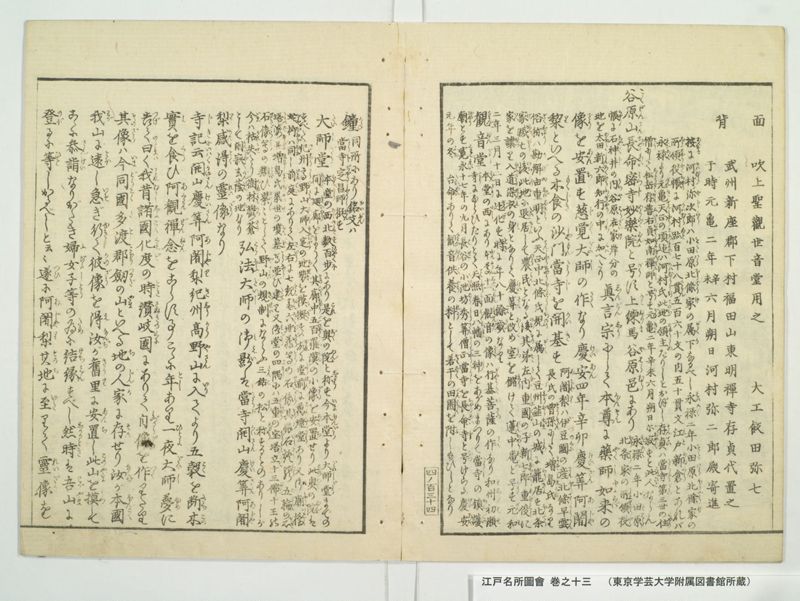
翻刻
【右丁】
面 吹上聖観世音堂用之
背 武州新座郡下村福田山東明禅寺存貞代置之
于時元亀二年《割書:辛|未》六月朔日河村弥二郎殿寄進
《割書:按(あんする)に河村弥次郎(かはむらやじらう)は小田原北条家(をたはらほうでうけ)の属下(ぞくか)なるべし永禄(えいろく)二年 小田原北条家(をたはらほうでうけ)の|所領役帳(しよりやうやくちやう)に河村跡(かはむらあと)百七十八貫( くわん)五百六十文の内五十貫文 江戸(えと)新倉(にゐくら)とあれば》
《割書:永禄(えいろく)より元亀(けんき)天正(てんしやう)の頃迄(ころまで)は河村氏(かはむらうぢ)此地(このち)の領主(りやうしゆ)たりしとおぼし存貞(そんてい)は当寺(たうじ)第三世(だい )の住(ぢゆう)|僧(そう)にして松岳存普右貞如南禅師(しようがくそんふいうぢやうによなんぜんし)と号(かう)す元亀(げんき)二年辛未六月朔日 示寂(じじやく)すと此人(このひと)ならん》
谷原山(こくげんさん)長命密寺(ちやうめいみつじ)妙楽院(めうらくゐん)と号(がう)す上練馬(かみねりま)谷原邑(やはらむら)にあり《割書:永禄(えいろく)二年 小田原(おたはら)|北条家(ほうでうけ)の所領役(しよりやうやく)》
《割書:帳(ちやう)に石神井(しやくじ)の内(うち)谷原(やはら)在家(ざいけ)岸分の|地を太田新六郎(おほたしんろくらう)知行(ちぎやう)の中(うち)に加(くは)へたり》真言宗(しんごんしう)にして本尊(ほんそん)に薬師如来(やくしによらい)の
像(ざう)を安置(あんち)す慈覚大師(じかくだいし)の作(さく)なり慶安(けいあん)四年辛卯 慶筭阿闍(けいざんあじや)
梨(り)といへる木食(もくじき)の沙門(しやもん)当寺(たうじ)を開基(かいき)す《割書:阿闍梨(あじやり)は伊豆国(いづのくに)の産(さん)北条早雲(ほうでうさううん)|長氏の曽孫(そうそん)にして増島氏(ますしまうぢ)なり》
《割書:俗称(ぞくしよう)は勘解由重明(かげゆしげあきら)といふ天正中(てんしやうちゆう)北条氏規(ほうでううぢのり)に属(ぞく)して豆州(づしう)韮山(にらやま)の城(しろ)に籠居(らうきよ)す北条(ほうでう) |家(け)滅亡(めつぼう)の後(のち)此地(このち)に退去(たいきよ)して農民(のうみん)となる後(のち)其弟(そのおとゝ)左内重国(さないしげくに)の子(こ)新七郎重俊(しんしちらうしげとし)に》
《割書:家(いへ)を譲(ゆづ)り入道(にふだう)染衣(ぜんえ)の身(み)となりて慶筭(けいさん)と改(あらた)め室(しつ)を儲(まう)けて蓮中庵(れんちゆうあん)と号(がう)す元和(げんわ) |二年三月十二日に遷化(せんげ)す時(とき)に年八十余歳( よさい)なり》
観音堂(くわんおんだう)《割書:本堂(ほんだう)の西(にし)にあり本尊(ほんそん)十一面観音(しふいちめんくわんおん)の像(さう)は行基菩薩(ぎやうきぼさつ)の作(さく)なり和州(わしう)初瀬(はせ)|寺(てら)にならひたりとて天照(てんしやう)春日(かすが)八幡(はちまん)の三神( しん)をあがめまつりて当寺(たうじ)の鎮護(ちんごの) 》
《割書:廟(びやう)とす寛永(くわんえい)十七年の九月 長谷(はせ)の小池坊秀筭僧正(こいけばうしうさんそうじやう)当寺(たうじ)を長命寺(ちやうめいじ)と号(なつ)けらる慶安(けいあん) |元年の冬(ふゆ) 台命(たいめい)ありて観音供養(くわんおんくやう)の料(れう)として若干(そくばく)の田園(でんえん)を附(ふ)し給ひしとなり》
【左丁】
鐘(かね)《割書:同所にあり銘文(めいぶん)は|当寺(たうじ)定昌師(ぢやうしやうし)撰(せん)す》
大師堂(たいしだう)《割書:本堂(ほんたう)の西北(にしきた)数百歩(すひやくほ)にあり是(これ)を《振り仮名:奥の院|おく ゐん》と称(しよう)す今(いま)本堂(ほんだう)より大師堂(だいしだう)までの|間(あいだ)に廻廊(くわいらう)をまうく其(その)廊中(らうちゆう)五百羅漢(ごひやくらかん)の小像( ざう)を安置(あんち)せり此(この)《振り仮名:奥の院|おく ゐん》は》
《割書:すべて紀州(きしう)高野山(かうやさん)大師(たいし)入定(にふぢやう)の地勢(ちせい)を摸擬(もぎ)する故(ゆゑ)に堂前(だうせん)に万燈堂(まんとうだう)あり又 御廟橋(みひやうのはし)|蛇柳(じややなぎ)は同(おな)し前庭(せんてい)にありて左右(さいう)に七観音( くわんおん)六地蔵(ろくぢざう)等(とう)の石像(せきざう)其余(そのよ)石灯籠(いしとうらう)五輪(ごりん)の石(せき)》
《割書:塔婆(たふは)幷(ならびに)増島氏(ますしまうぢ)累世(るいせ)の墳墓(ふんぼ)等(とう)並(なら)び建(たて)り又 御堂(みだう)に四隅(よすみ)には五重(ごぢゆう)の宝塔(ほうたふ)立(たて)十三仏( ぶつ)十王の|石像(せきざう)等(とう)の類(たぐ)ひ累々(るい〳〵)として野山(やさん)の規制(きせい)にならふ《振り仮名:三鈷の松|さんこ まつ》と称(しよう)するものありしが》
《割書:今(いま)は枯失(かれうせ)たり樹林(じゆりん)鬱蒼(うつさう)|として閑寂(かんじやく)玄蔭(げんいん)の地(ち)なり》弘法大師(こうほふだいし)の御影(みえい)は当寺(たうじ)開山(かいさん)慶筭阿闍(けいさんあじや)
梨(り)感得(かんとく)の霊像(れいざう)なり
寺記云(じきにいはく)開山(かいさん)慶筭阿闍梨(けいさんあじやり)紀州(きしう)高野山(かうやさん)に入(いり)てより五穀( こく)を断(たち)木(この)
実(み)を食(くら)ひ阿観(あくわん)禅念(ぜんねん)をこらす事こゝに年(とし)あり一夜(ひとよ)大師(だいし)夢(ゆめ)に
告(つげ)て曰(のたまは)く我(われ)昔(むかし)諸国(しよこく)化度(くえど)の時(とき)讃岐国(さぬきのくに)にありて自(みづから)像(ざう)を作(つく)りたり
其像(そのざう)は今(いま)同国(どうこく)多度郡(たとこほり)《振り仮名:釼の山|つるぎ やま》といへる地(ち)の人家(じんか)に存(そん)せり汝(なんぢ)が本国(ほんこく)
我(わが)山に遠(とほ)し急(いそ)ぎ行(ゆき)て彼像(かのざう)を得(え)汝(なんぢ)が旧里(きうり)に安置(あんち)し此山(このやま)を摸(うつ)して
こゝに参詣(さんけい)なりがたき婦女子(ふぢよし)等(とう)の為(ため)に結縁(けちえん)すべし然時(しかるとき)は吾山(わがやま)に
登(のぼ)るに等(ひと)しかるべしと云々 遂(つひ)に阿闍梨(あじやり)其地(そのち)に至(いた)りて霊像(れいざう)を
現代語訳
## 【右丁】
**【鐘銘の記録】**
(鐘の)表面:吹上聖観世音堂のために用いる。
裏面:武蔵国新座郡下村、福田山東明禅寺の存貞の代に置く。元亀二年(辛未)六月一日、河村弥二郎殿が寄進する。
> 按ずるに、河村弥次郎は小田原北条家の属下であろう。永禄二年、小田原北条家の所領役帳に「河村跡、百七十八貫五百六十文のうち五十貫文、江戸・新倉」とあれば、永禄より元亀・天正の頃までは河村氏がこの地の領主であったと思われる。存貞は当寺第三世の住僧にして、「松岳存普右貞如南禅師」と号す。元亀二年辛未六月一日に示寂したのはこの人であろう。
---
**谷原山長命密寺妙楽院**と号す。上練馬の谷原村にある。
> 永禄二年、小田原北条家の所領役帳に、石神井の内、谷原の在家・岸分の地を太田新六郎の知行のうちに加えたり、とある。
真言宗にして、本尊に薬師如来の像を安置する。慈覚大師の作である。慶安四年(辛卯)、慶筭阿闍梨という木食の沙門が当寺を開基した。
> 阿闍梨は伊豆国の産、北条早雲(長氏)の曽孫にして、増島氏なり。俗称は勘解由重明という。天正年間、北条氏規に属して豆州(伊豆国)韮山の城に籠居した。北条家滅亡の後、この地に退去して農民となる。後に、その弟・左内重国の子、新七郎重俊に家を譲り、入道・染衣の身となって「慶筭」と改め、室を設けて蓮中庵と号す。元和二年三月十二日に遷化す。時に年八十余歳なり。
**観音堂:** 本堂の西にある。本尊・十一面観音の像は行基菩薩の作なり。大和国(和州)初瀬寺(長谷寺)に倣い、天照・春日・八幡の三神を崇め祀り、当寺の鎮護の廟とする。寛永十七年九月、長谷の小池坊秀筭僧正が当寺を「長命寺」と号せられた。慶安元年の冬、台命(幕府の命)があり、観音供養の料として若干の田園を付し給ったとのことである。
---
## 【左丁】
**鐘:** 同所(観音堂のそば)にあり。銘文は当寺の定昌師が撰す。
**大師堂:** 本堂の西北、数百歩のところにある。これを「奥の院」と称する。現在、本堂より大師堂までの間に廻廊を設け、その廊中に五百羅漢の小像を安置している。この「奥の院」は、すべて紀州高野山における大師入定の地勢を模擬しているため、堂前に万燈堂あり。また、御廟橋・蛇柳は同じく前庭にあり、左右に七観音・六地蔵等の石像、そのほか石灯籠・五輪の石塔婆、ならびに増島氏累代の墳墓等が並び建てられている。また、御堂の四隅には五重の宝塔を立て、十三仏・十王の石像等の類が累々として、野山(高野山)の規制に倣っている。「三鈷の松」と称するものがあったが、今は枯れ失せてしまった。樹林は鬱蒼として、閑寂・幽玄の地である。
弘法大師の御影(みえい)は、当寺の開山・慶筭阿闍梨が感得した霊像である。
**寺記に云わく:** 開山・慶筭阿闍梨、紀州高野山に入りて以来、五穀を断ち、木の実を食い、阿観(阿字観)・禅念をこらすこと、ここに年あり。ある夜、大師(弘法大師)が夢に告げて曰わく、「われ昔、諸国化度の時、讃岐国にありて自ら像を作りたり。その像は今、同国多度郡、剣の山(剣山)という地の人家に存せり。汝が本国は我が山に遠し。急ぎ行きて彼の像を得て、汝が旧里に安置し、この山(高野山)を模して、ここに参詣しがたき婦女子等のために結縁すべし。然る時は、吾が山に登るに等しかるべし」と云々。ついに阿闍梨はその地に至りて霊像を〔次頁へ続く〕
英語訳
## [Right Page]
**[Record of the Bell Inscription]**
*Obverse:* For use at the Fukiage Shō-Kanzeon-dō Hall.
*Reverse:* Placed during the tenure of Sonjo at Fukudasan Tōmei-zenji temple, Shimomura, Niikura-gun, Musashi Province. Donated on the first day of the sixth month of the second year of Genki (1571, year of the Metal Sheep) by Lord Kawamura Yajirō.
> *Compiler's note:* Kawamura Yajirō was likely a retainer of the Odawara Hōjō clan. In the cadastral register (*Shoryō Yakuchō*) of the Odawara Hōjō clan from the second year of Eiroku (1559), it is recorded that among the holdings of "Kawamura's former domain," totaling 178 kan and 560 mon, 50 kan-mon were associated with "Edo and Niikura." This suggests that the Kawamura clan were lords of this district from the Eiroku era through the Genki and Tenshō periods. Sontei was the third-generation head priest of this temple, bearing the dharma name "Shōgaku Sonpu Ujō Nyonan Zenji." He is believed to have passed away on the first day of the sixth month of the second year of Genki (1571, year of the Metal Sheep).
---
The temple is formally named **Kokugensen Chōmei Mitsu-ji Myōraku-in**, located in Yahara Village, Kami-Nerima.
> According to the Odawara Hōjō clan's cadastral register of the second year of Eiroku (1559), the lands of Yahara Village (*zaike* and *kishiwake* portions) within Shakujii were added to the holdings of Ōta Shinrokurō.
It belongs to the Shingon sect, and enshrines as its principal image a statue of Yakushi Nyorai (Medicine Buddha), said to be the work of Jikaku Daishi (Ennin). In the fourth year of Keian (1651, year of the Metal Hare), a monk of ascetic practice (*mokujiki shamon*) named Keizan Ajari founded this temple.
> The Ajari was a native of Izu Province, a great-great-grandson of Hōjō Sōun (Nagauji), and bore the family name Masushima. His lay name was Kageyu Shigeakira. During the Tenshō era, he served under Hōjō Ujinori and was stationed in Nirayama Castle in Izu Province. After the fall of the Hōjō clan, he withdrew to this area and became a farmer. Later, he transferred the family headship to Shinshichirō Shigetoshi, son of his younger brother Sanai Shigekuni, took Buddhist vows and vestments, changed his name to Keizan, established a hermitage called Renchū-an, and passed away on the twelfth day of the third month of the second year of Genna (1616), at the age of over eighty.
**Kannon Hall:** Located to the west of the main hall. The principal image, an eleven-faced Kannon (*Jūichimen Kannon*), is attributed to the monk Gyōki Bosatsu. Modeled after Hase-dera Temple in Yamato Province (Yamato-no-kuni, present-day Nara), the three deities—Amaterasu, Kasuga, and Hachiman—are venerated here as the guardian shrine of the temple. In the ninth month of the seventeenth year of Kan'ei (1640), the monk Hōzan Shūzan Sōjō of Koike-bō, Hase, conferred upon the temple the name "Chōmei-ji." During the winter of the first year of Keian (1648), by order of the shogunate, a grant of farmland was bestowed for the purpose of conducting Kannon memorial services.
---
## [Left Page]
**Bell:** Located on the same grounds. The inscription was composed by Priest Jōshō of this temple.
**Daishi-dō (Hall of the Grand Master):** Situated several hundred paces to the northwest of the main hall, it is referred to as the "Oku-no-in" (Inner Sanctuary). A covered corridor (*kairō*) now connects the main hall to the Daishi-dō, and within this corridor, small statues of the Five Hundred Arhats (*Gohyaku Rakan*) are enshrined. This Inner Sanctuary wholly replicates the topography of Kōbō Daishi's place of eternal meditation (*nyūjō*) at Kōyasan in Kii Province. Accordingly, a Mantō-dō (Hall of Ten Thousand Lanterns) stands before the hall; the Gobyo-bashi (Mausoleum Bridge) and the Jajanaqi (Serpent Willow) are likewise situated in the front garden, with stone images of the Seven Kannon and the Six Jizō arranged on either side, along with stone lanterns, five-tiered stone stūpas (*gorin no tōba*), and the tombs of successive generations of the Masushima family. At the four corners of the main hall, five-tiered jeweled pagodas have been erected, and stone images of the Thirteen Buddhas and the Ten Kings are arrayed in abundance, all in faithful emulation of the forms of the mountain (Kōyasan). There was once a pine tree called the "Sanko no Matsu" (Three-Pronged Vajra Pine), but it has since withered and died. The grove remains dense and verdant—a place of tranquil, profound seclusion.
The sacred image (*miei*) of Kōbō Daishi is a numinous icon supernaturally obtained (*kantoku*) by the temple's founding priest, Keizan Ajari.
**The temple record states:** After entering Kōyasan in Kii Province, the founding priest Keizan Ajari abstained from the five grains, subsisted on wild nuts and berries, and devoted himself with great intensity to the practice of *akanji* (visualization of the Sanskrit letter "A") and meditative recitation for a number of years. One night, Kōbō Daishi appeared to him in a dream and declared: "Long ago, when I was traveling through the provinces to guide sentient beings, I made a statue of myself while in Sanuki Province. That statue now resides in the home of a person in a place called Tsurugi-no-yama (Mount Tsurugi) in Tado-gun of that same province. Your homeland is far from my mountain. Go there at once, obtain that image, enshrine it in your native village, model this mountain (Kōyasan) after your own, and thereby create a place of spiritual connection for women and children and others who cannot easily make the pilgrimage. To do so shall be equivalent to ascending my mountain." Following this vision, the Ajari traveled to that place and obtained the sacred image— *(continued on the next page)*