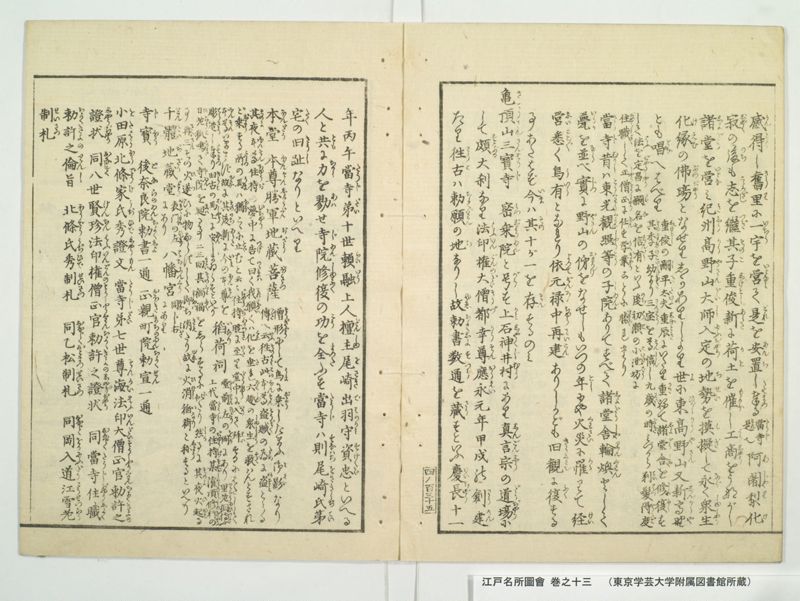
翻刻
【右丁】
感得(かんとく)し旧里(きうり)に一宇(いちう)を営(いとなみ)て是(これ)を安置(あんち)し奉(たてまつ)る《割書:当寺(たうじ)|是(これ)也》阿闍梨(あじやり)化(け)
寂(じやく)の後(のち)も志(こゝろざし)を継(つぎ)其子(そのこ)重俊(しげとし)新(あらた)に荷土(かと)を催(もよほ)し工商(こうしやう)をうながし
諸堂(しよだう)を営(いとな)み紀州(きしう)高野山(かうやさん)大師入定(だいしにふぢやう)の地勢(ちせい)を摸擬(もぎ)して永(なが)く衆生(しゆしやう)
化縁(けえむ)の仏場(ぶつぢやう)となせりしかありしより世(よ)に東高野山(ひがしかうやさん)又 新高野(しんかうや)
とも唱(とな)へはべり《割書:重俊(しげとし)の嗣(し)平太夫重辰(へいたいふしげとき)にいたり重(かさ)ねて諸堂舎(しよだうしや)を修復(しゆふく)す|其(その)季子(すゑのこ)幼(いとけなき)より三宝(さんはう)を尊信(そんしん)し九歳( さい)の時(とき)みづから剃髪(ていはつ)得度(とくど) 》
《割書:して法(はふ)を定昌(ぢやうしやう)に嗣(つぎ)名(な)を信有(しんいう)といふ後(のち)初瀬(はつせ)の小池坊(こいけばう)に|住職(ぢゆうしよく)して正僧正(しやうそうしやう)に任(にん)す学業(かくぎやう)ことに勝(すぐ)れたり》
当寺(たうじ)昔(むかし)は東光(とうくわう)観照(くわんしやう)等(とう)の子院(しゐん)ありてすべて諸堂(しよだう)舎輪(しやりん)燠(くわん)として
甍(いらか)を並(なら)べ実(じつ)に野山(やさん)の俤(おもかげ)をなせしもいつの年(とし)にや火災(くわさい)に罹(かゝ)りて径(けい)
営(えい)悉(こと〴〵)く烏有(ういう)となれり依(よつて)元禄中(げんろくちゆう)再建(さいこん)ありしかども旧観(きうくわん)に復(ふく)する
事あたはず今(いま)は其(その)十が一を存(そん)するのみ
亀頂山(きてうさん)三宝寺(さんはうじ) 密乗院(みつじようゐん)と号(がう)す上石神井村(かみしやくじむら)にあり真言宗(しんごんしう)の道場(だうぢやう)に
して頗(すこぶる)大刹なり法印権大僧都幸尊(はふいんごんのだいそうづかうそん)応永(おうえい)元年甲戌の創建(さうけん)
たり往古(わうこ)は勅願(ちよくぐわん)の地(ち)なりし故(ゆゑ)勅書(ちよくしよ)数通(すつう)を蔵(さう)すといふ慶長(けいちやう)十一
【左丁】
年丙午 当寺(たうじ)弟十世(だい ) 頼融上人(らいいう )檀主(だんしゆ)尾崎出羽守資忠(をさきではのかみすけたゞ)といへる
人と共(とも)に力(ちから)を勠(あは)せ寺院(じゐん)修復(しゆふく)の功(こう)を全(まつた)ふす当寺(たうじ)は則(すなはち)尾崎氏(をさきうぢ)第(てい)
宅(たく)の旧趾(きうし)なりといへり
本堂(ほんだう) 本尊(ほんそん)勝軍地蔵菩薩(しようぐんぢざうぼさつ)《割書:僧形(そうぎやう)にして馬(うま)に乗(じよう)したまふ御影(みえい)なり|伝(つた)へ云(いふ)往古(そのかみ)此(この)本尊(ほんそん)盗賊(とうぞく)の為(ため)盗(ぬすみ)とらる》
《割書:其夜(そのよ)本尊(ほんそん)住持(ちゆうぢ)の夢中(むちゆう)に告(つげ)て曰(のたまは)く我(われ)願(ねがは)くは化(くえ)を垂(た)れ六趣(ろくしゆ)の衆生(しゆしよう)を救(すく)はんとすされ|ど乗(じよう)する所(ところ)の馬(うま)は猶(なほ)こゝに止(とゞ)むと云々 住持(ぢゆうぢ)暁(あかつき)に至(いた)り堂中(だうちゆう)に入(いり)て拝(はい)するにはたして》
《割書:本尊(ほんそん)いまさず故(ゆゑ)に其後(そののち)新(あらた)に今(いま)の本尊(ほんそん)を|彫造(てうさう)し奉(たてまつ)り旧古(きうこ)の馬上(ばしやう)に安(あん)しまゐらすといへり》稲荷祠(いなり )《割書:堂前(だうせん)左(ひだり)の岡(をか)にあり里老(りらう)相伝(あひつた)ふ|上代 当寺(たうじ)の住持(ぢゆうぢ)某(それがし)灌頂(くわんてう)修行(しゆぎやう)の》
《割書:日(ひ)老狐(らうこ)鳴(なき)て寺院(じゐん)を廻(まは)る事二三回( くわい)其(その)禍福(くわふく)をしらするに似(に)たり然(しか)るに其夜(そのよ)火(ひ)起(おこ)る|事 再三(さいさん)その火(ひ)遂(つ)ひに物ならずして即(すなは)ち消(きえ)たり故(ゆゑ)に火消稲荷(ひけしいなり)と称(しよう)するといへり》
千体地蔵堂(せんたいぢざうだう)《割書:表門(おもてもん)の左(ひだり)|にあり》八幡宮(はちまんくう)《割書:同(おな)じ右(みぎ)|にあり》
寺宝(じほう) 後奈良院(ごならのゐん)勅書(ちよくしよ)一通 正親町院(おほきまちのゐん)勅宣(ちよくせん)一通
小田原北条家(おたはらほうでうけ)氏秀(うぢひで)証文(しやうもん) 当寺(たうじ)弟七世(だい )尊海法印大僧正(そんかいはふいんだいそうしやう)官勅許之(くわんちよくきよの)
証状(しやうぢやう) 同(おなじく)八世 賢珍法印権僧正(けんちんはふいんごんのそうしやう)官勅許之証状(くわんちよくきよのしやうぢやう) 同(おなじく)当寺(たうじ)住職(ぢゆうしよく)
勅許之倫旨(ちよくきよのりんし) 北条氏秀(ほうでううぢひで)制札(せいさつ) 同(おなじく)乙松(おとまろ)制札(せいさつ) 同(おなじく)岡入道江雪老(をかにふだうこうせつらう)
制札(せいさつ)
現代語訳
## 【右丁】
(前頁より続き)霊像を感得し、旧里に一宇(一つの堂)を営んでこれを安置し奉った(これが当寺である)。阿闍梨が遷化した後も、その志を継いで、その子・重俊が新たに土を運ばせ、工人・商人を促して諸堂を造営し、紀州高野山における大師入定の地勢を模擬して、永く衆生化縁の仏場とした。それ以来、世に「東高野山」また「新高野」とも称えられている。
> 重俊の跡継ぎである平太夫重辰の代に至り、重ねて諸堂舎を修復した。その末子は幼い頃より三宝を尊信し、九歳の時に自ら剃髪・得度して、法を定昌に嗣ぎ、名を信有という。後に初瀬の小池坊に住職して正僧正に任ぜられた。学業とりわけ優れていた。
当寺は昔、東光・観照等の子院があり、すべての諸堂舎が輪奐(立派に建ち並び)として甍を並べ、実に野山(高野山)の面影をなしていたが、いつの年にか火災に罹り、伽藍ことごとく烏有(灰燼)に帰してしまった。それにより元禄年間に再建があったが、旧観に復することはかなわず、今はその十分の一を残すのみとなっている。
---
**亀頂山三宝寺** 密乗院と号す。上石神井村にある。真言宗の道場にして、頗る大きな寺院(大刹)である。法印権大僧都・幸尊が応永元年(甲戌)に創建した。往古は勅願の地であったため、勅書数通を蔵すという。慶長十一
---
## 【左丁】
年(丙午)、当寺第十世・頼融上人が、檀主(施主)である尾崎出羽守資忠という人と共に力を合わせ、寺院修復の功を全うした。当寺は則ち尾崎氏の第宅(邸宅)の旧址であるといわれている。
**本堂:** 本尊は勝軍地蔵菩薩。
> 僧形にして馬に乗りたまう御影(像)である。伝え云うに、往古、この本尊は盗賊のために盗み取られた。その夜、本尊が住持の夢中に告げて曰わく、「われ願わくは化を垂れ、六趣の衆生を救わんとする。されど乗ずるところの馬は、なおここに止まる」と云々。住持が夜明けに堂中に入り拝したところ、はたして本尊はいらっしゃらなかった。ゆえにその後、新たに今の本尊を彫造し奉り、旧古の馬上に安置し申し上げたとのことである。
**稲荷祠:** 堂前左の岡にある。里の老人たちが相伝えるに、上代(昔)、当寺の住持某が灌頂修行の日、老いた狐が鳴きながら寺院を二・三回廻り、禍福を知らせるようであった。するとその夜、火が起こること再三、しかしその火はついに大事に至らずしてすぐに消えた。ゆえに「火消稲荷」と称するとのことである。
**千体地蔵堂:** 表門の左にある。
**八幡宮:** 同じく(表門の)右にある。
**寺宝:**
- 後奈良院(後奈良天皇)の勅書 一通
- 正親町院(正親町天皇)の勅宣 一通
- 小田原北条家・氏秀の証文
- 当寺第七世・尊海法印大僧正の官勅許の証状
- 同じく第八世・賢珍法印権僧正の官勅許の証状
- 同じく当寺住職・勅許の綸旨
- 北条氏秀の制札
- 同じく乙松の制札
- 同じく岡入道・江雪老の制札
英語訳
## [Right Page]
*(Continued from the previous page)* ...he obtained the sacred image and, returning to his native village, built a hall and enshrined it therein (this is the present temple). Even after the Ajari passed away, his successor, his son Shigetoshi, carried on his aspirations: he organized the transport of earth, mobilized artisans and merchants, and constructed the various halls of the temple, replicating the topography of Kōbō Daishi's place of eternal meditation (*nyūjō*) at Kōyasan in Kii Province, so as to establish the site forever as a sacred place of spiritual connection for sentient beings. Ever since, the temple has been known in the world as "Higashi-Kōyasan" (East Kōyasan) or "Shin-Kōya" (New Kōya).
> When headship passed to Shigetoshi's heir, Heitayū Shigetoki, further restoration of the various halls and buildings was carried out. His youngest son, from a very young age, revered the Three Treasures of Buddhism, and at the age of nine shaved his own head and received the Buddhist precepts. He inherited the Dharma from Jōshō, took the religious name Shin'yū, later became the head priest of Koike-bō at Hase, and was appointed to the rank of Shō-sōjō (Senior High Prelate). He was especially distinguished in his scholarship.
In former times, the temple had sub-temples (*in*) such as Tōkō and Kanshō, and all the halls and buildings stood magnificently side by side, the rooflines stretching in rows, truly evoking the likeness of Kōyasan. However, at some point the temple was struck by fire and the entire precinct was reduced to ashes. Subsequently, restoration was carried out during the Genroku era (1688–1704), but it was not possible to fully restore the temple to its former appearance; today, only about one-tenth of its former scale remains.
---
**Kitōzan Sanpō-ji Temple** — known by the formal sub-title *Mitsujō-in*. Located in Kami-Shakujii Village. It is a training temple (*dōjō*) of the Shingon sect and a particularly large and important establishment. It was founded by *Hōin Gon-no-Daisōzu* Kōson in the first year of Ōei (1394, year of the Metal Dog). In ancient times, it was a place designated for the prayer of the imperial court (*chokugan*), and is said to house several imperial edicts (*chokusho*). In the eleventh year of Keichō
---
## [Left Page]
(1606, year of the Fire Horse), the tenth-generation head priest of the temple, the Venerable Raiyu, together with the temple's chief lay patron (*danshu*), a man called Ozaki Dewa-no-Kami Sukutada, joined forces and completed the full restoration of the temple precincts. It is said that the present temple site was formerly the residential estate (*daitaku*) of the Ozaki clan.
**Main Hall:** The principal object of worship is the *Shōgun Jizō Bosatsu* (Jizō Bodhisattva of Victory in Battle).
> The image depicts Jizō in the form of a monk (*sōgyō*) riding on horseback. According to tradition, in ancient times, this principal image was stolen by thieves. That very night, the image appeared in the dream of the head priest and declared: "I wish to extend my transformative influence and save the sentient beings of the six realms. However, the horse I ride remains here still." When the head priest entered the hall at dawn to pay his respects, the principal image was indeed gone. Thereafter, a new principal image was carved and enshrined upon the horse of the original statue, which had been left behind.
**Inari Shrine:** Located on the hill to the left in front of the hall. As handed down by village elders, in ancient times, on the day when the head priest of this temple was conducting the *kanjō* (initiation ceremony), an old fox cried out and circled the temple grounds two or three times, as if foretelling fortune or misfortune. That same night, fires broke out repeatedly; yet each fire ultimately came to nothing and was immediately extinguished. For this reason, the shrine is said to be called the "Fire-Extinguishing Inari" (*Hikeshi Inari*).
**Sentai Jizō-dō (Hall of a Thousand Jizō Figures):** Located to the left of the main gate.
**Hachiman-gū Shrine:** Located to the right of the main gate.
**Temple Treasures:**
- One imperial edict (*chokusho*) from the Gonara-in (Emperor Go-Nara)
- One imperial decree (*chokusen*) from the Ōgimachi-in (Emperor Ōgimachi)
- A document (*shōmon*) from Ujihide of the Odawara Hōjō clan
- A certificate (*shōjō*) of official and imperial authorization for the seventh-generation head priest of this temple, Sonkai Hōin Daisōjō
- A certificate of official and imperial authorization for the eighth-generation head priest, Kenchin Hōin Gon-no-Sōjō
- A certificate of imperial authorization (*rinji*) for successive head priests of this temple
- A regulatory notice board (*seisatsu*) issued by Hōjō Ujihide
- A regulatory notice board (*seisatsu*) issued by Otomaro
- A regulatory notice board (*seisatsu*) issued by Oka Nyūdō Kōsetsu-rō (the monk Kōsetsu of Oka)