翻刻
【見開き 絵図】
【右丁】
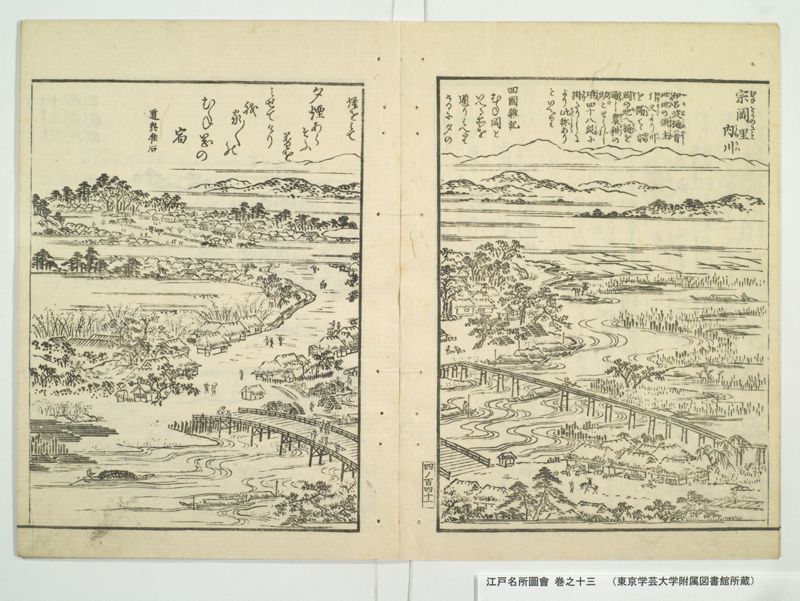
宗岡里(むねをかのさと)
内川(うちかは)
伊呂波樋(いろはとひ)は昔(むかし)
此地(このち)の領主(りやうしゆ)
引又(ひきまた)より川(かは)
を隔(へた)てゝ宗(むね)
岡(をか)の地(ち)へ樋(とひ)を
通(とほ)し農耕(のうがう)の
助(たすけ)とせられし
頃(ころ)四十八段( たん)に
掛(かけ)たりしに
より此称(このしよう)あり
といへり
回国雑記
むね岡と
いへる所を
通りはへり
けるに夕の
【左丁】
煙をみて
夕煙あら
そふ
暮を
みせてけり
我
家〳〵の
むね岡の
宿
道興准后
現代語訳
## 【見開き絵図】
### 【右丁】
**宗岡里(むねおかのさと) 内川(うちかわ)**
伊呂波樋(いろは樋)は、昔この地の領主が、引又より川を隔てて宗岡の地へ樋(とい)を通し、農耕の助けとされたころ、四十八段に掛けたりしによりこの称ありといへり。
(傍注)『回国雑記』——「むね岡」というところを通りましたところ、夕べの
### 【左丁】
煙を見て——
> 夕煙あらそふ暮れをみせてけり 我が家々のむね岡の宿
>
> 道興准后
英語訳
## [Double-Page Illustrated Spread]
### [Right Page]
**Muneoka Village (宗岡里) — Uchikawa River (内川)**
The "Iroha Conduit" (*Iroha-toi*): In former times, the lord of this district had a wooden conduit constructed from Hikimata across the river to the land of Muneoka, in order to assist agricultural irrigation. Because the conduit was hung in forty-eight sections, it came to bear this name, it is said.
*(Marginal note)* The *Kaikoku Zakki* (Miscellaneous Notes on Traveling the Provinces) records: "As I was passing through the place called Muneoka, I saw the evening
### [Left Page]
cooking smoke, and composed the following:"
> *Yūkemuri / arasou kure wo / mise te keri / wagaya wagaya no / Muneoka no yado*
>
> (The evening smoke rises in rivalry as dusk descends — from each and every home in Muneoka post station.)
>
> — The Cloistered Imperial Prince Dōkō (道興准后)