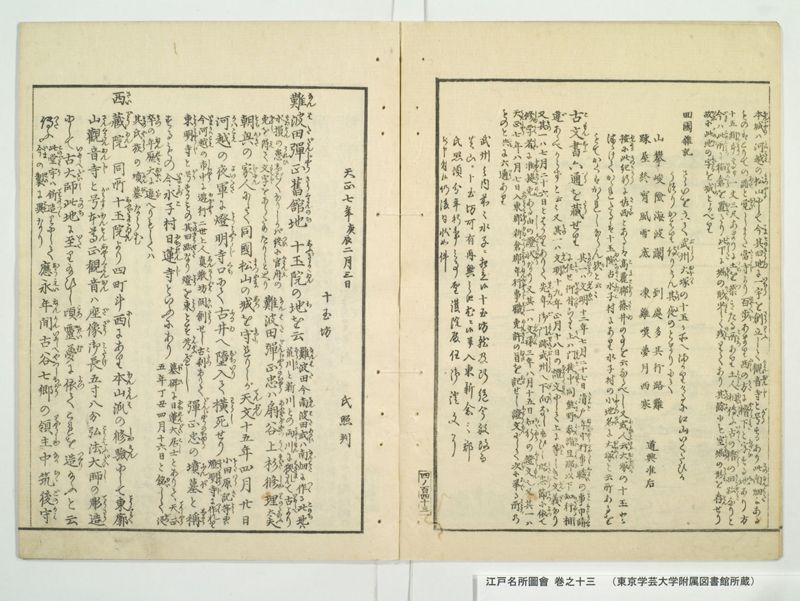
翻刻
【右丁】
《割書:本城(ほんじやう)は河越(かはこえ)の松山(まつやま)にして今(いま)其(その)旧地(きうち)に一宇(いちう)を創立(さうりふ)して観音寺(くわんおんじ)と号(がう)するあり此(この)南畑(なんはた)にある|ものはとりての跡(あと)と覚(おぼ)しまた当寺(たうじ)より百歩(ひやくほ)あまり西(にし)の方(かた)に櫓下(やくらした)と字(あざな)する地(ち)あり方》
《割書:十五間( けん)斗(はかり)高さ一丈三尺あまりに土(つち)を築(つ)きたる所(ところ)あり土人(とじん)相伝(あひつた)ふ古(いにしへ)の櫓(やくら)の旧跡(きうせき)なりと|今(いま)は此所(このところ)に稲倉(いなくら)を置(おき)たり此下(このした)に堀(ほり)の形(かたち)少(すこ)しく残(のこ)りてあり其余(そのよ)にも空堀(からほり)の形(かたち)を存(そん)せり|故(ゆゑ)に此地(このち)の字(あざな)を城(しろ)とよべり》
《割書:回国雑記 さゝいを立て武州(ぶしう)大塚(おほつか)の十玉か所へまかりけるに江山いくたひか| うつりかはり侍(はべ)りけん其夜(そのよ)のとまりにて》
山攀峻険海波瀾 到処多其行路難
踈屋終宵風雪底 凍雞嗼夢月西寒 道興准后
《割書:按(あんする)に此(この)紀行(きかう)に佐西(ささい)とあるは高麗郡(こまこほり)篠井(さゝゐ)の事を云なるべし又 或人云(あるひといふ)大塚(おほつか)の十玉と|つゝけてかゝれたるは十玉院( ゐん)古(いにしへ)水子村(みづこ )にあり水子村の小地名(しやうちめい)に大塚(おほつか)と云所あるを|もてかくはかゝれしならん欤(か)と云々》
古文書(こもんしよ)六通( つう)を蔵(さう)せり《割書:其一(そのひとつ)は文明(ぶんめい)十二年七月二十七日 清戸(きよと)年中行事職(ねんぢゆうぎやうじしよく)の事(こと)申請(まうしうくる)|に任(まか)せ仰付(おふせつけ)らるゝ上(うへ)は門徒中(もんとちゆう)同 熊野参詣(くまのさんけい)旦那(たんな)以下 知行(ちぎやう)相(さう) 》
《割書:違(い)あるべからずと云々又 其一(その )は文明(ぶんめい)十九年正月十八日の証文(しようもん)にして上に等(ひと)しき文義(ぶんぎ)なり|又 其一(その )は七月二十六日とはかりありて先年(せんねん)御門跡(ごもんせき)武州(ぶしう)へ下向(げかう)なし給ひし時(とき)忠節(ちうせつ)に依(よつ)て》
《割書:修学者(しゆかくしや)に准拠(じゆんきよ)免(めん)ある由(よし)の証状(しようぢやう)なり又其一は文禄(ぶんろく)三年八月十五日 知行(ちぎやう)の証文(しようもん)也其一は|天正(てんしやう)七年八月七日 入東郡(につとうこほり)新倉郡(にゐくらこほり)年行事職(ねんぎやうじしよく)免許(めんきよ)の旨(むね)を記(しる)せし証文(しようもん)にして次(つぎ)に挙(あぐ)る所(ところ)の|ものと共(とも)に六通( つう)あり》
《割書:武州之内前々水子に相立候十玉坊就及断絶今般改而|芝山に十玉坊可有再興之由尤に候幷入東新倉之郡》
《割書:氏照領分年行事之事聖護院殿任御証文了|被申付候仍後日状如件》
【左丁】
《割書:天正七年庚辰二月三日 氏照判| 十玉坊》
難波田弾正(なんはただんじやう)旧舘地(きうくわんのち) 十玉院(しふぎよくゐん)の地(ち)を云《割書:難波田(なんはた)今 南波田(なんはた)或(あるひ)は南畑(なんはた)に作(つく)る此地(このち)は|荒川(あらかは)と新川との両川(りやうせん)に挟(はさま)れて古(いにしへ)より》
《割書:水損(すゐそん)の患(うれひ)しば〳〵ありしかば終(つひ)に官府(くわんふ)の|免(ゆるし)を得(え)て文字(もんじ)をあらためたりしといへり》難波田弾正忠(なんはただんじやうのちゆう)は扇谷(あふぎがやつ)上杉修理太夫(うへすぎしゆりのたいふ)
朝興(ともおき)の家人(けにん)にして同国 松山(まつやま)の城(しろ)を守(まも)れりしが天文(てんぶん)十五年四月廿日
河越(かはこえ)の夜軍(よいくさ)に灯明寺口(とうみやうじくち)にて古井(ふるゐ)へ堕入(おちいり)て横死(わうし)せり《割書:小田原記(をたはらき)等(とう)には|灯明寺(とうみやうじ)に作(つく)れり》
《割書:今(いま)河越(かはこえ)の市中(しちゆう)に遊行(ゆぎやう)二世上人 真教坊(しんけうばう)開創(かいさう)せし古刹(こさつ)ありて|東明寺(とうみやうじ)と号(がう)するもの其(その)旧跡(きうせき)なり灯(とう)を東(とう)とす考(かんかふ)べし》弾正忠(だんじやうのちゆう)の墳墓(ふんぼ)と称(しよう)
するもの今(いま)水子村(みづこ )日蓮寺(にちれんじ)といふにあり《割書:墓碑(ぼひ)に日蓮大居士(にちれんだいこし)とありて天正(てんしやう)|五年丁丑四月十六日と銘(めい)して没(ぼつ)》
《割書:卒(そつ)の年歴(ねんれき)大(おほい)に違(たが)へりもしくは|其(その)氏族(やから)の墳墓(ふんぼ)ならむ》
西蔵院(さいざうゐん) 同所 十玉院(しふぎよくゐん)より四町斗 西(にし)にあり本山派(ほんさんは)の修験(しゆけん)にして東廓(とうくわく)
山(さん)観音寺(くわんおんじ)と号(がうす)本尊(ほんそん)正観音(しやうくわんおん)は座像(ざざう)御長(みたけ)五寸八分 弘法大師(こうはふだいし)の彫造(てうさう)
にして古(いにしへ)大師(だいし)此地(このち)に至(いた)り給ひし頃(ころ)霊夢(れいむ)に依(よつ)てこれを造(つくり)給ふと云
伝(つた)ふ《割書:此(この)堂宇(だうう)は釿造(てをのつく)りにして|今(いま)の製(せい)に異(こと)なり》応永年間(おうえいねんかん)古(いにしへ)谷七郷(やつしちがう)の領主(りやうしゆ)中筑後守(なかちくごのかみ)
現代語訳
## 【右丁】
(割注:本城は河越の松山にあり、今その旧地に一宇を創立して観音寺と号するものがある。この南畑にあるものはとりでの跡と思われる。また当寺より百歩あまり西の方に「櫓下」と字する地がある。)
(割注:方十五間ばかり、高さ一丈三尺あまりに土を築いたところがある。土地の人々が言い伝えるには、昔の櫓の旧跡であるという。今はこの場所に稲倉を置いている。この下には堀の形がわずかに残っており、その他にも空堀の形を存している。それゆえにこの地の字を「城」と呼んでいる。)
(割注:『回国雑記』に「篠井を経て武州大塚の十玉の所へ参ったが、川と山がいくたびか移り変わった。その夜の泊まりにて」として次の詩が記されている。)
> 山攀峻険海波瀾 到処多其行路難
> 踈屋終宵風雪底 凍雞嗼夢月西寒 道興准后
(割注:按ずるに、この紀行に「佐西(ささい)」とあるのは高麗郡篠井のことを言うのであろう。また、ある人が言うには、「大塚の十玉」と続けて書かれているのは、十玉院が古く水子村にあり、水子村の小地名に「大塚」という所があるので、こうように書かれたのであろうか、と言っている。)
古文書六通を所蔵する。
(割注:その一通は文明十二年七月二十七日付で、清戸の年中行事職のことについて申請に任せ、仰せ付けられる上は、門徒中ともに熊野参詣の旦那以下、知行に相違あるべからずとある。また、その一通は文明十九年正月十八日の証文で、上と同じ内容の文義である。また、その一通は七月二十六日とだけあり、先年御門跡が武州へ下向なさった時に、忠節によって修学者に准拠して免許が与えられた旨の証状である。また、その一通は文禄三年八月十五日付の知行の証文である。その一通は天正七年八月七日付で、入東郡・新倉郡の年行事職免許の旨を記した証文で、次に挙げるものとともに六通ある。)
> (割注:武州之内前々水子に相立候十玉坊、断絶に及ぶにつき今般改めて芝山に十玉坊再興あるべきの由、もっともに候。ならびに入東・新倉の郡、氏照領分年行事のことは聖護院殿の御証文に任せ申し付け候。仍って後日の状、件の如し。)
## 【左丁】
(割注:天正七年庚辰二月三日 氏照(花押)
十玉坊宛)
---
**難波田弾正の旧館地** ―― 十玉院の地をいう。
(割注:難波田は今「南波田」あるいは「南畑」と書く。この地は荒川と新川との両川に挟まれて、古くより水損の患いがしばしばあったので、ついに官府の許しを得て文字を改めたと言われている。)
難波田弾正忠は扇谷上杉修理大夫朝興の家人であり、同国松山の城を守っていたが、天文十五年四月二十日、河越の夜戦において灯明寺口にて古井に堕ち入って横死した。
(割注:『小田原記』などには「灯明寺」と書かれている。)
(割注:今、河越の市中に遊行二世上人・真教坊が開創した古刹があり、「東明寺」と号するものがその旧跡である。「灯」を「東」とするか考えるべきである。)
弾正忠の墳墓と称するものが、今、水子村の日蓮寺というところにある。
(割注:墓碑に「日蓮大居士」とあり、天正五年丁丑四月十六日と銘して没したとある。没卒の年歴が大いに違っている。もしくはその一族の墳墓であろう。)
---
**西蔵院** ―― 同所・十玉院より四町ばかり西にある。本山派の修験にして、東廓山観音寺と号す。本尊の正観音は座像で御丈五寸八分、弘法大師の彫造にして、古く大師がこの地にいらしたころ、霊夢によってこれを造られたと言い伝えている。
(割注:この堂宇は釿造りにして、今の造りとは異なる。)
応永年間、古谷七郷の領主であった中筑後守が……(次ページへ続く)
英語訳
## [Right Page]
*(Interlinear note: The main castle was at Matsuyama in Kawagoe. Today, a temple called Kannonji has been established on that former site. The remains found in Nanbata appear to be the site of a fortress. Furthermore, about one hundred paces to the west of this temple is a place known by the place-name "Yagurasita" [Beneath the Watchtower].)*
*(Interlinear note: There is an earthwork mound approximately fifteen ken [~27 meters] square and over one jō three shaku [~4 meters] in height. Local people have passed down the tradition that this is the former site of an ancient watchtower. Today a rice storehouse stands there. Below this, traces of a moat remain, and elsewhere the forms of dry moats are also preserved. For this reason, the place-name of this area is called "Shiro" [Castle].)*
*(Interlinear note: In the travel record "Kaikoku Zakki," it is written: "Passing through Sasai, I proceeded to the site of Jūtama in Ōtsuka, Musashi Province, where the mountains and rivers changed many times over. That night at my lodging, [I composed the following poem].")*
> Scaling steep mountains, crossing turbulent seas,
> Everywhere the road ahead is fraught with hardship.
> In a sparse dwelling through the night, beneath wind and snow,
> A frozen rooster breaks a dream—the moon hangs cold in the west.
> — *Dōkō Jungo* (Archbishop Dōkō)
*(Interlinear note: It is noted that the "Sasai" mentioned in this travel record likely refers to Sasai in Koma District. Furthermore, according to some, the reason "Ōtsuka no Jūtama" is written together is that Jūgyokuin was formerly located in Mizuko Village, which has a smaller place-name called "Ōtsuka," and so it was written in this way.)*
The temple possesses six ancient documents.
*(Interlinear note: The first is dated the twenty-seventh day of the seventh month of Bunmei 12 [1480], concerning the position of annual ritual officiant (nenjū gyōji-shoku) at Kiyoto; it states that, in accordance with the petition submitted, the appointment was duly made, and that there must be no deviation from the stipulated conduct regarding the parishioners (montochū), the patrons of Kumano pilgrimage, and all those under the jurisdiction. Another document is a certificate dated the eighteenth day of the first month of Bunmei 19 [1487], with content essentially identical to the above. Another, dated only as the twenty-sixth day of the seventh month, is a certificate granting, by virtue of loyal service rendered when the honorable monzeki [head priest of noble lineage] descended to Musashi Province in former years, an exemption equivalent to that of a scholar-monk. Another is a certificate of domain rights dated the fifteenth day of the eighth month of Bunroku 3 [1594]. Another is a certificate dated the seventh day of the eighth month of Tenshō 7 [1579], recording the granting of the position of annual ritual officiant for Nyūtō District and Niikura District; together with the document cited next, these make a total of six documents.)*
> *(Interlinear note: Regarding the Jūtamabō, which had formerly been established in Mizuko within Musashi Province but had fallen into decline and extinction, it is altogether appropriate that it be revived anew at Shibayama as Jūtamabō. Furthermore, concerning the position of annual ritual officiant for Ujiteru's domain in Nyūtō and Niikura Districts, this is hereby ordered in accordance with the certificate of the Shōgoin. This letter is thus issued for future reference.)*
## [Left Page]
*(Interlinear note:*
*Tenshō 7, Kanoe-tatsu [1579], Second Month, Third Day — Seal of Ujiteru*
*Addressed to: Jūtamabō)*
---
**Former Residence of Nanbata Danjō** — This refers to the land of Jūgyokuin.
*(Interlinear note: "Nanbata" is today written as "Nanbata [南波田]" or sometimes "Nanbata [南畑]." This land is flanked by the two rivers, the Arakawa and the Shinkawa, and has suffered frequent flood damage since ancient times. It is said that eventually, having obtained permission from the authorities, the written characters of the name were changed.)*
Nanbata Danjō-no-Chū was a retainer of Ōgigayatsu Uesugi Shuri-no-Taifu Tomooki, and guarded the castle of Matsuyama in the same province. On the twentieth day of the fourth month of Tenbun 15 [1546], at the night battle of Kawagoe, he fell into an old well at Tōmyōji-guchi and died an accidental death.
*(Interlinear note: The "Odawara-ki" and other records write this as "Tōmyōji [灯明寺].")*
*(Interlinear note: Today, within the town of Kawagoe, there is an ancient temple founded by Shinkōbō, the second-generation holy man of the Yūgyō sect, which is called "Tōmyōji [東明寺]" — this is said to be the former site. Whether "Tō [灯, lantern-light]" should be read as "Tō [東, east]" is worth further investigation.)*
What is said to be the grave of Danjō-no-Chū currently exists at a temple called Nichirenji in Mizuko Village.
*(Interlinear note: The gravestone bears the inscription "Nichiren Daikoji," with the date recorded as the sixteenth day of the fourth month of Tenshō 5, Hinoto-Ushi year [1577]. The date of death recorded thus greatly contradicts [the date of the battle]. This may perhaps be the grave of one of his kinsmen.)*
---
**Saizōin** — Located approximately four chō [~440 meters] to the west of Jūgyokuin in the same area. It is a Honzan-ha shugendo establishment, called Tōkaku-san Kannonji. The principal image, Shō-Kannon (Āryāvalokiteśvara), is a seated figure measuring five sun eight bu [~17.6 cm] in height, and is said to have been carved by Kōbō Daishi. According to tradition, when the Great Master visited this place in ancient times, he carved this image in response to a divine dream.
*(Interlinear note: The hall structure is built in the chōna-zukuri [adze-cut timber] style, differing from present-day architectural methods.)*
During the Ōei era [1394–1428], Naka Chikugo-no-Kami, the lord of Furuya Shichigō (the seven villages of Furuya)… *(continued on next page)*