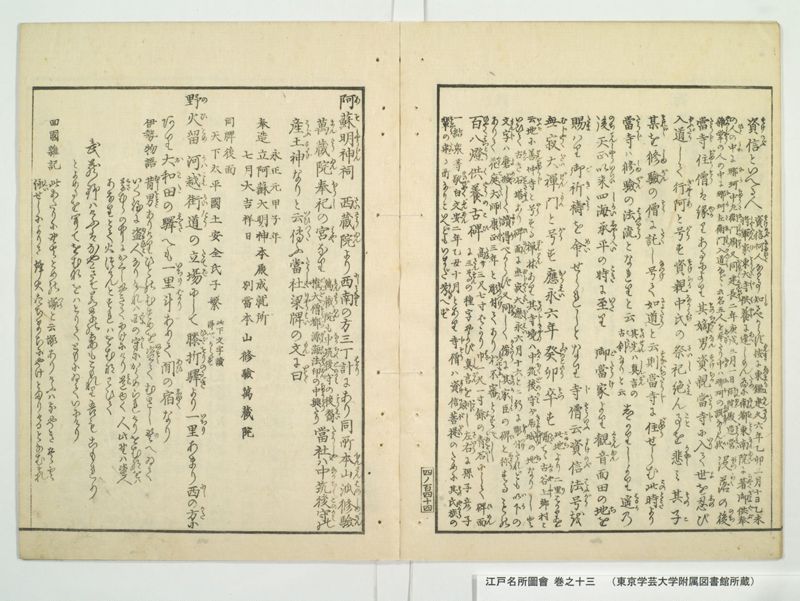
翻刻
【右丁】
資信(すけのぶ)といへる人《割書:資信(すけのぶ)何人(なにひと)なる事 知(しる)るべからず按(あんする)に東鑑(あづまかゞみ)建久(けんきう)六年乙卯三月十日乙未|将軍家(しやうぐんけ)東大寺(とうだいじ)供養(くやう)に逢(あは)しめん為(ため)に南都(なんと)東南院(とうなんゐん)に著御(ちやくぎよ)供奉(ぐぶ)》
《割書:の人(ひと)の中(うち)に那珂中左衛門尉(なかちゆうさゑもんのせう)又 同(おなじく)建長(けんちやう)二年庚戌三月一日 閑院殿(かんゐん )造営(ざうえい)|雑掌(ざつしやう)の人の中に那珂左衛門入道(なかさゑもんにふだう)などゝ云名五人を挙(あげ)たり中(なか)は那珂(なか)の誤(あやまり)ならん欤(か)》没落(ぼつらく)の後(のち)
当寺(たうじ)住僧(ぢゆうそう)と縁(ゆか)りあるにより其(その)嫡男(ちやくなん)資親(すけちか)当寺(たうじ)に入(いり)て世(よ)を忍(しの)び
入道(にふだう)して行阿(ぎやうあ)と号(がう)す資親(すけちか)中氏(なかうぢ)の祭祀(さいし)絶(たえ)ん事(こと)を悲(かなし)み其子(そのこ)
某(それがし)を修験(しゆげん)の僧(そう)に託(たく)し号(なつけ)て如道(によたう)と云 則(すなはち)当寺(たうじ)に住(ぢゆう)せしむ此時(このとき)より
当寺(たうじ)は修験(しゆげん)の法流(はふりう)となれりと云《割書:其先(そのせん)は真言(しんごん)の|古刹(こさつ)なりと云》しかりしより遙(はるか)の
後(のち)天正以来(てんしやういらい)四海承平(しかいしやうへい)の時(とき)に至(いた)り 御当家(ごたうけ)より観音(くわんおん)面田の地(ち)を
賜(たまはり)御祈祷(ごきたう)を命(めい)せられしとなり寺僧云(じそういふ)資信(すけのぶ)法号(はふがう)を
無寂大禅門(むじやくだいぜんもん)と号(がう)す応永(おうえい)六年 癸卯(みづのとのう)卒(そつ)す《割書:此地(このち)より二里( り)はかりを|隔(へだ)てゝ古谷上郷村(ふるやしやう )と》
《割書:云地(いふち)に善仲寺(せんちゆうじ)と号(がう)する禅林(ぜんりん)あり其(その)寺境(じきやう)は中筑後守(なかちくごのかみ)が居城(きよじやう)の地(ち)なりしと|いひて古(ふる)き石塔(せきたふ)あり碑面(ひめん)に無寂大(むじやくたい)応永(おうえい)六月十六と二行に彫付(ほりつけ)たれども以下(いか)の》
《割書:文字(もんじ)は磨滅(まめつ)して読得(よみう)べからず又 同(おな)しく傍(かたはら)に其(その)家臣(かしん)の碑(ひ)と称(しよう)するもの|ありて花庭大師(くわていたいし)康正(かうしやう)三年と彫付(ほりつけ)てあり尤(もつとも)不審(ふしん)とすべし》
百八灯供養古碑(ひやくはつとうくやうのこひ) 《割書:高(たか)さ三尺七寸ばかり巾(はゞ)一尺一寸 余(よ)の青石(あをいし)にして碑面(ひめん)|に三尊(さんそん)の種字および真言(しんごん)を刻(こく)し左右(さいう)に孫子彦子》
《割書:一結衆等 敬白(けいびやく)文安(ぶんあん)二年乙丑十月とあり寺僧(じそう)は資信(すけのぶ)菩提(ぼだい)のために其(その)氏族(やから)の|輩(ともがら)の建(たつ)る所なりといへどもいまだ考(かんが)へず》
【左丁】
阿蘇明神祠(あそみやうじん ) 西蔵院(さいさうゐん)より西南(にしみなみ)の方三丁 計(はかり)にあり同所 本山派(ほんさんはの)修験(しゆげん)
万蔵院(まんさうゐん)奉祀(ほうし)の宮(みや)なり《割書:万蔵院(まんさうゐん)も中筑後守(なかちくごのかみ)の後裔(こうえい)|権大僧都源海法印(ごんだいそうづげんかいほふゐん)の中興(ちゆうこう)たり》当社(たうしや)は中筑後守(なかちくごのかみ)の
産土神(うぶすな)なりと云伝(いひつた)ふ当社(たうしや)梁牌(りやうはい)の文(もん)に曰(いはく)
永正元甲子年
奉造立阿蘇大明神本殿成就所
七月大吉祥日 別当本山修験万蔵院
同牌後面
天下太平国土安全氏子繁《割書:此下文字読|得べからず》
野火留(のひとめ) 河越街道(かはこえかいたう)の立場(たてば)にして膝折駅(ひざをりのえき)より一里(いちり)あまり西(にし)の方(かた)に
あり大和田(おわた)の駅(えき)へも一里(いちり)斗(ばかり)ありて間(あひ)の宿(しゆく)なり
《割書:伊勢物語 昔(むかし)男(をとこ)ありけりひとのむすめを盗(ぬすみ)てむさし野(の)へゐて| いく程に盗人(ぬすひと)ありけれは国(くに)の守(かみ)にからめられけりをむなをは| 草(くさ)むらの中にかくしおきてにけにけり道(みち)ゆく人此野は盗人| あなりとて火つけんとすれはをむなわひて》
武蔵野はけふはなやきそ若草の妻もこもれり吾もこもれり
《割書:とよめるを聞てをむなをはとりてともにゐていにけり》
《割書:回国雑記 此あたりに野火とめの塚(つか)と云塚ありけふはなやきそと| 詠(えい)せしによりて烽火たちまちにやけとまりけるとなむそれ》
現代語訳
## 【右丁】
資信(すけのぶ)という人——
(割注:資信がいかなる人物であるかは知ることができない。按ずるに、『吾妻鏡』建久六年乙卯三月十日乙未の条に、将軍家が東大寺の供養に参加されるために南都東南院に御着きになった際の供奉の人々の中に「那珂中左衛門尉」の名があり、また同じく建長二年庚戌三月一日、閑院殿造営の雑掌の人々の中に「那珂左衛門入道」などという名が五人挙げられている。「中」は「那珂」の誤りであろうか。)
——没落の後、当寺の住僧と縁があったことから、その嫡男・資親(すけちか)が当寺に入り、世を忍んで入道し、行阿(ぎょうあ)と号した。資親は中氏の祭祀が絶えることを悲しみ、その子某を修験の僧に託して、如道(にょどう)と名付け、すなわち当寺に住まわせた。この時より当寺は修験の法流となったという。
(割注:それ以前は真言の古刹であったという。)
それより遥か後、天正以来、四海が承平の時に至り、御当家より観音面田の地を賜り、御祈祷を命ぜられたとのことである。寺僧が言うには、資信の法号を「無寂大禅門」と号し、応永六年癸卯に没したという。
(割注:この地より二里ほど隔てて、古谷上郷村という地に善仲寺と号する禅林がある。その寺境は中筑後守の居城の地であったといい、古い石塔がある。碑面に「無寂大 応永 六月十六」と二行に彫り付けてあるが、以下の文字は磨滅して読むことができない。また同じく傍らに、その家臣の碑と称するものがあり、「花庭大師 康正三年」と彫り付けてある。これはまことに不審とすべきである。)
**百八灯供養の古碑**
(割注:高さ三尺七寸ばかり、幅一尺一寸余の青石にして、碑面に三尊の種字および真言を刻し、左右に「孫子彦子 一結衆等 敬白 文安二年乙丑十月」とある。寺僧は、資信の菩提のためにその一族の者たちが建てたものであると言うが、いまだ確かめていない。)
## 【左丁】
**阿蘇明神祠** ―― 西蔵院より西南の方、三丁ばかりにある。同所の本山派修験・万蔵院が奉祀する宮である。
(割注:万蔵院もまた、中筑後守の後裔、権大僧都源海法印の中興による。)
当社は中筑後守の産土神であると言い伝えている。当社の梁牌の文に曰く、
> 永正元甲子年
> 奉造立 阿蘇大明神本殿成就所
> 七月大吉祥日 別当本山修験万蔵院
同牌の後面に、
> 天下太平 国土安全 氏子繁……(割注:この下の文字は読むことができない。)
---
**野火留** ―― 河越街道の立場(たてば)にして、膝折駅より一里あまり西の方にある。大和田の駅へも一里ばかりあり、間の宿(あいのしゅく)である。
(割注:『伊勢物語』に、「昔、男ありけり。人の娘を盗みて武蔵野へ連れて行くほどに、盗人ありけれは、国の守に捕らえられけり。女をば草むらの中に隠し置いて逃げにけり。道ゆく人が『この野は盗人があるぞ』とて火を付けようとすれば、女が詠んだのは、」)
> 武蔵野は けふはな焼きそ 若草の 妻もこもれり 我もこもれり
(割注:と詠んだのを聞いて、女を取り戻してともに連れて行ったという。)
(割注:『回国雑記』に、「このあたりに野火とめの塚という塚があった。『けふはな焼きそ』と詠んだことによって、烽火がたちまち燃えとまったのであるという。それゆえに……」)
英語訳
## [Right Page]
A man called Sukenobu —
*(Interlinear note: It is impossible to determine who Sukenobu was. It is noted, however, that in the Azuma Kagami, under the entry for the tenth day of the third month of Kenkyū 6 [1195], when the shogunal household arrived at Tōnan'in in Nanto [Nara] for the dedication ceremony of Tōdaiji, among those in attendance was a certain "Naka Chū Saemon-no-Jō." Likewise, in the entry for the first day of the third month of Kenchō 2 [1250], among those listed as administrators (zasshō) for the construction of Kan'in-dono, names including "Naka Saemon Nyūdō" and others are given — five persons in total. The character "Naka [中]" may be an error for "Naka [那珂].")*
After the fall of the Naka clan, their eldest son Sukechika, having ties with the resident monks of this temple, entered the temple, renounced the world in secrecy, took the tonsure, and took the religious name Gyōa. Grieving that the ancestral rites of the Naka clan would cease, Sukechika entrusted his son to the life of a shugendo monk and named him Nyōdō, having him reside at this temple. It is said that from this time onward, this temple came to follow the tradition of shugendo.
*(Interlinear note: Prior to this, the temple is said to have been an ancient Shingon establishment.)*
Much later, after the Tenshō era [1573–1592], when peace was restored throughout the realm, the honorable house [of the Tokugawa] granted the temple the land of Kannon Omota and ordered it to conduct prayers. According to the temple monks, Sukenobu's posthumous Buddhist name was "Mujaku Daizerumon," and he died in the Kanoe-tatsu year of Ōei 6 [1399].
*(Interlinear note: About two ri [~8 km] distant from this place, in a location called Furuya Shōgō Village, there is a Zen temple called Senchūji. The temple grounds are said to have been the site of Naka Chikugo-no-Kami's castle, and there is an old stone monument there. Carved on the face of the monument in two lines are the characters "Mujaku Dai — Ōei — Sixth Month, Sixteenth [Day]," but the remaining characters below are worn away and cannot be read. Alongside it stands another monument said to be that of one of his retainers, inscribed "Katei Daishi, Kōshō 3 [1457]." This is indeed most suspicious and doubtful.)*
**Ancient Monument of the Hundred and Eight Lamp Offering**
*(Interlinear note: A blue-stone stele approximately three shaku seven sun [~112 cm] in height and over one shaku one sun [~33 cm] in width. On its face are carved the seed syllables of the Three Honored Ones (sanzōn) and a Shingon mantra, with the inscription on the left and right sides reading: "Mago-ko Hiko-ko / Ichiketsushū-tō Keibyaku / Bun'an 2nd year, Otoshi [1445], Tenth Month." The temple monks say it was erected by members of Sukenobu's clan for the repose of his soul, but this has not yet been verified.)*
## [Left Page]
**Shrine of Aso Myōjin** — Located approximately three chō [~330 meters] to the southwest of Saizōin. It is a shrine tended by Manzōin, a Honzan-ha shugendo establishment in the same area.
*(Interlinear note: Manzōin was also restored by Gon-Daisōzu Genkai Hōin, a descendant of Naka Chikugo-no-Kami.)*
It is handed down that this shrine enshrines the tutelary deity (ubusuna-gami) of Naka Chikugo-no-Kami. The inscription on the ridge-plaque (ryōhai) of the shrine reads:
> Eirō 1, Kinoe-Ne year [1504]
> Erected in prayer for the completion of the main hall of Aso Daimyōjin
> Seventh Month, a day of great auspiciousness — Bettō [administrator], Honzan Shugendo Manzōin
On the reverse side of the same plaque:
> Peace under heaven; security throughout the realm; prosperity of the parishioners — *(Interlinear note: The characters below this point are illegible.)*
---
**Nobidomé** — A resting station (tateba) on the Kawagoe Highway, located over one ri [~4 km] to the west of the Hizaori station. It is also about one ri from the Ōwada station, and serves as an intermediate post-stop (ai-no-shuku).
*(Interlinear note: In the Ise Monogatari [Tales of Ise], it is written: "Long ago, there was a man. He stole another man's daughter and took her away to the Musashino plain. Along the way, it was discovered that he was an abductor, and he was caught by the provincial governor. He hid the woman in the grass and fled. When travelers came and said, 'There are thieves in this field — let us set fire to it!' the woman, in her distress, composed the following poem:")*
> *Musashino wa* / *kyō wa na yaki so* / *wakakusa no* / *tsuma mo komore ri* / *ware mo komore ri*
>
> (Do not burn the Musashino plain today — hidden in the young grass is my husband, and I too am hidden here.)
*(Interlinear note: Hearing this poem, the man retrieved the woman and together they departed.)*
*(Interlinear note: In the Kaikoku Zakki [Record of Travels Through the Provinces], it is written: "In this area there is a mound called 'Nobidomé no Tsuka.' It is said that because of the poem 'Do not burn [the plain] today,' the signal fire immediately stopped burning. Therefore…")*