翻刻
【右丁】
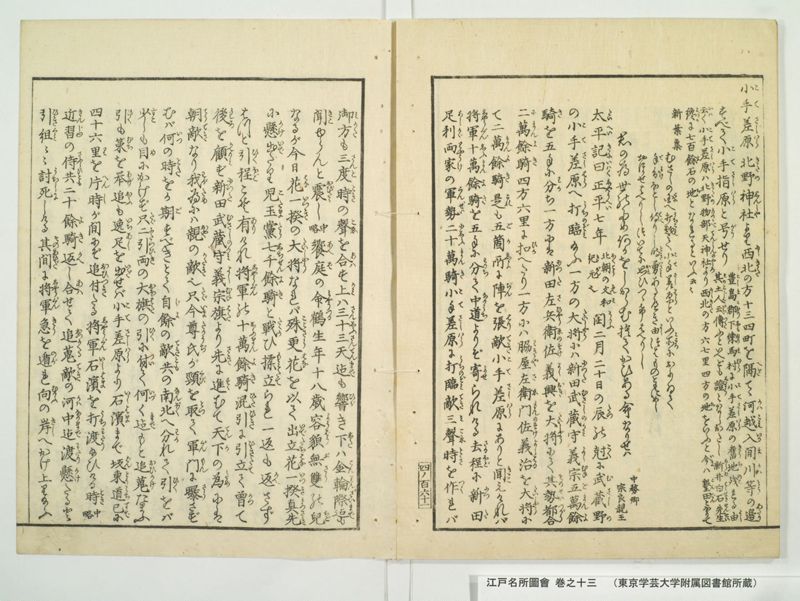
小手差原(こてさしはら) 北野神社(きたのしんしや)より西北(にしきた)の方十三四町を隔(へだ)てゝ河越(かはこえ)入間川(いるまかは)等(とう)の辺(あたり)
すべて小手指原(こてさしはら)と号(がう)せり《割書:豊島郡(としまこほり)下練馬村(しもねりまむら)に小手差原(こてさしはら)の旧地(きうち)残(のこ)れる由(よし)|其(その)土人(とじん)云伝(いひつた)ふといへども証(しよう)となしかたし新井白石先生(あらゐはくせきせんせい)》
《割書:云(いは)く小手差原(こてさしはら)は北野物部天神社(きたのものゝべてんしんのやしろ)より西北(にしきた)の方六七里四方の地(ち)をいふと今(いま)は墾田(こんでん)となりて|纔(わづか)に七百余石( よ )の地(ち)となれるといふ云々》
《割書:新葉集| むさしの国(くに)へ打越(うちこえ)て小手差原(こてさしはら)といふ所(ところ)におりゐて| 手分(てわけ)なとし侍(はべ)りし時(とき)勇(いさみ)あるへき由(よし)つはものともにめし| おほせはへりしついてに思(おも)ひつゝけはへりし》
君の為世のため何かをしからむ捨てすひある命なりせは 《割書:中務卿| 宗良親王》
太平記曰(たいへいきにいはく)正平(しやうへい)七年《割書:北朝(ほくてう)の文和(ふんわ)|紀元(きげん)也》閏(うるふ)二月二十日の《振り仮名:辰の刻|たつ こく》に武蔵野(むさしの)
の小手差原(こてさしはら)へ打臨(うちのぞみ)給ふ一方の大将(たいしやう)には新田武蔵守義宗(につたむさしのかみよしむね)五万余(ごまんよ)
騎(き)を五手に分(わか)ち一方には新田左兵衛佐義興(につたさひやうゑのすけよしおき)を大将(たいしやう)にて其勢(そのせい)都合(つがう)
二万余騎(にまんよき)四方六里に扣(ひか)へたり一方には脇屋左衛門佐義治(わきやさゑもんのすけよしはる)を大将(たいしやう)に
て二万余騎( まんよき)是(これ)も五箇所(ごかしよ)に陣(ぢん)を張(はり)敵(てき)小手差原(こてさしはら)にありと聞(きこ)えければ
将軍(しやうぐん)十万余騎(しふまんよき)を五手に分(わかち)て中道(なかみち)よりぞ寄(よせ)られける去程(さるほど)に新田(につた)
足利(あしかゞ)両家(りやうけ)の軍勢(くんぜい)二十万騎(にしふまんき)小手差原(こてさしはら)に打臨(うちのぞみ)敵(てき)三声(みこゑ)時(とき)を作(つく)れば
【左丁】
御方(みかた)も三度(さんと)時(とき)の声(こゑ)を合(あは)す上(かみ)は三十三天(さんしふさんてん)迄(まで)も響(ひゞ)き下(した)は金輪際(こんりんざい)迄(まで)も
聞(きこ)ゆらんと震(おびたゝ)し《割書:中|略》《振り仮名:饗庭の命鶴|あへば みやうつる》生年十八歳 容貌(ようばう)無雙(ぶさう)の児(ちご)
なるが今日 花一揆(はないつき)の大将(たいしやう)なれば殊更(ことさら)花(はな)を以て出立(いでたち)花一揆(はないつき)真先(まつさき)
に懸出(かけいで)たり児玉党(こたまたう)七千余騎(しちせんよき)と戦(たゝか)ひ揉立(もみたて)られ一返も返(かへ)さず
はつと引程(ひくほど)こそ有(あり)けれ将軍(しやうぐん)の十万余騎(しふまんよき)混引(ひたひき)に引立(ひきたて)て曽(かつ)て
後(うしろ)を顧(かへりみ)ず新田武蔵守義宗(につたむさしのかみよしむね)旗(はた)より先(さき)に進(すゝ)むて天下(てんか)の為(ため)には
朝敵(てうてき)なり我為(わがため)には親(おや)の敵(かたき)也 只今(たゞいま)尊氏(たかうぢ)が頸(くび)を取(とつ)て軍門(ぐんもん)に曝(さら)さず
むば何(いつ)の時(とき)をか期(ご)すべきとて自余(じよ)の敵共(てきとも)の南北(なんぼく)へ分(わか)れて引(ひく)をば
少(すこ)しも目(め)にかけず只(たゞ)二引両(ふたつひき)の大旗(おほはた)の引(ひく)に付(つい)て何(いづ)く迄(まで)もと追蒐(おひかけ)たまふ
引(ひく)も策(むち)を挙(あげ)追(おふ)も逸足(いちあし)を出(いだ)せば小手差原(ことさしはら)より石浜(いしはま)まで坂東道(ばんとうみち)已(すで)に
四十六里( り)を片時(へんし)が間にぞ追付(おひつき)たる将軍(しやうぐん)石浜(いしはま)を打渡(うちわたり)給ひける時(とき)《割書:中|略》
近習(きんじゆ)の侍共(さふらひとも)二十余騎( よき)返(かへ)し合(あは)せて追蒐(おつかくる)敵(てき)の河中(かはなか)迄(まで)渡懸(わたりかけ)たると
引組(ひきくみ)々々 討死(うちしに)しける其間(そのあひだ)に将軍(しやうぐん)急(きう)を遁(のが)れ向(むかふ)の岸(きし)へかけ上り給ふ
現代語訳
## 小手指原(こてさしはら)
北野神社より西北の方、十三、四町を隔てて、川越・入間川などの辺り一帯を小手指原と呼ぶ。
【割注】豊島郡下練馬村に小手指原の旧地が残っているとその土地の人々が言い伝えているが、証拠とするのは難しい。新井白石先生が言うには、小手指原は北野物部天神社より西北の方、六、七里四方の土地のことを指す。現在は開墾されて、わずかに七百余石の地となっているという。云々。
【新葉集より】
武蔵の国へ打ち越えて、小手指原という所に陣を構え、手分けなどをしていた時に、勇気あるべき旨を武士たちにお命じになった折に、思い続けられた歌:
君のため世のために何か惜しからん 捨ててし後ある命なりせば
(中務卿 宗良親王)
【太平記に曰く】正平七年(北朝の文和の紀元にあたる)閏二月二十日の辰の刻に、武蔵野の小手指原へ打ち臨まれた。一方の大将には新田武蔵守義宗が五万余騎を五手に分け、一方には新田左兵衛佐義興を大将として、その勢い合わせて二万余騎が四方六里に控えていた。もう一方には脇屋左衛門佐義治を大将として二万余騎が、これも五か所に陣を張った。敵が小手指原にいると聞こえてきたので、将軍(足利尊氏)は十万余騎を五手に分けて中道より攻め寄せられた。こうして新田・足利両家の軍勢二十万騎が小手指原に打ち臨み、敵が三声、鬨の声を上げれば、味方も三度鬨の声で応じた。その声は上は三十三天にまで響き、下は金輪際にまで聞こえるかと思われるほど凄まじかった。
【中略】
饗庭の命鶴丸、年齢十八歳、容貌無双の若者であるが、今日は花一揆の大将であるから、ことさら花をもって出立し、花一揆の真先に駆け出た。児玉党七千余騎と戦い、もみ立てられて一度も返すことなく、はっと引くほどであった。将軍の十万余騎は一直線に引き立てて、まったく後ろを顧みなかった。新田武蔵守義宗は旗よりも先に進んで、「天下のためには朝敵であり、我がためには親の仇である。ただ今、尊氏の首を取って軍門に晒さずして、いつの時を期すべきか」と言って、他の敵どもが南北へ分かれて引くのを少しも目にかけず、ただ二引両の大旗が引くのに付いて、どこまでもと追い駆けられた。引く者は鞭を挙げ、追う者も逸足を出せば、小手指原から石浜まで坂東路すでに四十六里を、またたく間に追いついた。将軍が石浜を打ち渡られた時、【中略】近習の侍ども二十余騎が返し合わせて、追いかけてくる敵が川の中まで渡りかかったところを、引き組み引き組み討ち死にした。その間に将軍はかろうじて難を逃れ、向こうの岸へ駆け上られた。
英語訳
## Kotesashi Plain (小手指原)
The area spanning approximately thirteen to fourteen *chō* (roughly 1.5 km) to the northwest of Kitano Shrine, encompassing the regions around Kawagoe and the Iruma River, is collectively known as Kotesashi Plain.
[Interlinear note] It is said by local people that the old site of Kotesashi Plain remains in Shimo-Nerima Village, Toshima District, though this is difficult to verify. Scholar Arai Hakuseki stated that Kotesashi Plain refers to the land stretching six or seven *ri* (roughly 24–28 km) in all directions to the northwest of Kitano Mononobe Tenjin Shrine. He noted that it has since been cultivated and reduced to a mere seven hundred-odd *koku* of land. And so on.
[From the *Shin'yōshū* poetry anthology]
*On crossing into Musashi Province and encamping at a place called Kotesashi Plain, while assigning positions to the troops, and commanding the warriors to be courageous, the following poem was composed:*
*Kimi no tame yo no tame nani ka oshikaran / sutete shi nochi aru inochi nari se ba*
("What is there to regret, for the sake of my lord and for the sake of the world? / If only this life, cast aside, might yet endure afterward.")
— His Imperial Highness Prince Muneyoshi (Munenaga), Minister of Central Affairs
[As recorded in the *Taiheiki*] On the twentieth day of the intercalary second month of Shōhei 7 (corresponding to the first year of Bunna in the Northern Court calendar), at the Hour of the Dragon, the forces descended upon Kotesashi Plain in Musashino. One commanding general, Nitta Musashi-no-kami Yoshimune, divided over fifty thousand cavalry into five contingents. Under another commander, Nitta Sahyōe-no-suke Yoshioki, a force of over twenty thousand cavalry was deployed, holding positions across a six-*ri* radius. A further force of over twenty thousand cavalry under Wakiya Saemon-no-suke Yoshiharu was arrayed at five separate positions. Upon hearing that the enemy was at Kotesashi Plain, the Shōgun (Ashikaga Takauji) divided his one hundred thousand cavalry into five contingents and advanced along the central road. Thus, the combined forces of the Nitta and Ashikaga clans — two hundred thousand cavalry in all — descended upon Kotesashi Plain. When the enemy raised three battle cries, the allied forces responded with three cries of their own. The sound seemed to reverberate as high as the thirty-three heavens and as deep as the foundation of the earth — so tremendous was the uproar.
[Passage omitted]
Aeba no Myōtsurumaru, eighteen years of age, a youth of incomparable beauty, served as the commander of the *Hana Ikki* (Flower Band) that day. Adorned especially with flowers as befitting his role, he charged out at the very vanguard of the Hana Ikki. He fought fiercely against the seven thousand cavalry of the Kodama clan, was pressed hard, and was driven back without being able to turn the tide even once. The Shōgun's one hundred thousand cavalry retreated in a straight line without looking back. Nitta Yoshimune advanced ahead of his own standard, declaring: "He is a rebel against the imperial court and the enemy who slew my father. If I do not take Takauji's head this very moment and display it before the army gate, when shall I ever have my chance?" Paying no heed whatsoever to the other enemy troops retreating to the north and south, he pursued only the great banner bearing the two-line *hikiryō* crest wherever it fled. As the fleeing forces whipped their horses and the pursuers drove their fastest steeds, the forty-six *ri* (roughly 180 km) of the Bandō road from Kotesashi Plain to Ishihama was covered in an instant. When the Shōgun crossed over Ishihama — [passage omitted] — some twenty-odd of his close attendants wheeled around to meet the pursuing enemy as they began to ford the river, grappling with them one after another until they fell in battle. During this interval, the Shōgun barely managed to escape his desperate situation and galloped up onto the opposite bank.