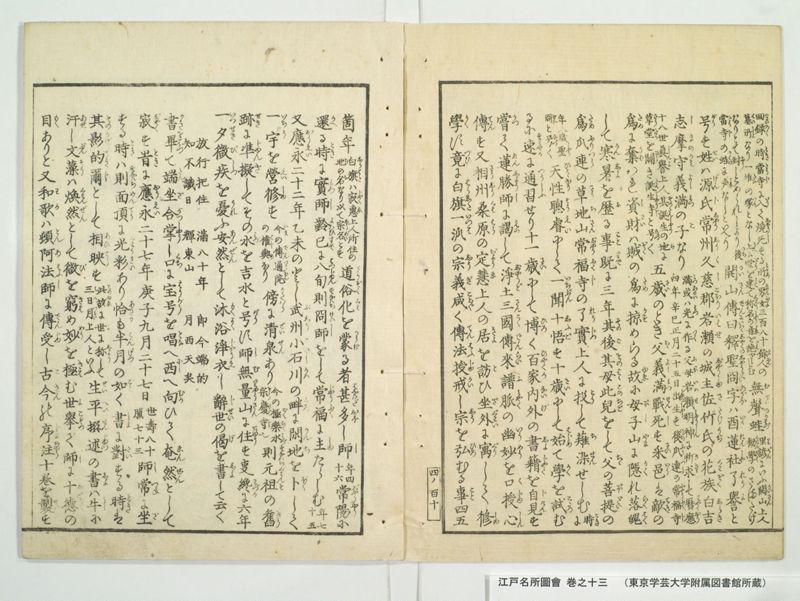
翻刻
【右丁】
《割書:回録(くわいろく)の時(とき)当寺(たうじ)に入(いり)て焼死(しやうし)する所(ところ)の男女(なんによ)三百八十余人( よにん)の|墓所(はかしよ)なり一堆( たい)の塚(つか)となし上(うへ)に堂(だう)を建(たて)て称名(しようみやう)の音(こゑ)を絶(たえ)ざらしむ》無声蛙(むせいのかはづ)《割書:里諺(りげん)にいふ開山上人(かいさん )|勧学(くわんかく)のさまたげ》
《割書:なりとて封(ふう)しこめられしより後(のち)|当寺(たうじ)の蛙(かはつ)に声(こゑ)なしといへり》開山伝曰(かいさんでんにいはく)釈(しやくの)聖冏(しやうけい)字(あざな)は酉蓮社了誉(いうれんしやれいよ)と
号(がう)す姓(せい)は源氏(げんじ)常州(しやうしう)久慈郡(くしこほり)岩瀬(いはせ)の城主(じやうしゆ)佐竹氏(さたけうぢ)の花族(くわぞく)白吉(しらき)
志摩守義満(しまのかみよしみつ)の子(こ)なり《割書:満(みつ)或(あるい)は光(みつ)に作(つく)る父母(ふぼ)岩瀬明神(いはせみやうしん)に祈求(ききう)して暦応(りやくおう)|四年辛巳正月二十五日 出生(しゆつしやう)す後(のち)瓜連(ふりつら)の常福寺(じやうふくじ)》
《割書:十八世 真誉上人(しんよ )其(その)誕生(たんしやう)の地(ち)に|草堂(さうたう)を闢(ひら)き誕生寺(たんしやうじ)と号(なづ)く》五歳( さい)のとき父(ちゝ)義満(よしみつ)戦死(せんし)す采邑(さいいう)は敵(てき)の
為(ため)に奪(うば)#1はれ資材(しさい)は賊(ぞく)の為(ため)に掠(かす)めらる故(ゆゑ)に母子(ぼし)山(やま)に隠(かく)れ落魄(らくはく)
して寒暑(かんしよ)を歴(ふ)る事(こと)既(すで)に三年 其後(そのご)其母(そのはゝ)此児(このちご)をして父(ちゝ)の菩提(ぼだい)の
為(ため)瓜連(ふりつら)の草地山(さうちさん)常福寺(じやうふくじ)の了実上人(れうじつ )に投(とう)して薙染(ちせん)せしむ《割書:時(とき)|に》
《割書:年八歳 聖(しやう)|冏(けい)と号(なづ)く》天性(ひとゝなり)聡睿(そうえい)にして一聞十悟(いちぶんしふご)を十歳( さい)にして始(はじめ)て学(かく)を試(こゝろ)む
るに速(すみやか)に通習(つうしふ)せり十一歳( さい)にして博(ひろ)く百家(ひやくか)内外(ないげ)の書籍(しよじやく)を自見(じけん)す
嘗(かつ)て蓮勝師(れんしようし)に謁(えつ)して浄土(じやうど)三国伝来(さんこくでんらい)譜脈(ふみやく)の幽妙(いうめう)を口授(くじゆ)心(しん)
伝(てん)す又 相州(さうしう)桑原(くははら)の定慧上人(ぢようゑ )の居(きよ)を訪(と)ひ坐外(ざぐわい)に寓(ぐう)して修(しゆ)
学(かく)す竟(つひ)に白旗(はらした)#2一派(いつは)の宗義(しうぎ)咸(こと〴〵)く伝法(てんはふ)授戒(じゆかい)し宗(しう)を弘(ひろ)むる事(こと)四五
【左丁】
箇年《割書:白旗(しらはた)は寂恵上人(じやくゑ )所住の|地(ち)の名(な)なり以て宗名(しうめい)とす》道俗(だうぞく)化(くわ)を蒙(かうむ)る者 甚(はなはだ)多(おほ)し師(し)《割書:年四|十六》常陽(ぢやうやう)に
還(かへ)る時(とき)実師(じつし)齢(よはひ)已(すで)に八旬(はつじゆん)則(すなはち)冏師(けいし)をして常福(じやうふく)に主(しゆ)たらしむ《割書:年七|十五》
又 応永(おうえい)二十二年乙未のとし武州(ぶしう)小石川(こいしかは)の畔(くろ)に閑地(かんち)を卜(ぼく)して
一宇(いちう)を営修(えいしゆ)す《割書:今(いま)の伝通院(でんつうゐん)|の権輿(はじめ)なり》傍(かたはら)に清泉(せいせん)あり《割書:今の極楽水(ごくらくみづ)|宗慶寺(そうけいじ)也》則(すなはち)元祖(ぐわんそ)の旧(きう)
跡(せき)に準擬(じゆんぎ)してその水(みづ)を吉水と号(がう)す師(し)無量山(むりやうさん)に住(ぢゆう)す事 纔(わづか)に六年
一夕(いつせき)微疾(びしつ)を憂(うれ)ふ安然(あんぜん)として沐浴(もくよく)浄衣(じやうえ)し辞世(じせい)の偈(げ)を書(しよ)して云く
放行把住 満八十年 即今端的
知不識日 輝東山 月西天矣
書畢(かきをはつ)て端坐(たんざ)合掌(がつしやう)し口(くち)に宝号(はうがう)を唱(とな)へ西(にし)へ向(むか)ひて奄然(ゑんぜん)として
寂(じやく)す旹(とき)に応永(おうえい)二十七年庚子九月二十七日《割書:世寿八十|臘七十三》師(し)常(つね)に坐(ざ)
する時(とき)は則(すなはち)面頂(めんてう)に光彩(くわうさい)あり恰(あたか)も半月(はんげつ)の如(ごと)く書(しよ)に対(たい)する時(とき)は
其影(そのかげ)的爾(てきじ)として相映(あひてら)す《割書:此故(このゆえ)に世(よ)に称(しよう)して|三日月上人(みかつき )といふ》生平(せいへい)撰述(せんじゆつ)の書(しよ)は牛(うし)に
汗(あせ)し文藻(ぶんそう)は煥然(くわんぜん)として微(び)を窮(きは)め妙(めう)を極(きは)む世(よ)挙(こぞつ)て師(し)に十徳(しふとく)の
目(もく)ありと又 和歌(わか)は頓阿法師(とんあはふし)に伝受(でんじゆ)し古今(こきん)の序注(じよちゆう)十巻を製(せい)す
現代語訳
【右丁】
**(無声の蛙)**
〔割注:回禄(火事)の際、当寺に逃げ込んで焼死した男女三百八十余人の墓所である。一堆の塚を築き、その上に堂を建てて、称名念仏の声が絶えないようにしている。〕
**無声の蛙**
〔割注:里の言い伝えによれば、開山上人が勧学(修学)の妨げになるとして蛙を封じ込めてより後、当寺の蛙には声がないと言われている。〕
**開山伝(かいさんでん)に曰く:**
釈聖冏(しゃくのしょうけい)、字(あざな)は酉蓮社了誉(ゆうれんしゃりょうよ)と号す。姓は源氏、常州(常陸国)久慈郡岩瀬の城主・佐竹氏の一族、白吉志摩守義満の子である。
〔割注:「満」はある本では「光」に作る。父母が岩瀬明神に祈願して、暦応四年辛巳(1341年)正月二十五日に生まれた。後に、瓜連(ふりつら)の常福寺十八世・真誉上人が、その誕生の地に草堂を開き、誕生寺と名付けた。〕
五歳のとき、父・義満が戦死した。所領(采邑)は敵に奪われ、財産は賊に掠め取られた。それゆえ母子は山中に身を隠し、落ちぶれて寒暑をしのぐこと既に三年。その後、母はこの子をして亡父の菩提のために、瓜連の草地山常福寺の了実上人に託して出家・剃髪させた。
〔割注:このとき年八歳。聖冏と号す。〕
生まれつき聡明にして、一を聞いて十を悟る才があった。十歳にしてはじめて学を試みると、速やかに習得した。十一歳にして広く百家・内外の書籍を独学で読みこなした。かつて蓮勝師に謁して、浄土三国(インド・中国・日本)伝来の譜脈の奥義を口授・心伝された。また相州(相模国)桑原の定慧上人の居所を訪ね、座の外に寄宿して修学した。ついには白旗一派の宗義をことごとく伝法・授戒し、宗を弘めること四・五
【左丁】
箇年。
〔割注:白旗(しらはた)は寂恵上人の住所の地名であり、それをもって宗名とする。〕
道俗(僧俗)の中で教化を受けた者はきわめて多かった。師は
〔割注:年四十六〕
常陽(常陸国)に帰った。そのとき実師(了実上人)の齢はすでに八十を超えていたので、則ち聖冏師を常福寺の住職とさせた。
〔割注:年七十五〕
また、応永二十二年(1415年)乙未の年、武州(武蔵国)小石川の畔(ほとり)に閑静な土地を選んで、一堂を営み建てた。
〔割注:今の伝通院の起こりである。〕
傍らに清泉あり。
〔割注:今の極楽水・宗慶寺がこれである。〕
則ち元祖(法然上人)の旧跡に準えて、その水を「吉水」と号した。師は無量山に住すること僅か六年、ある夕べ軽い病を患った。安らかに沐浴して浄衣を着し、辞世の偈を書して云う:
> 放行把住 満八十年 即今端的
> 知不識日 輝東山 月西天矣
書き終えると端座・合掌し、口に宝号(南無阿弥陀仏)を唱えながら西に向かって、静かに入寂した。時に応永二十七年(1420年)庚子九月二十七日のことである。
〔割注:世寿八十、法臘七十三〕
師は常に坐するとき、頭頂に光彩があり、恰も半月のようであり、書物に向かうときはその影がくっきりと照り映えた。
〔割注:この故に世に称して「三日月上人」という。〕
生涯に撰述した書は、牛に汗かかせるほど(汗牛充棟)多く、文の才は煥然として深微を究め、妙を極めた。世挙って師に「十徳」の称号があるとした。また和歌は頓阿法師(とんあほうし)に伝受し、古今集の序注十巻を著した。
英語訳
【Right Page】
**(The Silent Frogs)**
[Side note: This is the burial site of over three hundred and eighty men and women who fled into this temple during a great fire (*kairyoku*) and perished in the flames. A burial mound was raised, a hall built atop it, and the chanting of the nembutsu has been kept unceasing ever since.]
**The Silent Frogs (*Musei no Kawazu*)**
[Side note: According to local legend, ever since the Founding Abbot sealed away the frogs, saying they were a disturbance to Buddhist study (*kangaku*), the frogs of this temple have had no voice.]
**From the Biography of the Founding Abbot (*Kaisanden*):**
The monk Shōkei (釈聖冏), whose religious name was *Yūrensha Ryōyo* (酉蓮社了誉), was of the Minamoto clan (*Genji*). He was the son of Shiraki Shimanokamiyoshimitsu, a retainer of the Satake clan — lords of Iwase in Kuji District, Hitachi Province (modern Ibaraki Prefecture), and a branch of the clan.
[Side note: "Mitsu" (満) is written as "Mitsu" (光) in some versions. His parents prayed at Iwase Myōjin Shrine, and he was born on the twenty-fifth day of the first month of Ryakuō 4 (1341), the year of the Metal Ox (*kanoto-mi*). Later, the eighteenth abbot of Jōfuku-ji temple in Furitura, the Venerable Shin'yo, opened a grass-thatched hall at the site of his birth and named it Tanjō-ji (Temple of Birth).]
At the age of five, his father Yoshimitsu died in battle. Their domain (*saiyu*) was seized by enemies, and their property was plundered by brigands. Mother and child therefore took refuge in the mountains, living in poverty through heat and cold for three full years. Afterwards, his mother entrusted this child to the Venerable Ryōjitsu of Jōfuku-ji on Mount Sōchi in Furitura, for the sake of his late father's salvation, and had him enter the priesthood.
[Side note: He was eight years old at the time. He took the religious name Shōkei.]
By nature he was exceptionally gifted and wise — hearing one thing, he would comprehend ten. At the age of ten, he first applied himself to study and mastered it with remarkable speed. By eleven, he had independently read widely across all schools of learning, both Buddhist and secular. He once had an audience with Master Renshō, from whom he received the oral and spiritual transmission of the profound lineage of Pure Land Buddhism transmitted through the three countries (India, China, and Japan). He also visited the residence of the Venerable Jōe of Kuwahara in Sagami Province (modern Kanagawa Prefecture), lodging outside the study hall to pursue his learning. Ultimately, he received complete transmission and ordination in the doctrines of the Shirahataichiha (White Flag) school, and spent four or five years spreading the teachings.
【Left Page】
[Side note: "Shirahatа" (White Flag) takes its name from the place where the Venerable Jaku-e resided, and this became the name of the school.]
A great many people — both clergy and laity — received his teachings. The master
[Side note: at the age of forty-six]
returned to Jōyō (Hitachi Province). At that time, his teacher Ryōjitsu was already past eighty in age (*hachijun*), and so he appointed Master Shōkei as the head priest of Jōfuku-ji.
[Side note: at the age of seventy-five]
Furthermore, in the twenty-second year of the Ōei era (1415), the year of *kinoto-hitsuji*, he selected a quiet piece of land on the bank of Koishikawa in Musashi Province and built a hall there.
[Side note: This is the origin of the present-day Dentsu-in temple.]
Beside it was a clear spring.
[Side note: This is the present-day Gokuraku-sui ("Pure Land Water") at Sōkei-ji temple.]
Following the example of the holy founder's (Hōnen's) sacred sites, he named that water *Yoshimizu* ("Auspicious Water"). The master dwelt at Muryōzan for a mere six years. One evening he fell mildly ill. Calmly he bathed, put on clean robes, and wrote a death poem (*jisei no ge*), saying:
> *Hōkō hashū — mitsu hachijūnen — sokkon tanteki*
> *Chi fu shiki nichi — kagayaku Tōzan — tsuki Seiten ni*
>
> *(Freely going forth and returning — fully eighty years — right now, directly:*
> *Known or unknown, the sun — shines upon the eastern mountains — the moon over the western sky.)*
Having finished writing, he sat upright, pressed his palms together, chanted the sacred name (*Namu Amida Butsu*) with his lips, faced west, and passed away serenely. This was on the twenty-seventh day of the ninth month of the twenty-seventh year of Ōei (1420), the year of *kanoe-ne*.
[Side note: Worldly age: eighty; years since ordination (*rō*): seventy-three.]
Whenever the master sat in meditation, there was a radiance upon his face and crown, just like a half-moon; and when he faced a book, his shadow shone distinctly against it.
[Side note: For this reason, he was known in the world as the "Crescent Moon Abbot" (*Mikazuki Shōnin*).]
The books he compiled throughout his life were so numerous as to make an ox sweat (a classical Chinese expression meaning an enormous quantity of writings); his literary talent was resplendent, penetrating the most subtle points and reaching the highest profundity. The world unanimously held that the master possessed the "ten virtues" (*jittoku*). He also received transmission of Japanese court poetry (*waka*) from the priest Tonna, and composed ten volumes of commentary on the prefaces to the *Kokinshū* (the Imperial Anthology of Japanese Poetry).