翻刻
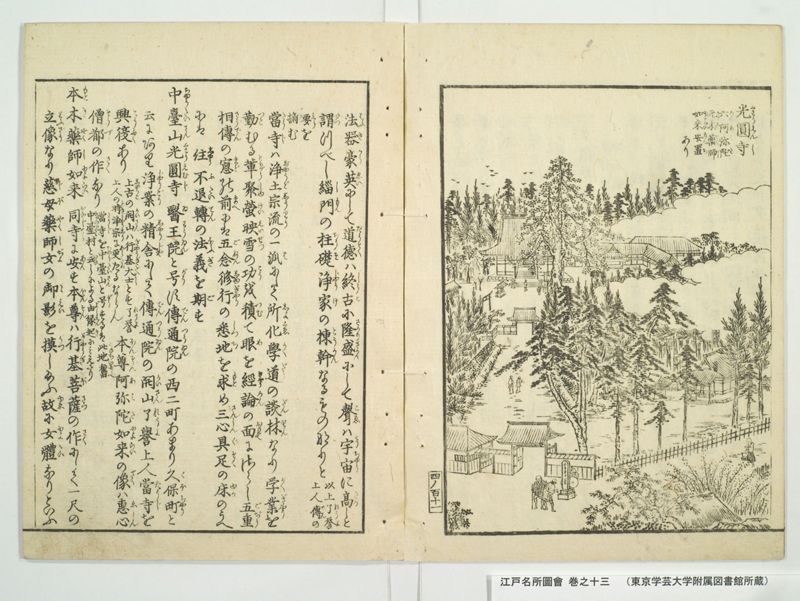
【右丁 絵図】
光円寺(くわうえんし)
六阿弥陀(ろくあみた)
元木薬師(もときやくし)
如来(によらい)安置(あんち)
あり
地蔵
本堂
【左丁】
法器(はふき)豪英(かうゑい)にして道徳(だうとく)は終古(しうこ)に隆盛(さかりさかん)にして声(こゑ)は宇宙(うちゆう)に高(たか)しと
謂(いつ)つべし緇門(しもん)の柱礎(ちうそ)浄家(じやうけ)の棟幹(とうかん)なるものなりと《割書:以上 了誉(れうよ)|上人伝( てん)の》
《割書:要(えう)を|摘(つ)む》
当寺(たうじ)は浄土宗流(じやうどしうりう)の一派( は)にして所化(しよくゑ)学道(かくだう)の談林(だんりん)なり学業(かくぎやう)を
勤(つと)むる輩(ともがら)聚蛍(しゆけい)映雪(えいせつ)の功(こう)を積(つむ)て眼(め)経論(きやうろん)の面(おもて)にさらし五重(ごぢう)
相伝(さうでん)の窓(まど)の前(まへ)には五念(ごねん)修行(しゆぎやう)の悉地(しつち)を求(もと)め三心(さんしん)具足(ぐそく)の床(ゆか)のうへ
には住不退転(しゆうふたいてん)の法義(ほふぎ)を期(ご)す
中台山(ちゆうたいさん)光円寺(くわうえむじ) 医王院(ゐわうゐん)と号(がう)す伝通院(でんつうゐん)の西二町あまり久保町(くほちやう)と
云にあり浄業(じやうごう)の精舎(しやうじや)にして伝通院(でんつうゐん)の開山(かいさん)了誉上人(れうよ )当寺(たうじ)を
興復(こうふく)あり《割書:上古(しやうこ)の開山(かいさん)は行基大士(ぎやうぎだいし)とす了誉(れうよ) |上人の時(とき)浄宗(じやうしう)に更(あらため)たるならん》本尊(ほんそん)阿弥陀如来(あみたによらい)の像(ざう)恵心(ゑしん)
僧都(そうづ)の作(さく)なり《割書:当寺(たうじ)を中台山(ちゆうたいさん)と号(がう)するは此地(このち)旧(いにしへ)|中台村(なかのだい )と云(いひ)しによる由(よし)縁起(えんき)にみえたり》
本木薬師如来(もときやくしによらい) 同寺(おなじてら)に安(あん)す本尊(ほんそん)は行基菩薩(ぎやうぎぼさつ)の作(さく)にして一尺の
立像(りふざう)なり慈母薬師女(じぼやくしぢよ)の御影(みえい)を摸(うつ)し給ふ故(ゆゑ)に女体(によたい)なりといふ
現代語訳
【右丁 絵図】
光円寺(こうえんじ)
六阿弥陀(ろくあみだ)
元木薬師(もときやくし)
如来(にょらい)安置(あんち)
あり
地蔵
本堂
---
【左丁】
(了誉上人は)法器(資質・器量)豪英にして、道徳は永遠にわたって盛んであり、その名声は宇宙に高くひびいたといってよい。僧門の柱・礎であり、浄土門(浄土宗)の棟梁・幹となる人物であった。
〔割注:以上は了誉上人伝の要点を摘録したものである。〕
当寺は浄土宗の一流派であり、修行僧たちが仏法を学ぶ談林(学問所)である。学業に励む者たちは、蛍を集め雪に映えて読書した古人の刻苦精励にならいその功を積んで、目を経論の上に注ぎ、五重相伝の学修においては五念修行の成就(悉地)を求め、三心具足の修行においては不退転の境地(住不退転)の法義を期すのである。
---
**中台山光円寺 医王院と号す**
伝通院の西二町あまり、久保町というところにある。浄土修行の精舎(寺院)であり、伝通院の開山・了誉上人がこの寺を復興された。
〔割注:上古の開山は行基大士とされている。了誉上人の時代に浄土宗に改められたのであろう。〕
本尊の阿弥陀如来像は、恵心僧都(源信)の作である。
〔割注:当寺を「中台山」と号するのは、この地が昔「中台村(なかのだいむら)」と呼ばれていたことによると、縁起(寺の由来書)に見える。〕
---
**本木薬師如来(もときやくしにょらい)**
同寺(光円寺)に安置されている。本尊は行基菩薩の作で、一尺の立像である。慈母薬師女(じぼやくしじょ)の御影(みすがた)を模して作られたとのことから、女体(女性の姿)であるといわれている。
英語訳
【Right Page — Illustrated Map】
Kōen-ji (光円寺)
Six Amida (Roku Amida)
Motoki Yakushi (元木薬師)
Nyorai (如来) enshrined here
Jizō (地蔵)
Main Hall (本堂)
---
【Left Page】
(The Venerable Ryōyo) was a vessel of the Dharma of outstanding brilliance; his virtue flourished for all time, and his renown resounded throughout the universe. He may truly be called the pillar and foundation of the monastic order, the ridgepole and trunk of the Pure Land tradition.
[Side note: The above is a summary extracted from the *Biography of the Venerable Ryōyo* (*Ryōyo Shōnin Den*).]
This temple belongs to a branch of the Pure Land school (*Jōdo-shū*) and serves as a *danrin* — a seminary where student monks come to study the Buddhist path. Those who apply themselves to their studies accumulate merit through diligent effort reminiscent of the ancients who gathered fireflies or read by reflected moonlight on snow; they fix their eyes upon the texts of the sutras and treatises, seek the *siddhi* (spiritual attainment) of the Five Meditations (*go-nen*) at the windows of the *Gojū Sōden* (Five-Level Transmission), and on the floor of the Three Minds (*sanshin*) practice, they aspire to the principle of the stage of non-retrogression (*jū-futaiten*).
---
**Chūtaisan Kōen-ji, also known as Iō-in**
Located just over two *chō* to the west of Dentsu-in, in a district called Kubo-chō. It is a sanctuary (*shōja*) for Pure Land practice, restored and revived by the Venerable Ryōyo, the founding abbot of Dentsu-in.
[Side note: The original founder in ancient times is said to have been the Great Bodhisattva Gyōki. It was likely converted to the Pure Land school (*Jōdo-shū*) during the time of the Venerable Ryōyo.]
The principal image (*honzon*) — a statue of Amida Nyorai — is the work of the Sōzu Eshin (the Venerable Genshin).
[Side note: The reason this temple is named "Chūtaisan" (Mount Chūtai) is said to be because this area was formerly called "Nakano-dai Village" (*Chūtai-mura*), as recorded in the temple's founding legend (*engi*).]
---
**Motoki Yakushi Nyorai (元木薬師如来)**
Also enshrined within the same temple (Kōen-ji). The principal image is the work of Bodhisattva Gyōki, a standing figure one *shaku* in height. It is said to be in female form because it was modeled after the sacred image of *Jibo Yakushi-jo* (the Compassionate Mother Medicine Woman).