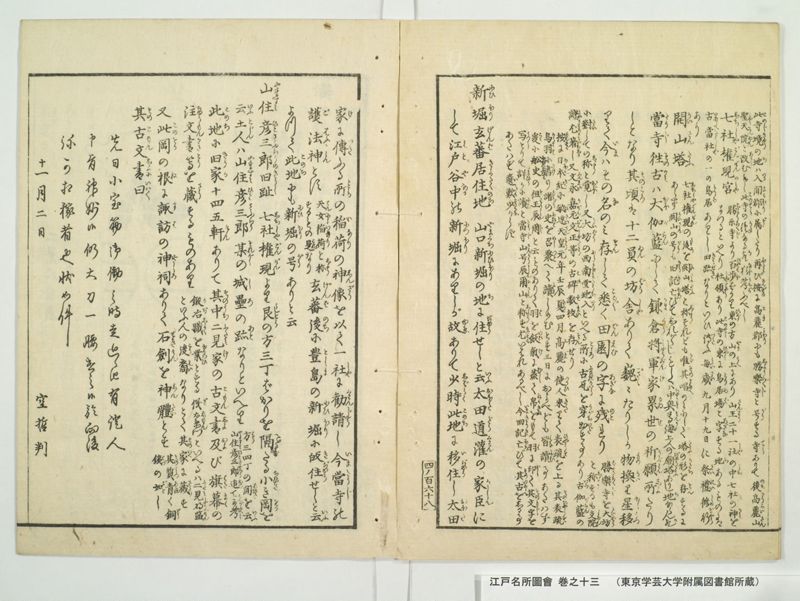
翻刻
【右丁】
《割書:此(この)寺境(じきやう)の地(ち)は入間郡(いるまこほり)に属(ぞく)したり再(ふたゝ)び按(あんずる)に高麗郡(こまこほり)にも勝楽寺(しようらくじ)と号(がう)する寺(てら)ありて後(のち)高麗山(かうらいさん)|聖天院(しやうてんゐん)と改(あらた)むもし此寺(このてら)の鐘(かね)なる欤(か)猶(なほ)考(かんが)ふべし》
七社権現宮(しちしやごんげんのみや) 《割書:勝楽寺(しようらくじ)より百歩(ひやくほ)ばかり東(ひがし)の方 山(やま)の上(うへ)にあり山王二十一社(さんわう しや)の中(うち)七社の神(かみ)を|まつるといへり社領(しやりやう)あり此寺(このてら)の東(ひがし)に鳥居場(とりゐば)と字(あざな)する地(ち)あるものは》
《割書:古(いにしへ)当社(たうしや)の一の鳥居(とりゐ)ありし旧跡(きうせき)なりといひ伝(つた)ふ毎歳(まいさい)九月十九日に祭礼(さいれい)修行(しゆぎやう)|あり》
開山塔(かいさんたふ) 《割書:七社権現(しちしやごんげん)の後(うしろ)を開山塔(かいさんたふ)と称(しよう)すれども唯(たゞ)其唱(そのとなへ)のみにして塔(たふ)の形(かたち)を存(そん)するに|あらず開山(かいさん)の号(がう)も旧記(きうき)亡(ほろ)びてしれがたしもしくは中興(ちゆうこう)尊海上人(そんかい )の廟塔(びやうたふ)ありし地(ち)ならん欤(か) 》
当寺(たうじ)往古(そのかみ)は大伽藍(おほがらん)にして鎌倉将軍家(かまくらしやうぐんけ)累世(るゐせ)の祈願所(きぐわんしよ)たり
しとなり其頃(そのころ)は十二員( ゐん)の坊舎(ばうしや)ありて巍々(ぎゝ)たりしか物換(ものかは)り星移(ほしうつ)
りて今(いま)はその名(な)のみ存(そん)して悉(こと〴〵)く田園(でんえむ)の字(あざな)に残(のこ)れり《割書:勝楽寺(しようらくじ)を大坊(たいばう)|と称(しよう)するも支院(しゐん) 》
《割書:に対(たい)しての称(しよう)と覚(おぼ)し又 大坊(たいばう)の西南(にしみなみ)堂地入(たうちいり)といへる所(ところ)に古瓦(ふるきかはら)を穿出(がちいだ)す事あり古(いにしへ)伽藍(がらん)の|証(しやう)尤(もつとも)著(いちしる)し又 文永(ふんえい)嘉元(かげん)文正(ぶんしやう)等(とう)の古碑(こひ)数枚(すまい)を存(そん)せり》
《割書:按(あんする)に日本紀(にほんき)に敏達天皇(ひたつてんわう)元年壬辰 夏(なつ)四月 高麗(こま)の使人(つかひ)来(きた)りて表疏(ひやうそ)を上る其(その)表疏(ひやうそ)|烏羽(からすは)に書(かけ)り諸(もろ〳〵)の史(ふひと)を召(めし)聚(つと)へて読(よま)しめむとす三日におよべども皆(みな)読(よむ)事あたはず》
《割書:爰(こゝ)に舩史(ふねのふひと)の祖(そ)王辰爾(わうしんじ)と云ものありて羽(は)を飯気(いひけ)に蒸(むし)て帛(ねりきぬ)をもて羽(は)に印(おし)て其(その)文字(もじ)を|写(うつし)とりて詳(つまひら)かに読(よむ)と当寺(たうじ)山号(さんがう)辰爾山(しんにさん)と称(しよう)す尤(もつとも)いはれあるべし今(いま)旧記(きうき)亡(ほろ)びて其古(そのいにしへ)をしる事|あたはず遺歎(いたん)少(すくな)からず》
新堀玄蕃居住地(にひほりげんばきよたくのち) 山口(やまくち)新堀(にひほり)の地(ち)に住(ぢゆう)せしと云(いふ)太田道潅(おほただうくわん)の家臣(かしん)に
して江戸(えと)谷中(やなか)の新堀(につほり)にありしが故(ゆゑ)ありて少時(しばらく)此地(このち)に移住(いぢゆう)し太田(おほた)
【左丁】
家(け)に伝(つた)ふる所(ところ)の稲荷(いなり)の神像(しんざう)を以て一社( しや)に勧請(くわんじやう)し今(いま)当寺(たうじ)の
護法神(ごはふしん)とす《割書:天女稲荷(てんによいなり)と称(しよう)|するもの是(これ)なり》玄蕃(げんば)後(のち)に豊島(としま)の新堀(にひほり)に帰住(きぢゆう)せしと云(いふ)
よつて此地(このち)にも新堀(にひほり)の号(がう)ありと云
山住彦三郎旧趾(やますみひこさふらうのきうし) 七社権現(しちしやごんげん)より艮(うしとら)の方三丁ばかりを隔(へだて)たる小(ちひさ)き岡(をか)を
云(いふ)土人(とじん)は山住彦三郎(やますみひこさふらう)某(それがし)の城壘(しろ)の趾(あと)なりといへり《割書:方(はう)三四丁の間(あひた)を云(いふ)|山住彦三郎(やますみひこさふらう)追(おつ)て可考(かんがふへし)》
此地(このち)に旧家(きうか)十四五軒( けん)ありて其中(そのうち)二見家(ふたみけ)の古文書(こもんしよ)及(およ)び旗幕(はたまく)の
注文書(ちゆうもんかき)等(とう)を蔵(さう)するものあり《割書:鍛冶職(かぢしよく)を業(なりはひ)とする儀右衛門(ぎゑもん)といへるは二見将監(ふたみしやうけん)|といふ人の後裔(こうえい)なりとて其家(そのいへ)に蔵(さう)す》
又 此岡(このをか)の根(ね)に諏訪(すは)の神祠(やしろ)ありて石剣(せきけん)を神体(しんたい)とす《割書:其質(そのしつ)青(あほ)く銅(どう)|銕(てつ)の如(ごと)し》
其(その)古文書曰(こもんしよにいはく)
先日小宝筋御働之時走廻候由有証人
申旨神妙候仍太刀一腰遣之候於向後
弥可相稼者也状如件
十一月二日 空誓判
現代語訳
【右丁】
〔この寺の境内の土地は入間郡に属している。改めて考えてみると、高麗郡にも「勝楽寺」と称する寺があり、後に「高麗山聖天院」と改称している。あるいはこの梵鐘はその寺のものではないかとも思われる。なお、よく調べる必要がある。〕
**七社権現宮** 〔勝楽寺より百歩ほど東の方、山の上にある。山王二十一社のうち七社の神を祀るといわれている。社領がある。この寺の東に「鳥居場」と字(あざ)する土地があるのは、昔この社の一の鳥居があった旧跡であると伝えられている。毎年九月十九日に祭礼が執り行われる。〕
**開山塔** 〔七社権現の後ろを「開山塔」と称しているが、ただその名称があるだけで、塔の形が残っているわけではない。開山の号も旧記が失われて知ることが難しい。おそらくは中興・尊海上人の廟塔があった場所であろうか。〕
当寺はむかし大伽藍であって、鎌倉将軍家が代々の祈願所としていたとのことである。そのころは十二院の坊舎があり、壮大な姿を誇っていたが、世が移り時が変わって、今はその名のみが残り、ことごとく田園の地名(字)に留まっているだけである。〔勝楽寺を「大坊」と称するのも、支院に対しての呼称であると思われる。また、大坊の西南、「堂地入」と呼ばれる場所で古い瓦が掘り出されることがあり、昔ここに伽藍があった証拠として特に顕著である。また、文永・嘉元・文正等の時代の古碑が数枚現存している。〕
〔考えるに、『日本書紀』に、敏達天皇元年壬辰、夏四月、高麗の使人が来て表疏(上奏文)を奉ったとある。その表疏は烏の羽に書かれており、諸々の史(ふひと=文字を読み書きする職の人)を集めて読ませようとしたが、三日が経っても皆読むことができなかった。そこに船史(ふねのふひと)の祖先、王辰爾(おうしんじ)という者がいて、羽を飯の湯気で蒸し、練り絹をもって羽に押し当てて文字を写し取り、詳しく読み解いた、とある。当寺の山号を「辰爾山」と称するのは、まことに由緒あることと思われる。今は旧記が失われてその古い由来を知ることができず、遺憾の念は少なくない。〕
**新堀玄蕃居住地** 山口・新堀の地に住んでいたという人物は、太田道灌の家臣であり、江戸・谷中の新堀にいたが、事情があってしばらくこの地に移り住み、太田
【左丁】
家に伝わる稲荷の神像をもって一社に勧請し、今は当寺の護法神としている。〔「天女稲荷」と称するのがこれである。〕玄蕃はその後、豊島の新堀に帰り住んだという。よってこの地にも「新堀」の名称があると伝えられる。
**山住彦三郎旧址** 七社権現より北東(艮)の方角へ三丁ほど隔たった小さな岡をいう。土地の人は、山住彦三郎某の城塁の跡であると言っている。〔周囲三・四丁の間をいう。山住彦三郎については、追って調べるべきである。〕
この地に旧家が十四・五軒あり、その中に二見家の古文書および旗幕の注文書などを所蔵するものがある。〔鍛冶職を生業とする儀右衛門という者は、二見将監という人の後裔であるとして、その家に所蔵している。〕
また、この岡の麓に諏訪の神祠があり、石剣を神体としている。〔その質は青く、銅か鉄のようである。〕
その古文書にいわく、
> 先日、小宝筋において御働きの折に走り回った由(よし)、証人の申すところ神妙に候。よって太刀一腰(ひとこし)を遣わし候。向後(こうご)においても、いよいよ相稼ぐべき者なり。状、件のごとし。
>
> 十一月二日 空誓(花押)
英語訳
**[Right Folio]**
*(Note: The land within this temple's precinct belongs to Iruma District. Upon further reflection, there is also a temple called "Shōraku-ji" in Koma District, which was later renamed "Kōraisan Shōten-in." It is possible that the bell described belongs to that temple. This matter warrants further investigation.)*
**The Shichisha Gongen Shrine (Shrine of the Seven Gongen Deities)** *(Located approximately one hundred paces east of Shōraku-ji, on top of a hill. It is said to enshrine seven of the deities among the twenty-one shrines of the Sannō (Mountain King) pantheon. The shrine holds a stipulated domain. To the east of this temple there is a place called "Torii-ba" (Torii Ground), which is said to be the site where the first torii gate of this shrine once stood in ancient times. A festival is held every year on the nineteenth day of the ninth month.)*
**The Founder's Pagoda (Kaisan-tō)** *(The area behind the Shichisha Gongen is called the "Kaisan-tō" (Founder's Pagoda), but this is only a name, and no actual structure in the form of a pagoda survives. The title of the founder is also unknown, as all old records have been lost. It is perhaps the site where the memorial pagoda of the revered founder Sonkai Shōnin once stood.)*
In ancient times, this temple was a great monastic complex (*daigaran*) and served as the prayer site (*kigan-sho*) for successive generations of the Kamakura shogunal house. At that time, twelve *bō* (sub-temple lodgings) stood in magnificent array, but as times changed and the world transformed, now only their names remain, preserved entirely as place names (*aza*) in the surrounding fields. *(The reason Shōraku-ji is called "Daibō" (Main Temple) appears to be a designation relative to its sub-temples. Moreover, in a place to the southwest of the Daibō called "Dōchi-iri," ancient roof tiles are sometimes unearthed, providing the most conspicuous evidence of the ancient monastic structures. Also, several old stone monuments (*kohi*) from the eras of Bun'ei, Kagen, and Bunshō still exist.)*
*(Upon reflection: in the* Nihon Shoki *(Chronicles of Japan), it is recorded that in the first year of Emperor Bidatsu's reign, the year of *jinshi* (572 CE), in the summer, fourth month, an envoy from Koguryŏ (Koma) arrived and presented a memorial document. This document was written on a raven's feather. Numerous scribes (*fuhito*) were assembled and asked to read it, but even after three days, none were able to do so. There was, however, a man named Ō no Chinni (Wang Chen-er), ancestor of the Fune no Fuhito clan, who steamed the feather over rice steam, pressed polished silk cloth against it to transfer the characters, and was thereby able to read the text in full detail. The fact that this temple's mountain name (*sangō*) is called "Shinni-zan" is most fitting and meaningful. Now that the old records have been lost, we can no longer know its ancient origins, which is a matter of no small regret.)*
**The Former Residence of Niihori Genba** — The person said to have resided in the area of Yamaguchi-Niihori was a retainer of Ōta Dōkan. Originally living in Niihori in Yanaka, Edo, he moved to this location for a time due to certain circumstances, and with the
**[Left Folio]**
divine image of Inari (the fox deity) passed down in the Ōta household, he established a shrine through a *kanjō* (ritual invitation of the deity), which now serves as the guardian deity (*gohōshin*) of this temple. *(This is what is called the "Tennyo Inari" [Celestial Maiden Inari].)* Genba is said to have later returned to live in Niihori in Toshima. It is for this reason that the name "Niihori" also exists in this area.
**The Former Site of Yamasumi Hikosaburō** — This refers to a small hill approximately three *chō* (about 330 meters) to the northeast (the *ushitora* direction) of the Shichisha Gongen Shrine. Local people say it is the site of the fortification (*shirō*) of one Yamasumi Hikosaburō. *(The area referred to is about three to four *chō* in circumference. The matter of Yamasumi Hikosaburō is to be investigated further.)*
In this area there are fourteen or fifteen old established households, among which some possess ancient documents belonging to the Futami family, as well as written orders (*chūmon-gaki*) for battle banners and curtains. *(One Giemon, who works as a blacksmith, is said to be a descendant of a man called Futami Shōken, and these items are kept in his household.)*
Furthermore, at the foot of this hill there is a small shrine to the Suwa deity, with a stone sword (*sekken*) as its sacred object (*shintai*). *(Its material is bluish in color and resembles copper or iron.)*
The ancient document reads as follows:
> It has been reported by reliable witnesses that on the occasion of the recent battle at Kohō-suji, you ran about actively in service, which is most admirable. Accordingly, one sword (*tachi hitokoshi*) is hereby presented to you. You are to continue to render ever greater service henceforward. This letter is as stated.
>
> Second day of the eleventh month — *Kūsei* (seal/monogram)