翻刻
【右丁 絵図】
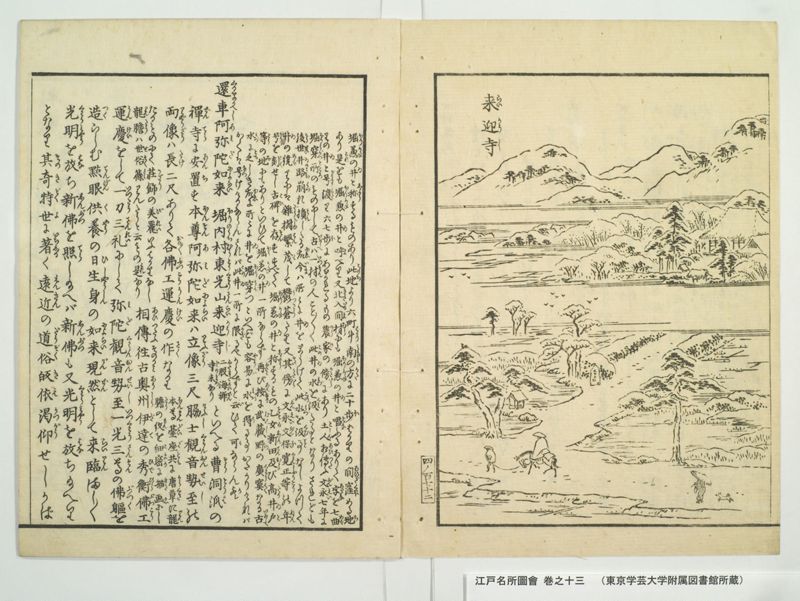
来迎寺(らいかうし)
【左丁】
《割書:《振り仮名:堀兼の井|ほりかね ゐ 》と称(しよう)するものあり此地(このち)より六町斗( はかり)南(みなみ)の方(かた)に二十歩( ほ)ばかりの間(あひだ)窪(くぼ)める地(ち)|あり是(これ)をも《振り仮名:堀兼の井|ほりかね ゐ 》と呼(よ)べり又 北入間村(きたいるまむら)にも《振り仮名:堀兼の井|ほりかね ゐ 》と唱(とな)ふるありて字(あざな)を七曲( めぐ)》
《割書:《振り仮名:りの井| ゐ》と号(がうす)渡(わた)り六七歩( ほ)にあまれるもの農家(のうけ)の傍(かたはら)にあり土人(としん)相伝(あひつた)ふ文永(ぶんえい)七年に|堀穿(ほりうがつ)所(ところ)のものにして古(いにしへ)は一村(いつそん)の人こと〳〵く此井(このゐ)の水(みづ)を汲(くみ)たるとなりされども》
《割書:後世(こうせい)井路(ゐのみち)崩(くづ)れ損(そん)したる故(ゆゑ)今(いま)は所々に井(ゐ)をまうけて此(この)水(みづ)を汲(くむ)事(こと)なしよつて|井(ゐ)の繞(めぐ)りには雑樹(ざうじゆ)繁茂(はんも)して鬱蒼(うつさう)たり又 其傍(そのかたはら)に文永(ぶんえい)文保(ぶんほ)寛正(くわんしやう)等(とう)の年(ねん)》
《割書:号(かう)を刻(こく)せし古碑(こひ)を存(そん)すすべて《振り仮名:堀兼の井|ほりかね ゐ 》と称(しよう)するもの乙女新田(をとめしんてん)及(およ)び高井戸(たかゐと)|等(とう)の地(ち)にもありといひて《振り仮名:堀兼の井|ほりかね ゐ 》一所ならず再(ふたゝ)び按(あんする)に武蔵野(むさしの)の広寞(くわうはく)なる古(いにしへ)》
《割書:水(みづ)に乏(とも)しき故(ゆゑ)に所々に井(ゐ)を堀穿(ほりうか)つといへども容易(やうい)に水(みづ)を得(う)る事かたかりければ|かくは号(なつ)けけるならんされば此井(このゐ)一所に限(かぎ)るべからずと云(い)ひて可(か)ならん欤(か)》
還車阿弥陀如来(くるまかへしあみだによらい) 堀内村(ほりのうちむら)東光山(とうくわうさん)来迎寺(らいかうじ)《割書:二俣(ふたまた)海禅(かいぜん)|寺(じの)末(まつ)なり》といへる曹洞派(そうとうは)の
禅寺(ぜんてら)に安置(あんち)す本尊(ほんそん)阿弥陀如来(あみだによらい)は立像(りふざう)三尺 脇士(けふし)観音(くわんおん)勢至(せいし)の
両像(りやうざう)は長(たけ)二尺ありて各(おの〳〵)仏工(ふつこう)運慶(うんけい)の作(さく)なり《割書:本尊(ほんそん)台座(だいざ)共(とも)に唐草(からくさ)に龍(りん)|膽(たう)の紋(もん)を細密(こまか)に描画(まきゑ)にし》
《割書:たるものにて荘飾(かざり)の美麗(びれい)いふはかりなし|龍膽(りんたう)は世俗(せそく)篠(さゝ)りんたうと云もの是(これ)なり》相伝(あひつたふ)往古(そのかみ)奥州(あうしう)伊達(だて)の秀衡(ひでひら)仏工(ぶつこう)
運慶(うんけい)をして一刀三礼(いつたうさんれい)にして弥陀(みだ)観音(くわんおん)勢至(せいし)一光三尊(いつくわうさんそん)の仏軀(ぶつく)を
造(つく)らしむ点眼供養(てんげんくやう)の日(ひ)生身(しやうしん)の如来(によらい)現然(げんぜん)として来臨(らいりん)まし〳〵
光明(くわうみやう)を放(はな)ち新仏(しんぶつ)を照(てら)し給へば新仏(しんぶつ)も又 光明(くわうみやう)を放(はな)ち給へり
となり其(その)奇特(きどく)世(よ)に著(いちしる)く遠近(えんきん)の道俗(だうぞく)帰依(きえ)渇仰(かつがう)せしかば
現代語訳
【右丁 絵図】
来迎寺(らいこうじ)
【左丁】
〔また、この地より南へ約六町ほどのところに、二十歩(ぶ)ほどの広さの窪んだ土地があり、これも「堀兼の井」と呼ばれている。また北入間村にも「堀兼の井」と唱えるものがあり、字(あざ)を「七曲りの井」と号する。幅渡り六、七歩あまりのもので、農家の傍らにある。土地の人の伝えによれば、文永七年(1270年)に掘り穿たれたものであり、昔は一村の人々がこぞってこの井の水を汲んでいたという。しかしながら後世になって井路(水路)が崩れ損じたため、今はあちこちに井戸を設けて、この水を汲むことはなくなった。よって井の周囲には雑木が繁茂して鬱蒼としている。またその傍らに、文永・文保・寛正等の年号を刻んだ古碑が残っている。およそ「堀兼の井」と称するものは、乙女新田および高井戸等の地にもあるといい、堀兼の井は一ヶ所に限らない。重ねて按ずるに、武蔵野が広大で、昔より水に乏しかったため、あちこちに井戸を掘り穿ったとはいえ、容易に水を得ることが難しかったので、かくも名付けられたのであろう。されば、この井が一ヶ所に限らないと言っても、もっともなことであろうか。〕
還車阿弥陀如来(くるまかえしあみだにょらい)
堀内村(ほりのうちむら)、東光山(とうこうざん)来迎寺(らいこうじ)〔二俣(ふたまた)海禅寺の末寺〕という曹洞派の禅寺に安置されている。本尊の阿弥陀如来は立像で高さ三尺、脇侍の観音・勢至の両像は高さ二尺あり、いずれも仏師・運慶の作である。〔本尊は台座ともに唐草に龍胆(りんどう)の紋を細密に蒔絵にしたもので、荘飾の美麗さは言いようもないほどである。龍胆とは、世俗に「ササリンドウ」と呼ぶものがこれである。〕
伝えによれば、昔、奥州伊達の秀衡が仏師の運慶に命じて、一刀三礼(いっとうさんらい)の作法をもって、阿弥陀・観音・勢至の一光三尊(いっこうさんぞん)の仏体を造らせた。点眼供養(てんげんくよう)の日、生身(しょうじん)の如来が現れるかのように来臨されて光明を放ち、新たな仏像を照らし給えば、その新仏もまた光明を放ち給った、とのことである。その不思議な霊験は世に広く知られ、遠近の僧俗を問わず、帰依し渇仰する者が多かったので、
英語訳
**[Right Folio — Illustration]**
Raikōji Temple
**[Left Folio]**
[Furthermore, there is a place called the "Horikane Well" located approximately six *chō* to the south of this site — a depression of about twenty *bu* in area — which is also called the Horikane Well. In the village of Kita-Iruma as well, there is a place called the "Horikane Well," bearing the local place-name *Nanakurinoi* ("Seven-Winding Well"). It spans some six or seven paces across and lies beside a farmhouse. Local tradition holds that this well was dug in Bun'ei 7 (1270), and that in former times the entire village drew its water from it. However, in later ages the well-channel collapsed and fell into disrepair, so that today wells have been dug here and there, and no one draws from this one any longer. Consequently, the area around the well has become overgrown with miscellaneous trees and is densely wooded. Beside it, moreover, ancient stone monuments bearing dates from the Bun'ei, Bunpō, and Kanshō eras still survive. In general, places called "Horikane Well" exist in locations such as Otome Shinden and Takaido as well, and the Horikane Well is by no means confined to a single site. On further reflection, because Musashino was vast and desolate and had been poor in water since ancient times, wells were dug here and there, yet it was difficult to obtain water easily — and so, in all likelihood, the name came to be applied. It would therefore seem reasonable to say that this well is not limited to any one place.]
**Kuruma-kaeshi Amida Nyorai (The "Carriage-Turning" Amitābha)**
This image is enshrined at Raikōji Temple (Mountain name: Tōkōzan), a Zen temple of the Sōtō school located in Horinuchi Village, which is a sub-temple of Futamata Kaizenji. The principal image (*honzon*) is a standing figure of Amitābha (*Amida Nyorai*), three *shaku* in height. The two attendant images (*wakiji*) — Kannon (Avalokiteśvara) and Seishi (Mahāsthāmaprāpta) — each measure two *shaku* in height, and all are works of the Buddhist sculptor Unkei. [The principal image, together with its pedestal, is decorated with a fine *makie* (gold lacquer) design of arabesque scrollwork (*karakusa*) and gentian (*rindō*) crests, the ornamental beauty of which is beyond description. The gentian referred to here is what common people call *sasa-rindō* (dwarf gentian).]
According to tradition, long ago Hidehira of the Date clan of Ōshū (northern Japan) commissioned the sculptor Unkei to carve the three sacred figures — Amida, Kannon, and Seishi — as a unified *ikkō sanzon* (one-halo trinity), with Unkei performing three reverential bows after each stroke of the chisel (*ittō sanrai*). On the day of the eye-opening ceremony (*tengen kuyō*), the living body (*shōjin*) of the Tathāgata itself seemed to appear and descended in person, radiating a great light that illuminated the newly made images. The new images, in turn, also radiated light of their own. Such was the miraculous wonder of this event that it became widely known throughout the land, and people from near and far — clergy and laity alike — came in devoted veneration, so that…