翻刻
【右丁】
毎年四月八日十二日 開扉(かいひ)結縁(けちえん)せしむ
縁起云(えむきにいふ)天平十三年辛巳 行基菩薩(ぎやうぎぼさつ)《割書:歳四|十三》東国(とうこく)の群類(くんるい)を化度(くゑと)
せむとし先(まづ)南紀(なんきの)熊野権現(くまのごんげん)へ参籠(さんらう)あふし#3帰路傍(かへるさみちのかたはら)に杉(すぎ)の
大樹(たいじゆ)あり此を像材(ざうさい)とし仏像(ぶつざう)を造立(ざうりふ)せんとし其木(そのき)を伐(き)り誓(ちかつ)て
云く若(もし)此事(このこと)仏意(ぶつい)に協(かな)ひなば此木(このき)我(われ)に先(さき)たつて有縁(うえん)の地(ち)に至(いた)る
べしと云て彼所(かしこ)の谷川(たにかは)に流(なが)され夫(それ)より東国(とうこく)に赴(おもむ)き此地(このち)に
至(いた)り給ふに彼(かの)霊木(れいぼく)こゝの入江(いりえ)に漂着(ひやうちやく)す《割書:往古(そのかみ)此辺(このあたり)より高田(たかた)の辺(あた)り|神田橋(かんだはし)の内外迄(うつそとまで)すべて汐入(しほいり)の》
《割書:江河なり|といふ》仍(よつて)仏意(ぶつい)を尊(たつと)み慈母(じぼ)の為(ため)則(すなはち)東方(とうはう)に向(むか)ひ香華(かうけ)を捧(さゝ)げ礼(れい)
拝(はい)なし信心(しん〴〵)の誠(まこと)を尽(つく)し給ふ然(しか)るに面親(まのあたり)薬師女(やくしぢよ)金色(こんしき)の光(ひかり)を放(はな)
ちて顕(あらは)れ給ふ依(よつ)て行基菩薩(ぎやうぎぼさつ)件(くだん)の杉(すぎ)の本木(もとき)を以て此(この)本尊(ほんそん)を
摸刻(もこく)し此境(このさかひ)に一宇(いちう)を営(いとな)んで安置(あんち)せり又 六道(ろくだう)流転(るてん)の衆生(しゆじやう)を
救(すく)はん為(ため)末木(すゑのき)を以(もつ)て六体(ろくたい)の弥陀像(みだざう)を彫造(てうざう)し六所(ろくしよ)に分(わか)ち給へり
《割書:江戸六阿弥陀(えとろくあみだ)と|称(しよう)するもの是(これ)なり》
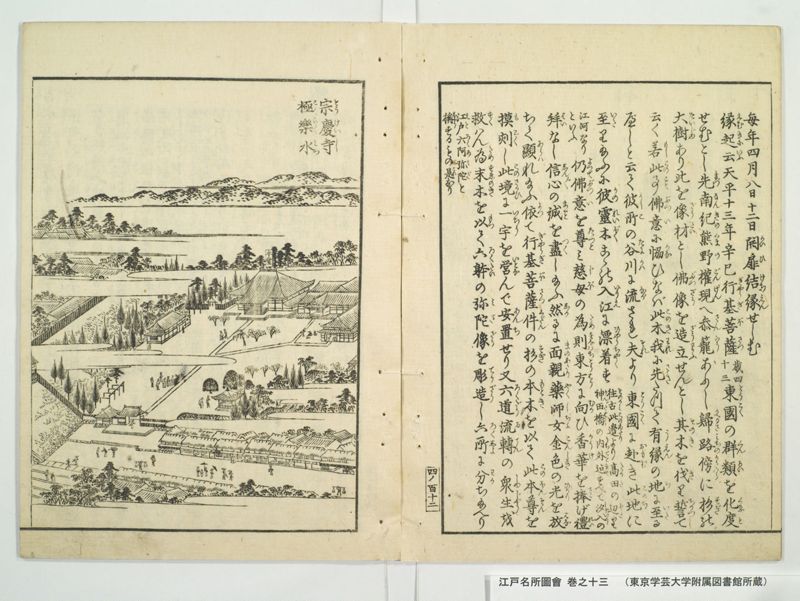
【左丁 絵図】
宗慶寺(そうけいし)
極楽水(こくらくみつ)
本堂 極楽水
現代語訳
【右丁】
毎年四月八日・十二日に開扉・結縁が行われる。
縁起に言う。天平十三年辛巳(しんし)、行基菩薩(当時四十三歳)が東国の多くの人々を教え導こうとして、まず紀伊国(南紀)の熊野権現へ参籠された。帰路、道のかたわらに杉の大木があり、これを仏像の材木として仏像を造り立てようとし、その木を切って誓いを立てておっしゃった。
「もしこのことが仏の御心にかなうならば、この木は私より先に、縁のある地へ届くであろう」
そうおっしゃって、その木をその地の谷川に流された。それより東国に向かわれ、この地(後の光円寺の地)に到着されたところ、あの霊木がこの入江に漂い着いていた。
〔割注:昔、この辺りから高田の辺り、神田橋の内外に至るまで、すべて塩水が入り込む江河(入り江・川)であったという。〕
そこで仏の御心を尊び、慈母(薬師女)のために、東の方角に向かって香華(香と花)を捧げ、礼拝し、信心の誠を尽くされた。すると、目の前に薬師女が金色の光を放ちながら現れた。そこで行基菩薩は、件の杉の根元の木(本木)をもってこの本尊を模刻し、この地に一宇(一つの堂宇)を営んで安置した。また、六道を流転する衆生を救うために、末木(杉の梢・上部の木)をもって六体の阿弥陀像を彫り造り、六か所に分け奉った。
〔割注:「江戸六阿弥陀」と称するものは、これである。〕
---
【左丁 絵図】
宗慶寺(そうけいじ)
極楽水(ごくらくみず)
本堂 極楽水
英語訳
【Right Page】
Every year, on the eighth and twelfth days of the fourth month, the inner doors are opened and the public is invited to form a karmic bond (*kechien*) with the enshrined image.
The temple's founding legend (*engi*) states: In the thirteenth year of Tenpyō, the year of *Kanoto-mi* (741 CE), the Bodhisattva Gyōki — then forty-three years of age — set out to guide and convert the multitudes of the eastern provinces. He first undertook a retreat (*sanrō*) at the Kumano Gongen shrine in southern Kii Province. On his return journey, he came upon a great cryptomeria (*sugi*) tree by the roadside. Intending to use it as material for a Buddha image, he felled the tree and made a vow:
"If this endeavor accords with the will of the Buddha, then this wood shall arrive before me at the place with which it has a karmic bond."
With that, he cast the wood into the valley stream at that spot and then proceeded eastward. When he arrived at this very place, that sacred timber (*reiboku*) had already washed ashore in the inlet here.
[Side note: In ancient times, it is said that the entire area from around here to the vicinity of Takada, extending to the inside and outside of Kanda Bridge, was all tidal estuary — rivers and inlets fed by seawater.]
Revering the will of the Buddha, and in honor of the Compassionate Mother (*Jibo*), Gyōki turned to face the east, offered incense and flowers (*kōge*), performed obeisance, and devoted himself entirely to sincere faith. Thereupon, before his very eyes, Yakushi-jo appeared, radiating a golden light. Gyōki then used the base of the aforementioned cryptomeria — the *motoki* (root wood) — to carve this principal image (*honzon*) in likeness of that vision, and built a hall on this site in which to enshrine it. Furthermore, in order to save all sentient beings wandering through the six realms of transmigration (*rokudō*), he used the upper portion of the tree — the *sueki* (tip wood) — to carve six statues of Amida and distributed them to six separate locations.
[Side note: These are what are referred to as the "Six Amida of Edo" (*Edo Roku Amida*).]
---
【Left Page — Illustrated Map】
Sōkei-ji (宗慶寺)
Gokuraku-mizu (極楽水, "Paradise Water")
Main Hall Gokuraku-mizu