翻刻
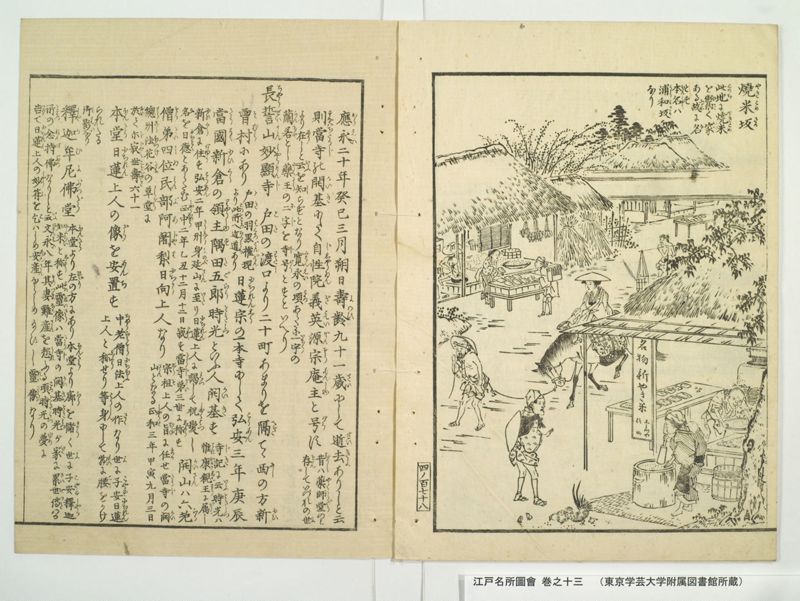
【右丁 絵図】
焼米坂(やきこめさか)
此地(このち)に焼米(やきこめ)
を鬻(ひさ)く家(いへ)
ある故(ゆゑ)に名(な)
とす
本名(ほんみやう)は
浦和坂(うらわさか)
なり
【左丁】
応永(おうえい)二十年癸巳三月朔日 寿齢(よはひ)九十一歳( さい)にして逝去(せいきよ)ありしと云
則(すなはち)当寺(たうじ)の開基(かいき)にして自性院義英源宗庵主(じしやうゐんぎえいげんそうあんしゆ)と号(がう)す《割書:昔(むかし)は薬師堂(やくしだう)のみ|存(そん)していづれの世(よ)》
《割書:より在(あり)しと云(いふ)を知(し)らずとなり寛永(くわんえい)の頃(ころ)あらたに一宇(いちう)の|蘭若(らんにや)とし薬王(やくわう)の二字(にじ)を寺号(じがう)とすといへり》
長誓山(ちやうせいさん)妙顕寺(みやうけんじ) 《振り仮名:戸田の渡口|とた わたし》より二十町あまりを隔(へだ)てゝ西(にし)の方 新(にひ)
曽村(そむら)にあり《割書:戸田(とた)の羽黒権現(はくろごんげん)|より此所(このところ)へ近道(ちかみち)あり》日蓮宗(にちれんしう)の一本寺にして弘安(こうあん)三年庚辰
当国(たうこく)新倉(にひくら)の領主(りやうしゆ)隅田五郎時光(すたごらうときみつ)といふ人 開基(かいき)す《割書:寺記(じき)に云(いふ)時光(ときみつ)は|惟康親王(これやすしんわう)に属(ぞく)し》
《割書:新倉(にひくら)に住(ぢゆう)す弘安(こうあん)二年 甲州(かうしう)身延山(みのぶさん)に至(いた)り日蓮上人(にちれん )に謁(えつ)して祝髪(しゆくはつ)し|名(な)を日徳(にちとく)とあらたむ正中(しやうちゆう)二年乙丑十二月十二日 寂(じやく)す当寺(たうじ)弟三世(だい )に称(しよう)す》開山(かいさん)は六老( らう)
僧(そう)第四位(たいしゐ)民部阿闍梨日向上人(みんぶあじやりにちかう )なり《割書:宗祖上人(しうそ )の旨(むね)に任(まか)せ当寺(たうじ)の開(かい) |山(さん)となる正和(しやうわ)三年甲寅九月三日》
《割書:総州(さうしう)法花谷(ほつけたに)の草堂(さうだう)に|於(おい)て尓寂(じじやく)世寿(ことぶき)六十一》
本堂(ほんたう)日蓮上人(にちれん )の像(ざう)を安置(あんち)す《割書:中老僧(ちゆうらうそう)日法上人(にちほう )の作(さく)なり世(よ)に子安日蓮(こやすにちれん)|上人と称(しよう)せり等身(とうしん)にして物(もの)に腰(こし)をかけ》
《割書:られたる|御影(みえい)なり》
釈迦牟尼仏堂(しやかむにぶつだう) 《割書:本堂(ほんたう)より左(ひだり)の方にあり本堂(ほんたう)より廊(らう)を儲(まう)く世(よ)に子安釈迦(こやすしやか)|如来(によらい)と称(しよう)す此(この)霊像(れいさう)は当寺(たうじ)の開基(かいき)時光(ときみつ)が家(いへ)に累世(るいせ)伝(つた)はる》
《割書:所(ところ)の念持仏(ねんぢぶつ)なりしと云(いふ)文永(ぶんえい)八年 其妻(そのつま)難産(なんさん)を愁(うれ)ふる頃(ころ)時光(ときみつ)の夢(ゆめ)に|告(つげ)て日蓮上人(にちれん )の妙符(みやうふ)を乞(こ)はしめ安産(あんさん)ならしめ給ひし霊像(れいさう)なり》
現代語訳
【右丁 絵図】
**焼米坂(やきごめざか)**
この地に焼米(やきごめ)を売る家があることから、この名がついた。本来の名は浦和坂(うらわざか)である。
---
【左丁】
応永二十年(1413年)癸巳、三月一日、享年九十一歳にて逝去されたという。すなわち当寺の開基であり、自性院義英源宗庵主(じしょういんぎえいげんそうあんしゅ)と号した。〔昔は薬師堂のみが存在しており、いつの時代から(この地に)あったのかは知れないという。寛永の頃に新たに一宇の寺院として建立し、「薬王」の二字を寺号としたといわれる。〕
**長誓山妙顕寺** 戸田の渡し口より二十町あまりを隔てて、西の方、新曽村にある。〔戸田の羽黒権現よりこの所へ近道がある。〕日蓮宗の一本寺(本山格の寺)であって、弘安三年(1280年)庚辰に、当国新倉の領主・隅田五郎時光という人が開基した。〔寺記によると、時光は惟康親王に仕え、新倉に住んでいた。弘安二年(1279年)に甲州身延山へ赴き、日蓮上人に拝謁して剃髪し、名を日徳と改めた。正中二年(1325年)乙丑十二月十二日に寂す。当寺の第三世に称する。〕開山は六老僧第四位、民部阿闍梨日向上人である。〔宗祖上人(日蓮)の意に従い当寺の開山となる。正和三年(1314年)甲寅九月三日、総州法花谷の草堂において入寂。世寿六十一。〕
本堂には日蓮上人の像を安置する。〔中老僧・日法上人の作であり、世に「子安日蓮上人」と称される。等身大であって、何かに腰をかけておられるお姿(御影)である。〕
**釈迦牟尼仏堂** 〔本堂より左の方にあり、本堂より廊下を設けて通じる。世に「子安釈迦如来」と称する。この霊像は当寺の開基・時光の家に代々伝わる念持仏であったという。文永八年(1271年)、その妻が難産に苦しんでいた頃、時光の夢に(仏が)告げて、日蓮上人の妙符(霊験あらたかなお札)を求めさせ、安産させてくださった霊像である。〕
英語訳
【Right Page: Illustration】
**Yakigome-zaka (Roasted Rice Slope)**
This place takes its name from the fact that there was a shop here selling *yakigome* (roasted rice). Its original name was Urawa-zaka (Urawa Slope).
---
【Left Page】
It is said that he passed away on the first day of the third month of the twentieth year of Ōei (1413), year of Kisshi (癸巳), at the age of ninety-one. He was accordingly the founding patron (*kaiki*) of this temple, and bore the religious name Jishōin Giei Gensō Anshū. [In former times, only the Yakushidō (Medicine Buddha Hall) existed here, and it was unknown from which era it had stood. It is said that during the Kan'ei period (1624–1644), a new temple building was established, and the two characters for "Yakuō" (Medicine King) were adopted as the temple name.]
**Chōseizan Myōkenji Temple** — Located more than twenty *chō* (approximately 2.2 km) to the west of the Toda Ferry crossing, in the village of Nizo. [There is a shortcut from the Hakuro Gongen Shrine at Toda to this place.] It is a *honzan*-ranked temple of the Nichiren sect, founded in the third year of Kōan (1280), the year of Kōshin (庚辰), by a man named Suda Gorō Tokimitsu, the lord of Niikura in this province. [According to the temple records, Tokimitsu served under Prince Koreyasu and resided at Niikura. In the second year of Kōan (1279), he traveled to Mt. Minobu in Kai Province, where he had an audience with the Venerable Nichiren, took the tonsure, and changed his name to Nichitoku. He passed away on the twelfth day of the twelfth month of the second year of Shōchū (1325), year of Itsuchū (乙丑). He is designated the third abbot of this temple.] The founding abbot (*kaisan*) was the fourth among the Six Elder Monks (*Rokurōsō*), the Venerable Nichikō, Ajari of Minbu. [Following the wishes of the sect's founder (Nichiren), he became the founding abbot of this temple. On the third day of the ninth month of the third year of Shōwa (1314), year of Kitai (甲寅), he passed away at the hermitage in Hokkegaya in Sōshū Province, at the age of sixty-one.]
The main hall enshrines an image of the Venerable Nichiren. [This is a work by the middle-elder monk, the Venerable Nichihō, and is known to the world as the "Koyas Nichiren Shōnin" (the Child-Granting Nichiren). It is a life-sized image depicting him seated, leaning against something.]
**Shakyamuni Buddha Hall** — [This hall is located to the left of the main hall, connected to it by a corridor. It is known to the world as the "Koyas Shakanyorai" (the Child-Granting Shakyamuni Tathāgata). This sacred image had been passed down through the generations as the personal devotional Buddha (*nenjiButsu*) of Tokimitsu, the temple's founding patron. In the eighth year of Bun'ei (1271), when Tokimitsu's wife was suffering through a difficult labor, a message came to Tokimitsu in a dream, instructing him to seek a miraculous talisman (*myōfu*) from the Venerable Nichiren, which then enabled her to give birth safely. This is that sacred image.]