翻刻
【右丁】
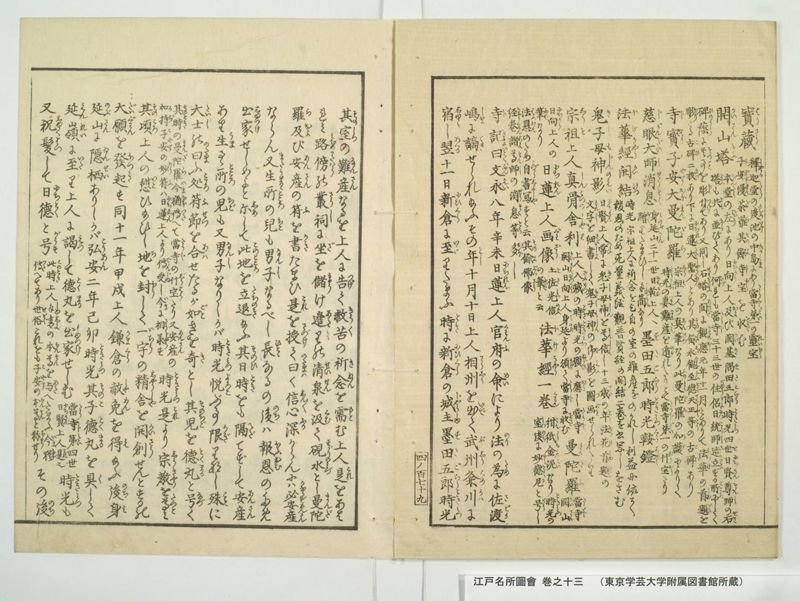
宝蔵(はうさう)《割書:釈迦堂(しやかたう)の後(うしろ)池(いけ)の中島(なかしま)にあり当寺(たうじ)第一(だい )の霊宝(れいほう) |子安漫荼羅(こやすまんだら)其余(そのよ)寺宝(じほう)を収(をさ)む》
開山塔(かいさんたふ)《割書:本堂(ほんたう)の左(ひだり)にあり日向上人(にちかう )及(およ)び開基(かいき)隅田五郎時光(すたこらうときみつ)四世( せ)日賢尊師(にちけんそんし)の石(せき)|塔(たふ)も共(とも)に並(なら)びてあり何(いづ)れも当寺(たうじ)三十三世の住侶(ぢゆうりよ)日統師(につとうし)造立(さうりふ)する所(ところ)にして》
《割書:碑蔭(ひのうしろ)に其事(そのこと)を彫付(ほりつけ)てあり又同し石塔(せきたふ)の間(あひだ)に観応(くわんおう)元年十一月とありて法華(ほつけ)の首題(しゆだい)を|彫(ほり)たる古碑(こひ)二枚( まい)あり下に日蓮大聖人(にちれんたいしやうにん)とあり其余(そのよ)永観(えいくわん)至徳(しいとく)天正(てんしやう)等(とう)の古碑(こひ)あり》
寺宝(じはう)子安大曼荼羅(こやすおほまんだら)《割書:宗祖上人(しうそ )の真筆(しんひつ)なり此(この)曼荼羅(まんだら)の加護(かご)によりて|時光(ときみつ)の妻(つま)難産(なんさん)を遁(のが)れたりとて当寺(たうじ)弟一(だい )の什宝(じうほう)たり》
慈眼大師(じげんだいし)消息(せうそく)《割書:身延山(みのぶさん)二十一世 日乾上人(にちけん )へ|贈(おく)りたまひし手簡(しゆかん)なり》墨田五郎時光(すたごらうときみつ)鞍(くら)鐙(あぶみ)
法華経(ほけきやう)開結(かいけつ)《割書:時光宗祖上人に祈念を乞自の室の難産をのかれし利益に依て|報恩のため⺛量義経観普賢経の開結二巻を書写しをさむ》
鬼子母神影(きしもじんのえい)《割書:日賢上人(にちけん )常(つね)に鬼子母神(きしもしん)を尊信(そんしん)し十三歳( さい)の年(とし)法花首題(ほつけしゆだい)の|文字(もんじ)を細書(さいしよ)して鬼子母神(きしもしん)の御影(みえい)を図画(づぐわ)せられたり》
宗祖上人(しうそ )真骨舍利(しんこつのしやり)《割書:上人 入滅(にふめつ)の時(とき)時光(ときみつ)の願(ねがひ)に応(おう)し当寺(たうじ)|開山(かいさん)日向上人(につかう )身延(みのぶ)より頌(わけ)て当寺(たうじ)に収(をさ)む》曼陀羅《割書:当寺(たうじ)|開山(かいさん)》
《割書:日向上人(にちかう )の|筆(ふで)なり》日蓮上人(にちれん )画像(ぐわざう)《割書:土佐光信(とさみつのぶ)|の筆(ふで)と云》 法華経(ほけきやう)一巻( くわん)《割書:紺紙金泥(こんしきんでい)なり時光(ときみつ)の|室(しつ)後(のち)に妙徳尼(めうとくに)と号(がう)し》
《割書:報恩(はふおん)のため自(みづから)書写(しよしや)すと云 其余(そのよ)仏像(ぶつさう)|経巻(きやうくわん)諸尊師(しよそんし)の消息(せうそく)等(とう)多(おほ)し》
寺記曰(じきにいはく)文永(ぶんえい)八年辛未 日蓮上人(にちれん )官府(くわんふ)の命(めい)により法(のり)の為(ため)佐渡(さどか)
嶋(しま)に謫(てき)せられ給ふその年(とし)十月十日上人 相州(そうしう)を出(いで)て武州(ぶしう)粂川(くめかは)に
宿(しゆく)し翌(あくる)十一日 新倉(にひくら)に至(いた)りたまふ時(とき)に新倉(にひくら)の城主(じやうしゆ)墨田五郎時光(すたごらうときみつ)
【左丁】
其室(そのしつ)の難産(なんさん)なるを上人に告(つげ)て救苦(きうく)の祈念(きねん)を需(もと)む上人 是(これ)をあは
れみ路傍(みちのかたはら)の叢祠(さうし)に坐(ざ)を儲(まう)け辺(あた)りの清泉(せいせん)を汲(くむ)て硯水(すゞりのみづ)とし曼陀(まんだ)
羅(ら)及(およ)び安産(あんさん)の符(ふ)を書(かき)たまひ是(これ)を授(さづけ)て曰(のたまは)く信心(しん〳〵)深(ふか)からんには必(かならず)安産(あんさん)
ならん又(また)生所(うまるゝところ)の児(ちこ)も男子(なんし)なるべし長(ひとゝ)なるの後(のち)は報恩(ほふおむ)のため
出家(しゆつけ)せしめよと尓(しめ)して此地(このところ)を立退(たちのき)給ふ其日(そのひ)時(とき)をも隔(へだ)てずして安産(あんさん)
あり生(うま)るゝ所(ところ)の児(ちご)も又 男子(なんし)なりしかば時光(ときみつ)悦(よろこ)ぶ事 限(かぎ)りなし殊(こと)に
大士(たいし)の曰(のたま)ふ処(ところ)符節(ふせつ)を合(あは)せたるが如(ごと)きを奇(き)とし其児(そのちご)を徳丸(とくまる)と号(なづ)く
《割書:其時(そのとき)の曼陀羅(まんだら)今猶(いまなほ)伝(つた)へて当寺(たうじ)の什宝(じうはう)たり又 安産(あんさん)の|加持(かぢ)子安(こやす)の妙符(めうふ)は日蓮上人(にちれん )より伝受(でんじゆ)し今(いま)に相承(さうじやう)す》 時光(ときみつ)是(これ)より宗教(しうきやう)を尊(たつと)み
其頃(そのころ)上人の憩(いこ)ひ給ひし地(ち)を封(ふう)して一宇(いちう)の精舎(しやうしや)を開創(かいさう)せんとするの
大願(だいぐわん)を発起(ほつき)す同十一年甲戌上人 鎌倉(かまくら)の赦免(しやめん)を得(え)給ふ後(のち)身(み)
延山(のぶさん)に隠栖(ゐんせい)ありしかば弘安(こうあん)二年己卯 時光(ときみつ)其子(そのこ)徳丸(とくまる)を具(く)して
延嶺(えんれい)に至(いた)り上人に謁(えつ)して徳丸(とくまる)を出家(しゆつけ)せしむ《割書:当寺(たうじ)第四世(たい )|日賢上人(にちけん )是(これ)也》時光(ときみつ)も
又 祝髪(しゆくはつ)して日徳(にちとく)と号(がうす)《割書:此時(このとき)上人 手書(しゆしよ)の本尊(ほんそん)を与(あた)へたまふ今猶(いまなほ)|伝(つた)へてあり世俗(せぞん)これをも子安(こやす)の本尊(ほんそん)と称(ちよう)せり》その後(のち)
現代語訳
【右丁】
**宝蔵**〔釈迦堂の後ろ、池の中島にある。当寺第一の霊宝である「子安曼荼羅」およびその他の寺宝を収める。〕
**開山塔**〔本堂の左にあり、日向上人および開基・隅田五郎時光、四世・日賢尊師の石塔も共に並んでいる。いずれも当寺三十三世の住持・日統師が造立したものであり、碑の裏にその由来が彫り付けてある。また同じ石塔の間に、観応元年十一月とあって法華の首題を彫った古碑が二枚あり、下に「日蓮大聖人」とある。その他、永観・至徳・天正などの年号を持つ古碑もある。〕
**寺宝・子安大曼荼羅**〔宗祖上人(日蓮)の真筆である。この曼荼羅の加護によって時光の妻が難産を免れたとして、当寺第一の什宝とされている。〕
**慈眼大師消息**〔身延山二十一世・日乾上人へお贈りになった書状である。〕 **隅田五郎時光の鞍・鐙**
**法華経開結**〔時光が宗祖上人に祈念を乞い、自らの妻の難産を逃れた利益に依って、報恩のために無量義経・観普賢経の開結二巻を書写して収めた。〕
**鬼子母神影**〔日賢上人は常に鬼子母神を尊信し、十三歳のとき、法華首題の文字を細かく書いて鬼子母神の御影を図画された。〕
**宗祖上人真骨舎利**〔上人入滅のとき、時光の願いに応じて、当寺開山・日向上人が身延より分けて当寺に収めた。〕 **曼荼羅**〔当寺開山・日向上人の筆である。〕 **日蓮上人画像**〔土佐光信の筆と伝わる。〕 **法華経一巻**〔紺紙金泥である。時光の妻(後に妙徳尼と号す)が報恩のために自ら書写したという。その他、仏像・経巻・諸尊師の消息など多数ある。〕
---
**寺記に曰く**、文永八年辛未、日蓮上人は官府の命により、法のために佐渡島へ流罪とされた。その年の十月十日、上人は相州を出発して武州粂川に宿泊し、翌十一日、新倉に至られた。このとき新倉の城主・隅田五郎時光は、
【左丁】
その妻が難産であることを上人に告げ、苦しみを救う祈念を求めた。上人はこれを哀れみ、道のかたわらの小さな祠のそばに座所を設け、周辺の清らかな泉を汲んで硯の水とし、曼荼羅および安産の符を書いてこれを授け、次のようにおっしゃった。「信心が深ければ、必ず安産となるであろう。また、生まれてくる子も男子であろう。その子が成長した後には、報恩のために出家させなさい。」こうして上人はこの地を立ち去られた。その日、時をも置かずして安産があり、生まれた子もまた男子であったので、時光の喜びは限りなかった。特に大士(日蓮上人)のおっしゃったことが、ことごとく符合したことを奇跡として、その子を徳丸と名付けた。〔そのときの曼荼羅は今もなお伝えられ、当寺の什宝となっている。また、安産加持・子安の妙符は日蓮上人より伝授され、今に至るまで相承されている。〕
時光はこれより(日蓮の)宗教を尊び、その頃上人が休まれた地を封じて、一宇の精舎を開創せんとする大願を発起した。同十一年甲戌、上人が鎌倉の赦免を得られた後、身延山に隠栖されたので、弘安二年己卯、時光はその子・徳丸を連れて身延嶺に至り、上人に拝謁して徳丸を出家させた。〔当寺第四世・日賢上人がこれである。〕時光もまた剃髪して日徳と号した。〔このとき上人は自筆の本尊を与えてくださった。今もなお伝えられており、世間ではこれをも「子安の本尊」と称している。〕その後——
英語訳
【Right Page】
**The Treasure Repository (Hōzō)** — [Located on an island in the pond behind the Shakyamuni Hall. It houses the temple's foremost sacred treasure, the *Koyas Mandara* (Child-Granting Mandala), along with other temple treasures.]
**The Founding Abbot's Stupa (Kaisan-tō)** — [Located to the left of the main hall. The stone stupas of the Venerable Nichikō, the founding patron Suda Gorō Tokimitsu, and the fourth-generation master, the Venerable Nichiken, stand side by side here. All were erected by Nittsū, the thirty-third resident abbot of this temple, and the circumstances are engraved on the back of the monument. Among the stone stupas there are also two ancient stone monuments bearing an inscription dated the eleventh month of the first year of Kan'ō (1350), carved with the title invocation of the Lotus Sutra, and inscribed below with the words "Nichiren Daishōnin." Other ancient monuments bearing dates from the Eikan, Shitoku, and Tenshō eras are also found here.]
**Temple Treasure: The Great Child-Granting Mandala (Koyas Daimandara)** — [This is in the hand of the sect's founder (Nichiren) himself. As it was through the protection of this mandala that Tokimitsu's wife was delivered safely from a difficult labor, it is held as the foremost treasure of this temple.]
**The Jigen Daishi Letter** — [This is a letter sent to the Venerable Nichiken, the twenty-first abbot of Mt. Minobu.] **The Saddle and Stirrups of Suda Gorō Tokimitsu**
**The Lotus Sutra Opening and Closing Sutras (*Kaiketsu*)** — [Tokimitsu sought prayers from the sect's founder for his wife's difficult delivery, and having been saved through that blessing, copied out the two volumes of the opening and closing sutras — the *Muryōgīkyō* (Sutra of Immeasurable Meanings) and the *Kanfugenkyō* (Sutra of Meditation on the Bodhisattva Samantabhadra) — and deposited them at the temple as an act of gratitude.]
**The Image of Kishimojin (Hāritī)** — [The Venerable Nichiken always revered Kishimojin with deep faith and, at the age of thirteen, wrote out the title-text of the Lotus Sutra in minute characters, and from these fashioned a painted image of Kishimojin.]
**The True Bone-Relic (*Shinkotsu no Shari*) of the Sect's Founder** — [At the time of the founder's entry into nirvana, in response to the vow of Tokimitsu, the founding abbot of this temple, the Venerable Nichikō, divided a portion from Mt. Minobu and enshrined it at this temple.] **The Mandala** — [This is written by the founding abbot of this temple, the Venerable Nichikō.] **Portrait of the Venerable Nichiren** — [Said to be the work of Tosa Mitsunbu.] **One Scroll of the Lotus Sutra** — [Written in gold ink on dark blue paper (*konshi kindei*). It is said that Tokimitsu's wife, who later took the religious name Myōtokuni, copied it herself as an act of gratitude. In addition, there are many other items, including Buddhist statues, scripture scrolls, and letters from various revered masters.]
---
**The Temple Records State:** In the eighth year of Bun'ei (1271), year of Shinbi (辛未), the Venerable Nichiren was, by order of the government, exiled to the island of Sado for the sake of the Dharma. On the tenth day of the tenth month of that year, the Venerable departed from Sōshū (Sagami Province) and lodged at Kumegawa in Bushū (Musashi Province), arriving at Niikura on the following eleventh day. At that time, Suda Gorō Tokimitsu, the lord of Niikura's castle,
【Left Page】
informed the Venerable that his wife was in the midst of a difficult labor, and begged him for prayers to relieve her suffering. The Venerable took pity on them, prepared a seat beside a small wayside shrine, drew clear water from a nearby spring to use as water for his inkstone, and wrote out a mandala and a talisman for safe childbirth, which he then presented, saying: "If your faith is deep, the birth will surely be safe. Moreover, the child to be born will be a son. When he has grown up, let him take holy orders as a form of gratitude." Having said this, the Venerable departed from the place. That very day, without any delay, the child was born safely, and indeed it was a boy; Tokimitsu's joy knew no bounds. He was especially struck by the miraculous way in which everything the Great Teacher had declared had come true to the letter, and he named the child Tokumaru. [The mandala written at that time is still preserved today and is held as a treasured possession of this temple. Furthermore, the healing blessing for safe childbirth — the Child-Granting Miraculous Talisman (*Koyas no Myōfu*) — was transmitted from the Venerable Nichiren and has been passed down in succession to the present day.]
From that time, Tokimitsu came to revere the faith of the sect, and he formed the great vow to consecrate the place where the Venerable had rested and to establish a temple there. In the eleventh year of the same era (1274), year of Kinōinu (甲戌), after the Venerable received a pardon from Kamakura and subsequently retired to Mt. Minobu, Tokimitsu, in the second year of Kōan (1279), year of Kibō (己卯), traveled with his son Tokumaru to Mt. Minobu's ridge (Enrei), had an audience with the Venerable, and had Tokumaru take the tonsure. [This is none other than the Venerable Nichiken, the fourth abbot of this temple.] Tokimitsu himself also shaved his head and took the religious name Nichitoku. [At this time, the Venerable presented him with a personally inscribed honzon (object of worship). This is still preserved today, and the world calls it too the "Child-Granting Honzon (Koyas no Honzon)."] And thereafter——