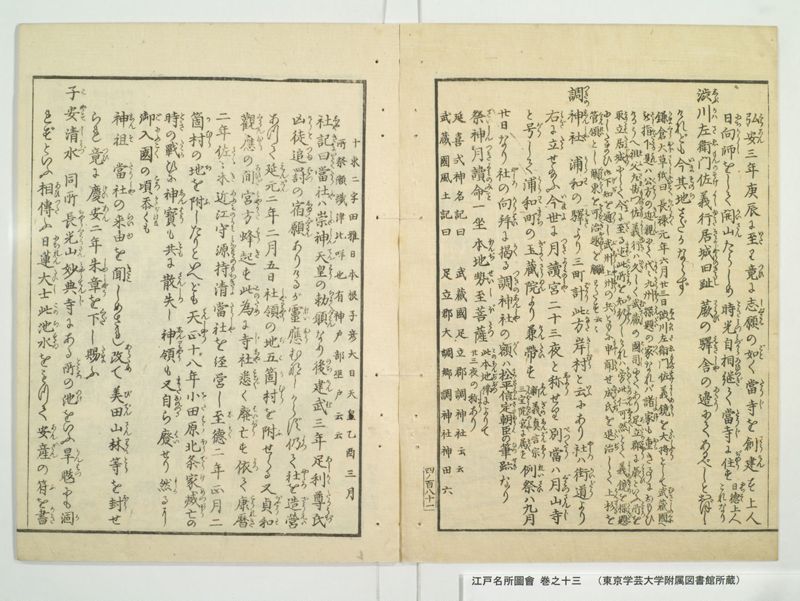
翻刻
【右丁】
弘安(こうあん)三年庚辰に至(いた)り竟(つひ)に志願(しぐわん)の如(ごと)く当寺(たうじ)を創建(さうけん)す上人
日向師(にちかうし)をして開山(かいさん)たらしめ時光(ときみつ)自(みづから)相継(あひつぎ)て当寺(たうじ)に住(ぢゆう)す《割書:日徳上人(にちとく )|これなり》
渋川左衛門佐義行(しぶかはさゑもんのすけよしゆき)居城旧趾(きよじやうのきうし) 蕨(わらび)の駅舎(えきしや)の辺(あたり)にてあるべしとおぼし
けれども今(いま)其地(そのち)さだかならず
《割書:鎌倉大草紙曰(かまくらおほさうしにいはく)長禄(ちやうろく)元年六月廿三日 渋川左衛門佐義鏡(しぶかはさゑもんのすけよしあきら)を大将(たいしやう)として武蔵国(むさしのくに)へ|被指下(さしくださる)是(これ)は公方(くはう)の近親(きんしん)にて代々(よゝ)九州探題(きうしうたんだい)の家(いへ)なれば諸家(しよけ)も重(おも)き事におもひ》
《割書:けるうへ祖父(そふ)左衛門佐義行(さゑもんのすけよしゆき)は久(ひさ)しく武蔵(むさし)の国司(こくし)にてあり足立郡(あたちこほり)に蕨(わらび)といふ所(ところ)を|取立(とりたて)居城(きよじやう)にして今(いま)に至(いた)る迄(まで)此所(このところ)を知行(ちぎやう)しけれは旁(かた〳〵)此仁(このにん)可然(しかるべし)とて義鏡(よしあきら)を探題(たんだい)》
《割書:にしたまひ御下知( げぢ)を通(つう)し武州(ぶしう)上州(じやうしう)の兵(へう)ともに申聞(もふしきか)せ成氏(なりうぢ)を退治(たいぢ)して上杉(うへすぎ)を|管領(くわんれい)とし関東(くわんとう)を可治(をさむへき)趣(おもむき)を触(ふれ)わたす云々》
調神社(つきのしんしや) 浦和(うらわ)の駅(えき)より三町計( ばかり)此方(こなた)岸村(きしむら)と云(いふ)にあり社(やしろ)は街道(かいだう)より
右(みぎ)に立(たゝ)せ給ふ今(いま)世(よ)に月読宮(つきよみのみや)二十三夜と称(しよう)せり別当(べつたう)は月山寺(ぐわつさんじ)
と号(がう)して浦和町(うらわまち)の玉蔵院(ぎよくさうゐん)より兼帯(けんたい)す《割書:新義真言宗(しんぎのしんごんしう)|三宝院宮(さんばうゐんのみや)に属(ぞく)す》例祭(れいさい)は九月
廿日なり社(やしろ)の向拝(かうはい)に掲(かく)る調神社(つきのしんしや)の額(がく)は松平信定朝臣(まつたいらのふさたあそん)の筆跡(ひつせき)なり
祭神(さいしん)月読命(つきよみのみこと)一坐 本地(ほんぢ)勢至菩薩(せいしぼさつ)《割書:此(この)本地仏(ほんぢぶつ)によりて|廿三夜の称(しよう)あり》
《割書:延喜式神名記曰 武蔵国足立郡調神社云々|武蔵国風土記曰 足立郡大調郷調神社神田六》
【左丁】
《割書:十束二字田雅日本根子彦大日天皇乙酉三月|所祭瀬織津比咩也有神戸部巫戸云云》
社記曰(しやきにいはく)当社(たうしや)は崇神天皇(しゆしんてんわう)の勅願(ちよくぐわん)なり後(のち)建武(けんむ)三年 足利尊氏(あしかゝたかうぢ)
凶徒追罰(けうとつゐばつ)の宿願(しゆくぐわん)ありけるが霊応(れいおう)むなしからず仍(よつ)て社(やしろ)を造営(ざうえい)
あつて延元(えんげん)二年二月五日 社領(しやりやう)の地(ち)五箇村(ごかむら)を附(ふ)せらる又 貞和(ぢやうわ)
観応(くわんおう)の間(あひだ)宮方(みやかた)蜂起(はうき)す此為(このため)に寺社(じしや)悉(こと〴〵)く廃亡(はいぼう)す依(よつ)て康暦(こうれき)
二年 佐々木近江守源持清(さゝきあふみのかみみなもとのもちきよ)当社(たうしや)を経営し至徳(しとく)二年正月二
箇村(かむら)の地(ち)を附(ふ)したりといへども天正(てんしやう)十八年 小田原北条家(をたはらほうでうけ)滅亡(めつぼう)の
時(とき)の戦(たゝか)ひに神宝(しんはう)も共(とも)に散失(さんしつ)し神領(しんりやう)も又(また)自(おのづか)ら廃(はい)せり然(しか)るに
御入国(ごにふこく)の頃(ころ)忝(かたぢけな)くも
神祖(しんそ) 当社(たうしや)の来由(らいゆ)を聞(きこ)しめされ改(あらため)て美田(びでん)山林(さんりん)等(とう)を封(ほう)せ
られ竟(つひ)に慶安(けいあん)二年 朱章(しゆしやう)を下(くだ)し賜(たま)ふ
子安清水(こやすしみづ) 同所 長光山(ちやうくわうさん)妙典寺(みやうてんじ)にある所(ところ)の池(いけ)をいふ旱魃(かんはつ)にも涸(か)
れずといふ相伝(あひつた)ふ日蓮大士(にちれんたいし)此(この)池水(ちすゐ)をもつて安産(あんさん)の符(ふ)を書(かき)
現代語訳
【右丁】
(妙顕寺の記述、前丁より続く)
弘安三年(1280年)庚辰に至り、ついに志願のとおり当寺を創建し、日向師をして開山とし、時光自らも相継いで当寺に住した。(これが日徳上人である。)
---
**渋川左衛門佐義行の居城旧跡**
蕨の宿場の辺りにあるべしと思われるが、今その地は定かではない。
《割注:『鎌倉大草紙』に言う――長禄元年(1457年)六月二十三日、渋川左衛門佐義鏡を大将として武蔵国へ派遣された。これは、義鏡が公方の近親であり、代々九州探題の家柄であったため、諸家もこれを重く見ていたうえ、祖父の左衛門佐義行は長く武蔵の国司であり、足立郡に蕨という所を取り立て居城として、今に至るまでこの地を知行していたため、何かとこの人物が相応しいとして、義鏡を探題となし、御下知を通じ、武蔵・上野の兵ともに申し聞かせ、成氏を退治して上杉を管領とし、関東を治めるべき趣を触れ渡す、云々。》
---
**調神社(つきのみや)**
浦和の宿より三町ほど手前、岸村と言う所にある。社は街道より右手にあり、今の世に「月読宮・二十三夜」と称されている。別当は月山寺と号し、浦和町の玉蔵院より兼帯する。(新義真言宗、三宝院宮に属す。)例祭は九月二十日である。社の向拝に掲げる「調神社」の額は、松平信定朝臣の筆跡である。
祭神:月読命 一坐 本地:勢至菩薩(この本地仏によって「二十三夜」の称がある。)
《割注:
・『延喜式神名記』に曰く――武蔵国足立郡、調神社、云々。
・『武蔵国風土記』に曰く――足立郡大調郷、調神社、神田六……》
【左丁】
《割注(前丁より続く):……十束二字田、雅(やまと)日本根子彦大日天皇(景行天皇)の乙酉三月に祭る所は瀬織津比咩なり。神戸部・巫戸あり、云々。》
社記に言う――当社は崇神天皇の勅願による。後、建武三年(1336年)に足利尊氏が凶徒追罰の宿願をもち、霊験はむなしからず、よって社を造営し、延元二年(1337年)二月五日、社領の地五箇村を附せられた。また、貞和・観応の間(1345〜1352年頃)に宮方が蜂起し、このために寺社ことごとく廃亡した。よって康暦二年(1380年)、佐々木近江守源持清が当社を再興し、至徳二年(1385年)正月に二箇村の地を附したという。しかし天正十八年(1590年)、小田原北条家滅亡の際の戦いに、神宝も共に散失し、神領もまた自然に廃れた。しかるに御入国(徳川家康の関東入国)の頃、かたじけなくも神祖(家康公)が当社の由来をお聞きになり、改めて美田・山林等を封ぜられ、ついに慶安二年(1649年)に朱章(朱印状)を下し賜った。
---
**子安清水(こやすしみず)**
同所(蕨・浦和近辺)の長光山妙典寺にある池をいう。旱魃にも涸れないと言われる。伝えるところでは、日蓮大士がこの池の水をもって安産の符を書き……(次丁へ続く)
英語訳
【Right Page】
*(Continuing the entry on Myōkenji Temple from the previous page)*
In the third year of Kōan (1280), the cyclical year *kōshin*, the temple was finally founded in accordance with the founder's vow. The monk Nichikō was made the founding abbot (*kaisan*), and Tokimitsu himself subsequently took up residence at the temple. *(This refers to the Venerable Nichitoku.)*
---
**The Ruins of the Castle of Shibukawa Saemon-no-suke Yoshiyuki**
It is believed to have been situated somewhere around the post-town of Warabi, but the exact location is no longer certain today.
*(Marginal note: According to the* Kamakura Ōzōshi*: On the twenty-third day of the sixth month of the first year of Chōroku (1457), Shibukawa Saemon-no-suke Yoshiakira was dispatched as commander-in-chief to Musashi Province. Since Yoshiakira was a close kinsman of the Kubō and his family had served as Kyushu Tandai (Deputy Governor-General of Kyushu) for generations, all the great houses regarded him with considerable respect. Moreover, his grandfather, Saemon-no-suke Yoshiyuki, had long served as the provincial governor of Musashi, establishing the place called Warabi in Adachi District as his castle town, and the family had held jurisdiction over this area ever since. For all these reasons, it was deemed appropriate that this man should take the role, and so Yoshiakira was appointed Tandai. His orders were conveyed throughout the province; the soldiers of Musashi and Kōzuke were informed accordingly; and proclamations were issued to the effect that Nariuji should be subdued, the Uesugi installed as Kantō Kanrei (Deputy Shogun of the Kantō), and order restored to the eastern provinces, and so forth.)*
---
**Tsuki no Miya (Tsuki Shrine)**
Located about three *chō* (approx. 330 meters) before the post-station of Urawa, in a place called Kishi Village. The shrine stands to the right of the highway and is known today as "Tsukiyomi no Miya" and associated with the Twenty-Third Night observance. Its *bettō* (administrative Buddhist temple) is called Gassan-ji, and it is under the joint administration of Gyokuzō-in in the town of Urawa. *(It belongs to the Shingi Shingon sect and is affiliated with the Sanbō-in monzeki.)* The annual festival is held on the twentieth day of the ninth month. The tablet bearing the inscription "Tsuki no Miya" displayed on the shrine's *kōhai* (front porch canopy) is in the calligraphy of Matsudaira Fusasada, Asomi.
Enshrined deity: Tsukiyomi no Mikoto (one seat). Buddhist counterpart (*honji*): Seishi Bosatsu (Mahāsthāmaprāpta). *(The association with the Twenty-Third Night derives from this Buddhist counterpart deity.)*
*(Marginal notes:*
- *The* Engishiki Jinmyōchō *states: "Musashi Province, Adachi District, Tsuki Shrine," etc.*
- *The* Musashi no Kuni Fudoki *states: "Adachi District, Ōtsuki Township, Tsuki Shrine, six* *tan* of divine fields…")*
【Left Page】
*(Marginal note continued from right page: "…twelve bundles [of rice], two-character field. In the third month of the year* *kinoto-tori* of the reign of Emperor Yamato Neko Hiko Ōhi (Emperor Keikō), the deity enshrined was Seoritsuhime. There are *kambe* (shrine households) and *kannagihe* (shamaness households), and so forth.")*
The shrine record states: This shrine was founded by imperial vow of Emperor Sujin. Later, in the third year of Kenmu (1336), Ashikaga Takauji made a vow to subdue the rebels, and the divine response was not in vain; accordingly he undertook the construction of the shrine buildings. On the fifth day of the second month of the second year of Engen (1337), land comprising five villages was granted as shrine estate. Furthermore, during the Jōwa and Kannō eras (approximately 1345–1352), the imperial (*miyakata*) forces rose up, and as a consequence all temples and shrines fell into ruin and abandonment. Therefore, in the second year of Kōryaku (1380), Sasaki Ōmi-no-kami Minamoto no Mochikiyo undertook the restoration of the shrine, and in the first month of the second year of Shitoku (1385), land comprising two villages was additionally granted. However, in the eighteenth year of Tenshō (1590), during the battles attending the fall of the Hōjō clan of Odawara, the sacred treasures were lost and scattered, and the divine estate too fell into desuetude of its own accord. Then, at the time of the "entry into the domain" (Tokugawa Ieyasu's assumption of the Kantō), the Divine Founder (*Shinso*, i.e., Ieyasu) graciously heard of the shrine's origins and history, and once again granted fertile fields, forests, and the like in perpetuity. Finally, in the second year of Keian (1649), an official red-seal document (*shujō*, i.e., *shuin-jō*) was bestowed upon the shrine.
---
**Koyas(u) Shimizu (Child-Granting Pure Spring)**
This refers to the pond located at Chōkōzan Myōten-ji Temple in the same area. It is said never to dry up even during droughts. According to tradition, the Great Teacher Nichiren used the waters of this pond to write out talismans for safe childbirth… *(continued on next page)*