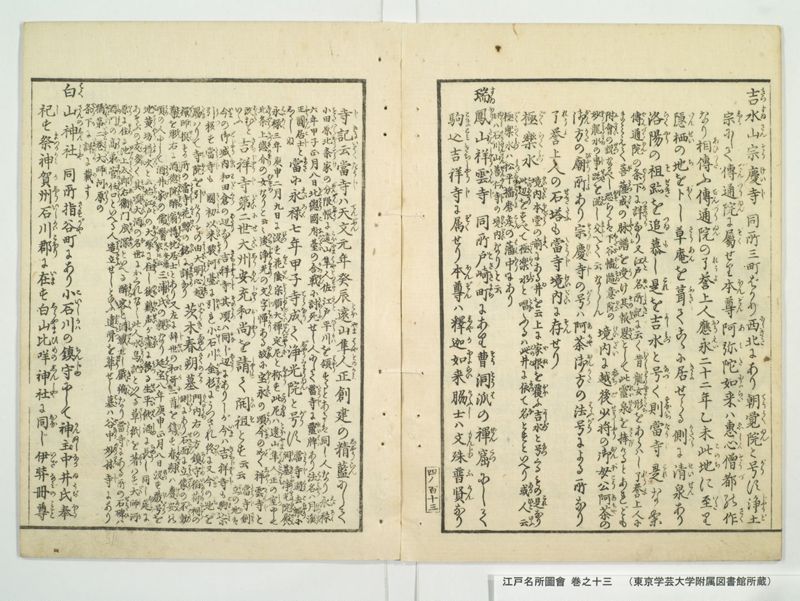
翻刻
【右丁】
吉水山(きつすゐさん)宗慶寺(そうけいじ) 同所三町ばかり西北(にしきた)にあり朝覚院(てうかくゐん)と号(がう)す浄土(じやうど)
宗(しう)にして伝通院(でんつうゐん)に属(ぞく)せり本尊(ほんぞん)阿弥陀如来(あみだによらい)は恵心僧都(ゑしんそうづ)の作(さく)
なり相伝(あひつた)ふ伝通院(でんつうゐん)の了誉上人(れうよ )応永(おうえい)二十二年乙未 此地(このち)に至(いた)り
隠栖(いんせい)の地(ち)を卜(ぼく)し草庵(さうあん)を葺(ふき)てこゝに居(きよ)せらる側(かたはら)に清泉(せいせん)あり
洛陽(らくやう)の租跡(そせき)#1を追慕(つゐも)し是(これ)を吉水(よしみづ)と号(なづ)く則(すなはち)当寺(たうじ)是(これ)なり
《割書:伝通院(でんづうゐん)の条下(でうか)に詳(つまひらか)なり又 江戸名所記(えとめいしよき)に云く昔(むかし)龍女(りうによ)形(かたち)をあらはし了誉上人(れうよ )に|まみえて菩薩戒(ぼさつかい)の脉譜(みやくふ)を受(う)け其(その)報恩(ほふおん)として此 霊泉(れいせん)を捧(さゝげ)けるとあれども》
《割書:附会(ふくわい)の説(せつ)なるべし恐(おそ)らくは下谷(したや)幡随意院(ばんすゐいゐん)の|妙龍水(めうりうすゐ)の事跡(じせき)を混(こん)し交(まじ)へて云ならん》境内(けいだい)に越後少将(ゑちごせうしやう)の御母公(おんぼこう)阿茶(あちや)の
御方(おんかた)の廟所(びやうしよ)あり宗慶寺(そうけいじ)の号(がう)は阿茶(あちや)御方(おんかた)の法号(はふがう)による所なり
了誉上人(れうよ )の石塔(せきたふ)も当寺(たうじ)境内(けいだい)に存(そん)せり
極楽水(ごくらくみづ)《割書:境内(けいだい)本堂(ほんだう)の前(まへ)にある井(ゐ)を云上に屋根(やね)を覆(おほ)ふ吉水(よしみづ)と号(なつ)くるもの是(これ)なり|此辺(このあたり)をすべて極楽水(ごくらくみづ)と唱(とな)ふるは此井(このゐ)に依(よつ)て名(な)とすといへり或人云(あるひといふ)》
《割書:極楽水(ごくらくみづ)は松平播磨侯(まつだいらはりまこう)の藩中(はんちう)にあり|旧(むかし)は石川山(せきせんさん)善仁寺(ぜんにんじ)の境内(けいだい)なりと云》
瑞鳳山(すゐほうさん)祥雲寺(しやううんじ) 同所 戸崎町(とさきまち)にあり曹洞派(そうとうは)の禅窟(ぜんくつ)にして
駒込(こまこみ)吉祥寺(きちしやうじ)に属(ぞく)せり本尊(ほんぞん)は釈迦如来(しやかによらい)脇士(けふし)は文殊(もんじゆ)普賢(ふけん)なり
【左丁】
寺記云(じきにいはく)当寺(たうじ)は天文(てんぶん)元年癸辰 遠山隼人正(とほやまはやとのかみ)創建の精藍(しやうらん)にして
《割書:小田原北条家(をたはらほうでうけ)の分限帳(ぶんげんちやう)に遠山隼人佐(とほやまはやとのすけ)江戸(えと)平川(ひらかは)を領(りやう)するとあるは同し人なり永禄(えいろく)|六年甲子正月八日 北総(ほくそう)国府台(こふのたい)の合戦(かつせん)に討死(うちしに)せし人にして当寺(たうじ)に霊牌(れいはい)あり法名(はふみやう)は月渓(げつけい) 》
《割書:正円居士(しやうえんこじ)と|しるしぬ》当(まさ)に永禄(えいろく)七年甲子 寺(てら)成(なり)て浄光院(じやうくわうゐん)と号(がう)す《割書:当寺(たうじ)過去帳(くわこちやう)に|開基(かいき)浄光院殿(じやうくわうゐんでん)は》
《割書:永禄(えいろく)三年庚申二月九日に没(ぼつ)す花陰宗順大禅定尼(くわいんそうじゆんだいぜんぢやうに)と称(しよう)す此尼(このあま)は遠山隼人正(とほやまはやとのかみ)の室(しつ)にして|北条上総介(ほうでうかづさのすけ)の女(むすめ)なりと云々 後(のち)浄光(じやうくわう)の文字(もんじ)憚(はゞかり)ある故(ゆゑ)に宝永(ほうえい)の頃(ころ)今(いま)の如(ごと)く祥雲寺(しやううんじ)と》
《割書:改(あらた)むと|いふ》吉祥寺(きちじやうじ)第二世(だいにせ)大州安充和尚(たいしうあんじゆうおしやう)を請(しやうじ)て開祖(かいそ)とす云云《割書:当寺(たうじ)創(さう)|立(りふ)の地(ち)は》
《割書:今(いま)の御城内(ごじやうない)和田倉(わだくら)の辺(あたり)なり吉祥寺(きちじやうじ)其頃(そのころ)は同(おな)じ辺(あたり)にありしが今(いま)は吉祥寺(きちじやうじ)も駒込(こまこみ)に|引移(うつ)す当寺(たうじ)も 国初(こくしよ)以来(いらい)駿河台(するがだい)に引(ひか)れ小石川金杉(こいしかはかなすぎ)にうつされ終(つひ)に又 今(いま)の地(ち)を》
《割書:賜(たま)はりて寺院(じゐん)を引(ひ)けりその由(よし)大明心越(たいみんしんゑつ)|禅師(ぜんし)撰(せん)する所の当寺(たうじ)花鯨(くわけい)の銘(めい)に詳(つまひらか)なり》茨木春朔墓(いばらきしゆんさくのはか)《割書:門内(もんのうち)右の方 鎮守(ちんじゆ)稲荷祠(いなりのほこら)の|側(かたはら)にあり石面(せきめん)に立像(りふざう)の不動(ふどう) 》
《割書:尊(そん)を彫(ほり)右に酒徳院酔翁樽枕居士(しゆとくゐんすゐおうそんちんこし)とあり又左に辞世(じせい)の和哥(わか)二首(にしゆ)を鐫(けい)す春朔(しゆんさく)は慶安(けいあん)の|頃(ころ)の人にして酒井家(さかゐけ)の儒医(じゆい)《割書:又は安藤|家とも云》三浦氏(みうらうぢ)の親(おや)なり延宝(えんはう)八年庚申正月八日 没(ぼつ)す戯号(けがう)を》
《割書:地黄坊樽次(ぢわうばうたるつぐ)と云 始(はじめ)江戸(えど)の大塚(おほつか)に住(ぢゆう)し後(のち)《振り仮名:鶏声が窪|けいせい くぼ》に移(うつ)る生平(せいへい)飲酒(いんしゆ)に長(ちやう)し同し莚(むしろ)に|あそぶの友(とも)多(おほ)く其頃(そのころ)大酒(たいしゆ)の名(な)世(よ)にかくれなし此人 水鳥記(みづとりのき)といへる草紙(さうし)を著(あら)はす大師河(だいしか)》
《割書:原(はら)に住(すめ)る池上太郎右衛門底深(いけかみたらうゑもんそこふか)といへる酔客(すゐかく)と酒戦(しゆせん)せし戯編(きへん)なり当寺(たうじ)にある所の石碑(せきひ)は|酒門(しゆもん)の高弟(かうてい)菅任口(すけのにんこう)といへる人 造立(ざうりふ)せしといふ遺骨(ゆゐこつ)を葬(さう)せし墓(はか)は谷中(やなか)妙林寺(めうりんじ)にあり》
《割書:猶(なほ)第二巻(だいにくわん)大師河原(だいしかはら)の|条下(でうか)に詳(つまひらか)に載(の)す》
白山神社(はくさんのしんしや) 同所 指谷町(さすがや )にあり小石川(こいしかは)の鎮守(ちんじゆ)にして神主(かんぬし)中井氏(なかゐうぢ)奉(ほう)
祀(し)す祭神(まつるかみ)賀州(かしう)石川郡(いしかはこほり)に在(いま)す白山比咩神社(しらやまひめのしんしや)に同(おな)じ伊弉冊尊(いざなみのみこと)
現代語訳
【右丁】
**吉水山 宗慶寺**
同所(光円寺)から三町ほど西北にある。朝覚院と号し、浄土宗にして伝通院に属する。本尊の阿弥陀如来は恵心僧都の作である。
伝えによれば、伝通院の了誉上人が応永二十二年乙未(1415年)にこの地に来られ、隠棲の地を占い、草庵を結んでここに居された。傍らに清らかな泉があり、洛陽(京都)の吉水の旧跡を追い慕って、これを「吉水」と名付けた。すなわち当寺がこれである。
〔割注:伝通院の項に詳しい。また『江戸名所記』に言う。昔、龍女が姿を現して了誉上人に拝謁し、菩薩戒の脈譜を受けた。その報恩として、この霊泉を捧げたとあるけれども、これは附会(こじつけ)の説であろう。おそらく下谷の幡随意院の妙龍水の事跡と混同・混交して言ったのであろう。〕
境内に越後少将の御母公・阿茶の御方の廟所がある。宗慶寺という号は、阿茶の御方の法号によるものである。了誉上人の石塔も当寺境内に存する。
**極楽水**
〔割注:境内の本堂の前にある井戸のことをいう。上に屋根を覆っている。吉水と名付けるものはこれである。この辺り一帯をすべて「極楽水」と唱えるのは、この井戸に由来して名とするという。ある人が言う。極楽水は松平播磨侯の藩中にあり、昔は石川山善仁寺の境内であったという。〕
---
**瑞鳳山 祥雲寺**
同所・戸崎町にある。曹洞派の禅刹にして、駒込の吉祥寺に属する。本尊は釈迦如来、脇侍は文殊・普賢である。
【左丁】
寺記に言う。当寺は天文元年癸辰(1532年)、遠山隼人正の創建した精藍(寺院)である。
〔割注:小田原北条家の分限帳に「遠山隼人佐、江戸の平川を領する」とあるのは同じ人物である。永禄六年甲子(1564年)正月八日、北総の国府台の合戦で討死した人物であり、当寺に霊牌がある。法名は「月渓正円居士」と記されている。〕
ちょうど永禄七年(※原文は永禄七年甲子とあるが、甲子は永禄七年にあたる)に寺が成り、「浄光院」と号した。
〔割注:当寺の過去帳に、開基・浄光院殿は永禄三年庚申(1560年)二月九日に没し、「花陰宗順大禅定尼」と称すとある。この尼は遠山隼人正の室(妻)にして、北条上総介の娘と云々。後に「浄光」の文字が憚りある(=徳川将軍家の忌み字となった)ため、宝永(1704〜1711年)の頃、今のように「祥雲寺」と改めたという。〕
吉祥寺第二世の大州安充和尚を請じて開祖とした。
〔割注:当寺の創立の地は、今の御城内・和田倉の辺りである。吉祥寺もその頃は同じ辺りにあったが、今は吉祥寺も駒込に引き移した。当寺も国初(江戸幕府開府)以来、駿河台に引かれ、小石川金杉に移され、ついに又今の地を賜って寺院を引いた。その由来は、大明(明国出身)の心越禅師が撰した当寺の「花鯨の銘」に詳しい。〕
**茨木春朔の墓**
〔割注:門内の右の方、鎮守稲荷祠の傍らにある。石面に立像の不動尊を彫り、右に「酒徳院酔翁樽枕居士」とある。また左に辞世の和歌二首を刻む。春朔は慶安(1648〜1652年)の頃の人で、酒井家の儒医(または安藤家とも言う)、三浦氏の親にあたる。延宝八年庚申(1680年)正月八日に没した。戯号を「地黄坊樽次」といった。初め江戸の大塚に住み、後に鶏声ヶ窪に移った。生涯、飲酒を得意とし、同じ席で遊ぶ友が多く、その頃、大酒の名が世に隠れなかった。この人は『水鳥記』という草紙を著した。大師河原に住む池上太郎右衛門底深という酔客と酒の飲み比べをした戯れの編著である。当寺にある石碑は、酒門の高弟・菅任口という人が造立したという。遺骨を葬った墓は谷中の妙林寺にある。なお、第二巻大師河原の項に詳しく載せる。〕
---
**白山神社**
同所・指谷町にある。小石川の鎮守にして、神主・中井氏が奉祀する。祭神は加賀国(賀州)石川郡にある白山比咩神社と同じく、伊弉冊尊(イザナミノミコト)……
英語訳
【Right Page】
**Kissui-zan Sōkei-ji Temple**
Located about three *chō* (approximately 330 meters) to the northwest of the aforementioned site (Kōen-ji). It bears the name Chōkaku-in, belongs to the Jōdo (Pure Land) sect, and is affiliated with Denzu-in Temple. The principal image, an Amida Nyorai (Amitābha), is the work of the Monk Eshin Sōzu.
It is said that Ryōyo Shōnin of Denzu-in came to this place in the twenty-second year of Ōei, the year of *Kinoto-Hitsuji* (1415 CE), divined this spot as a place for his hermitage, thatched a small retreat, and resided here. Finding a clear spring nearby, he named it "Yoshimizu" (*Yoshimizu* meaning "auspicious water") in fond remembrance of the Yoshimizu quarter in Rakuyō (Kyoto). This temple is that very place.
[Side note: Details are given in the entry on Denzu-in. The *Edo Meisho Ki* also states that a dragon maiden once appeared before Ryōyo Shōnin, received the lineage transmission of the Bodhisattva precepts (*bosatsukai myakufu*) from him, and offered this sacred spring as a token of gratitude. However, this is likely an invented story (*fukkai*). It is probably a conflation with the account of the Myōryū-sui spring at Banzui-in Temple in Shitaya.]
Within the temple precincts is the mausoleum (*byōsho*) of the Honorable Lady Acha, mother of the Lord of Echigo-no-shōshō. The name "Sōkei-ji" derives from Lady Acha's posthumous Buddhist name (*hōgō*). The stone pagoda of Ryōyo Shōnin also remains within the temple grounds.
**Gokuraku-mizu (Paradise Water)**
[Side note: This refers to the well located in front of the main hall within the precinct, covered with a roof above. This is the one called "Yoshimizu." It is said that the entire surrounding area came to be called "Gokuraku-mizu" (*Gokuraku* meaning "Paradise/Pure Land") because of this well. One person states that Gokuraku-mizu falls within the domain of the Lord Matsudaira of Harima, and that in former times it was within the precinct of Sekisen-zan Zennin-ji Temple.]
---
**Zuihō-zan Shōun-ji Temple**
Located in Tosaki-machi, in the same district. It is a Zen establishment of the Sōtō sect, affiliated with Kichijō-ji Temple in Komagome. The principal image is Śākyamuni (Shaka Nyorai), flanked by Mañjuśrī (Monju) and Samantabhadra (Fugen) as attendants.
【Left Page】
The temple records state: This temple was founded in the first year of Tenbun, the year of *Mizunoto-Tatsu* (1532 CE), as a refined monastery established by Tōyama Hayato-no-kami.
[Side note: In the roster of retainers (*bungenchō*) of the Odawara Hōjō clan, the entry reading "Tōyama Hayato-no-suke, holding the domain of Hirakawa in Edo" refers to this same person. He was killed in battle at the Battle of Konodai in northern Shimōsa Province on the eighth day of the first month of the sixth year of Eiroku, *Kinoe-Ne* (1564 CE). A memorial tablet (*reihai*) for him is kept at this temple. His posthumous name is recorded as "Getsukei Shōen Koji."]
In the seventh year of Eiroku, *Kinoe-Ne* (※ see annotation), the temple was completed and named "Jōkō-in."
[Side note: According to the temple's death register (*kakochō*), the founding patron (*kaiki*), the Lord Jōkō-in, passed away on the ninth day of the second month of the third year of Eiroku, *Kanoe-Saru* (1560 CE). She is referred to as "Kain Sōjun Daizenjōni." This nun was the wife of Tōyama Hayato-no-kami and is said to have been the daughter of Hōjō Kazusa-no-suke. Later, because the characters for "Jōkō" (*浄光*) became a name to be avoided (as it was associated with a name in the Tokugawa shogunal lineage), the temple was renamed Shōun-ji as it stands today, around the Hōei era (1704–1711).]
The Second Abbot of Kichijō-ji, the Venerable Daishū Anjū, was invited to serve as the temple's founding priest (*kaiso*).
[Side note: The original site of this temple's founding was near Wadakura within what is now the inner castle grounds. Kichijō-ji was also located in the same vicinity at that time, but has since been relocated to Komagome. This temple, too, was moved to Surugadai from the time of the founding of the shogunate, then transferred to Kanasugui in Koishikawa, and finally was granted the present site to which the temple was moved. The details of these circumstances are recorded in the inscription for the temple's "Flower Whale" (*Kakei*) composed by the Zen Master Shin'etsu from the Ming dynasty.]
**Tomb of Ibaraki Shunsaku**
[Side note: Located to the right upon entering the gate, beside the precinct's guardian Inari shrine. The stone face is carved with a standing image of Fudō-son (Acalanātha). To the right are inscribed the words "Shutoku-in Suiō Sonchinkoji" (a posthumous name alluding to his love of sake). To the left are carved two farewell (*jisei*) waka poems. Shunsaku was a person of the Keian era (1648–1652), a Confucian physician (*jui*) in the service of the Sakai clan (some say the Andō clan), and the father of the Miura family. He died on the eighth day of the first month of the eighth year of Enpō, *Kanoe-Saru* (1680 CE). His pen name for comic writing was "Jioubō Tarutsugu." He first lived in Ōtsuka in Edo, later moving to Keiseigakubo. Throughout his life he excelled at drinking, had many companions with whom he shared merry gatherings, and his fame as a great drinker was well known throughout the city at the time. This man authored a popular booklet (*sōshi*) titled *Mizutori-ki* (Record of the Water Bird), a comic work recounting a drinking contest he staged against a drinking companion named Ikegami Tarōemon Sokofuka, who lived at Daishi-kawara. The stone monument at this temple is said to have been erected by a senior disciple of the "school of sake," one Suke-no-Ninkō. The grave where his remains are interred is at Myōrin-ji Temple in Yanaka. For further details, see the entry on Daishi-kawara in Volume 2.]
---
**Hakusan Jinja (White Mountain Shrine)**
Located in Sasugaya-machi, in the same district. It is the guardian shrine (*chinju*) of Koishikawa, with the Nakai family serving as the Shinto priests (*kannushi*). The enshrined deity is the same as that of the Shirayamahime Shrine in Ishikawa-gun, Kashu (Kaga Province): Izanami-no-Mikoto...