翻刻
【右丁】
給ひ時光(ときみつ)か妻(つま)に与(あた)へられし加持水(かちすゐ)なりといふ
宮本簸川大明神社(みやもとひかはたいみやうしんのやしろ) 宮本郷(みやもとのかう)《割書:大宮駅(おほみやゑき)より|二十町程北》三室山(みむろやま)の南麓(みなみふもと)にあり
土人(とじん)宮本(みやもと)の簸川社(ひかはのやしろ)と称(とな)へ又 女体宮(によたいくう)と号(かう)す祭神(さいしん)大宮(おほみや)同体(とうたい)に
して本宮(ほんくう)大己貴命(おほあなむちのみ
こと)右(みき)素戔嗚尊(そさのをのみこと)左(ひたり)奇稲田媛命(くしいなたひめのみこと)を斎(いは)ひ祀(まつ)る当社(たうしや)山(さん)
中(ちゆう)杉(すき)檜(ひのき)榊(さかき)多(おほ)く社頭(しやとう)魏然(きせん)として瑞籬(みつかき)莓(こけ)滑(なめらか)なり覡(きね)か皷(つゝみ)の音(おと)朝(あした)
の祈(いのり)夕(ゆふへ)の報賽(かへりまうし)すゝしめのこゑ山林(さんりん)にひゝきてさなから神感(しんかん)の興(きよう)
を催(もよほ)すらむといと貴(たふと)し神主(かむぬし)武笠氏(むかさうち)世々(よゝ)これを奉祀(ほうし)し社領(しやりやう)
五十石を賜(たま)ふ国初(こくしよ)の頃(ころ)嘗(かつ)て 神祖(しんそ)も神主(かむぬし)の家(いへ)に入(いら)せたまひ
神領(しんりやう)及(およ)ひ神宝等(しんほうとう)御寄附(こきふ)あらせ給ふ古器(こき)古文書等(こもんしよとう)神主(かむぬし)の
家(いへ)に伝(つた)へてこれを蔵(さう)すといふ
御沼(みぬま)《割書:旧事記に水沼に作り|又は見沼と書ことも有にや》本社(ほんしや)鳥井(とりゐ)の前(まへ)にあり当社(たうしや)の御手洗(みたらし)
にして昔(むかし)は長(なかさ)四五里はかり広(ひろさ)二十余町( よてう)ありしとかや享保(きやうほ)十二年
に官命(くわんめい)ありて此沼(このぬま)を新田(しんてん)に開発(かいほつ)せしめらる今(いま)は僅(わつか)に沼(ぬま)の形(かたち)を
【左丁 絵図】
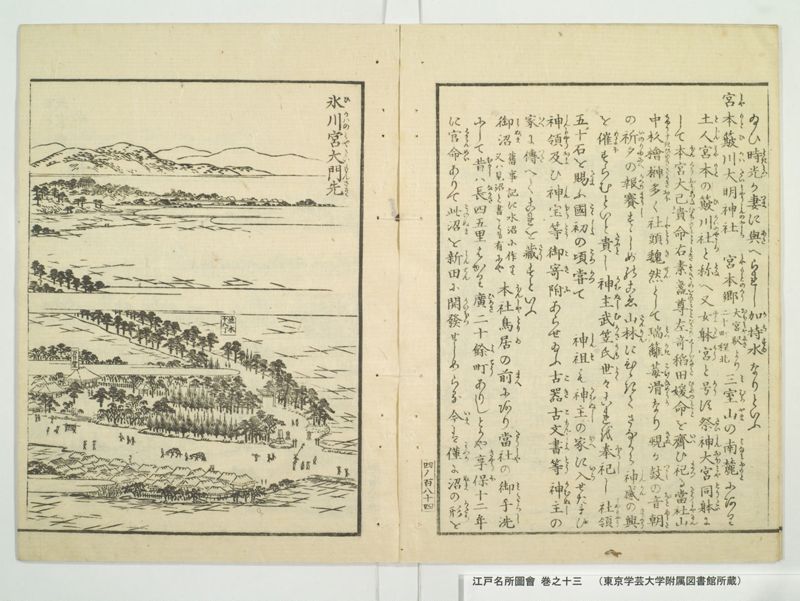
氷川宮大門先(ひかはのみやたいもんさき)
並木十八丁
万日堂
現代語訳
【右丁】
…(時光の妻に与えられた加持水であるという。)
**宮本簸川大明神社**(みやもとひかわだいみょうじんのやしろ)
大宮駅より北へ二十町ほどのところ、宮本郷の三室山の南麓にある。
地元の人々はこれを「宮本の簸川社」と呼び、また「女体宮」とも称する。祭神は大宮(氷川神社)と同体であり、本宮には大己貴命(おおあなむちのみこと)を、右に素戔嗚尊(すさのおのみこと)を、左に奇稲田媛命(くしいなだひめのみこと)を祀っている。
当社は山中に杉・檜・榊が多く茂り、社頭は威厳があって、玉垣には苔が滑らかに生えている。神職が打つ鼓の音、朝の祈り、夕べの報賽(お礼参り)、祓いの声が山林に響き渡り、まるで神の感応を催させるかのようで、まことに尊い。
神主は武笠氏が代々これを奉祀し、社領五十石を賜っている。徳川家康公(神祖)が江戸幕府を開かれた頃、かつて神祖も神主の家においでになり、神領および神宝等を御寄附あそばされた。古器・古文書等は神主の家に伝えられ、所蔵されているという。
**御沼**(みぬま)
〔旧事記には「水沼」と書き、また「見沼」と書くこともある〕
本社の鳥居の前にある。これは当社の御手洗(みたらし)であり、昔は長さ四・五里ほど、広さ二十余町もあったという。享保十二年(1727年)に幕府の命があり、この沼を新田として開発させた。今はわずかに沼の形を(留めるばかりとなっている)。
【左丁 絵図】
氷川宮大門先(ひかわのみやたいもんさき)
並木 十八丁
万日堂
英語訳
【Right Page】
…(It is said to be the sacred healing water [kaji-sui] that was given to the wife of Tokimitsu.)
**Miyamoto Hikawa Daimyojin Shrine**
Located at the southern foot of Mimuroyama, in Miyamoto-go, approximately twenty chō north of Ōmiya Station.
The local people call it the "Miyamoto Hikawa Shrine" and also refer to it as the "Nyotai-gū" (Shrine of the Female Deity). The enshrined deities are the same as those of the Ōmiya (Hikawa) Shrine: the central shrine houses Ōanamuchi no Mikoto, with Susanoo no Mikoto on the right and Kushiinadahime no Mikoto on the left.
The shrine grounds are densely covered with cedar, cypress, and sacred sakaki trees, lending the precinct an imposing and solemn atmosphere. The sacred fence (mizugaki) is smoothly covered in moss. The sound of the drums struck by the shrine's kannagi (spirit medium), the morning prayers, the evening thanksgiving offerings, and the voices of ritual purification echo through the mountain forest, stirring one to feel the very presence and response of the divine — truly a most sacred and awe-inspiring place.
The Mukasa clan has served as hereditary Shinto priests (kannushi) here for generations and has been granted a shrine estate of fifty koku. Around the founding of the Edo shogunate, the "Divine Ancestor" (i.e., Tokugawa Ieyasu) himself visited the home of the kannushi and bestowed donations of shrine lands and sacred treasures. Ancient implements and old documents are said to have been handed down and kept in the family of the kannushi to this day.
**Minuma (The Sacred Pond)**
[In the Kujiki it is written as "Mizunuma"; it may also be written as "Minuma" (見沼)]
This pond lies in front of the main torii gate of the shrine and serves as the sacred ablution basin (mitarashi) of the shrine. It is said that in former times it extended four to five ri in length and more than twenty chō in width. In the twelfth year of the Kyōhō era (1727), by order of the shogunate, this pond was developed into new rice paddies (shinden). Today, only a faint remnant of the pond's former shape remains...
【Left Page: Illustrated Map/Scene】
In front of the Great Gate of Hikawa Shrine (氷川宮大門先)
Tree-lined avenue (竝木) — eighteen chō
Mannichi-dō (萬日堂)