翻刻
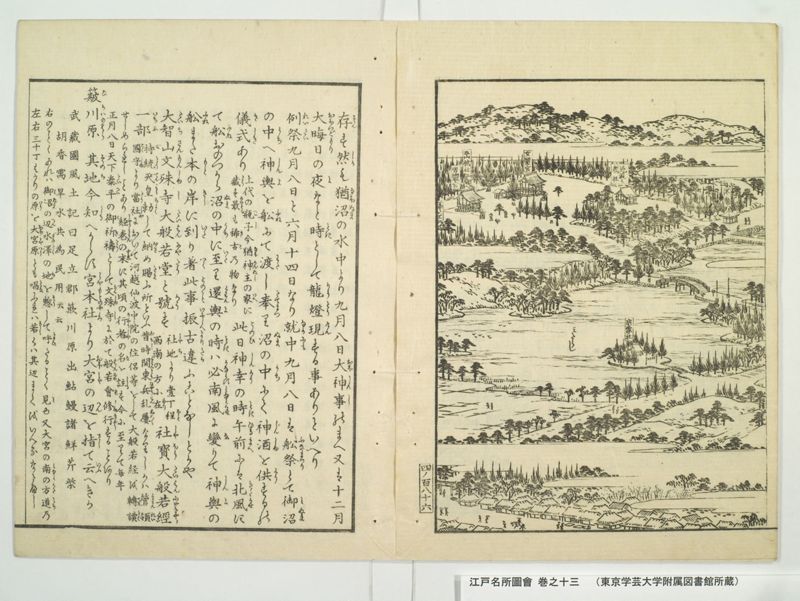
【右丁 絵図】
不動
荒波々幾社 宗像社
みたらし
女体宮
五山祇社
男体宮
あたご
【左丁】
存(そん)す然(しか)も猶(なほ)沼(ぬま)の水中より九月八日 大神事(おほしんし)のまへ又は十二月
大晦日(おほつごもり)の夜(よ)なと時(とき)として竜灯(りうとう)現(けん)する事ありといへり
例祭(れいさい)九月八日と六月十四日なり就中(なかにも)九月八日を舩祭(ふなまつり)とし御沼(みぬま)
の中(うち)へ神輿(しんよ)を舩(ふね)にて渡(わた)し奉(たてまつ)り沼(ぬま)の中(うち)にて神酒(じんしゆ)を供(くう)するの
儀式(きしき)あり《割書:上代の瓶子(へいし)今 猶(なほ)神主(かんぬし)の家(しへ)に|蔵(さう)す最(もつとも)も稀古(きこ)の物なり》此日(このひ)神幸(しんかう)の時(とき)午前(ひるまへ)には北風(きたかせ)に
て舩(ふね)おのつから沼(ぬま)の中(うち)に至(いた)り還輿(くわんよ)の時(とき)は必(かならす)南風(みなみかせ)に変(な)りて神輿(しんよ)の
舩(ふね)また本(もと)の岸(きし)に到(いた)り着(つく)此事(このこと)振古(いにしへより)違(たか)ふことなしとかや
大智山(たいちさん)文殊寺(もんしゆし)大般若堂(たいはんにやたう)と号(かう)す《割書:社地(しやち)より壱丁程( ほと)|西南の方に在(あり)》社宝(しんほう)大般若経(たいはんにやきやう)
一部(いちふ)《割書:持統天皇(ぢとうてんわう)勅(ちよく)して納(おさ)め賜(たま)ふ所といふ昔時(むかし)関東(くわんとう)兵乱(ひやうらん)屢(しは〳〵)なりしかは管領(くわんれい)|国守(こくしゆ)より当社(たうしや)において河-越仙-波中-院の住侶等をして大般若経を転読(てんとく)》
《割書:せしめられしことあり《振り仮名:経巻|し#1やうくわん》の末(すゑ)に其頃の行者(きやうしや)の名(な)を註(しる)す今に至りて毎年|正月八日天下 泰平(たいへい)の御祈祷(こきたう)として文殊寺(もんしゆし)に於て般若会(はんにやゑ)修行(しゆきやう)することあり》
簸川原(ひかはのはら) 其地(そのち)今 知(しる)へからす宮本社(みやもとのやしろ)より大宮(おほみや)の辺(へん)を指(さし)て云(いふ)へきか
武蔵国風土記曰足立郡簸川原出鮎鰻諸鮮芹柴
胡香需旱水共為民用云云
《割書:右のことくあれは御沼(みぬま)の辺(へん)水沢(すゐたく)の地(ち)を惣(そう)して呼(よひ)たることく見(み)ゆ又大宮の南(みなみ)の方(かた)道(みち)の|左右三十丁はかりの原(はら)を大宮原(おほみやはら)とも唱(とな)ふれは若(もし)くは其辺ましくをいへるなるへし》
現代語訳
【右丁 絵図】
不動(ふどう)
荒波々幾社(あらはばきのやしろ) 宗像社(むなかたのやしろ)
御手洗(みたらし)
女体宮(にょたいのみや)
五山祇社(ごさんぎのやしろ)
男体宮(なんたいのみや)
愛宕(あたご)
---
【左丁】
(前ページより続き)…(沼は)今も存在している。それでもなお、沼の水中から、九月八日の大神事の前、あるいは十二月大晦日の夜などに、時として竜灯が現れることがあると言われている。
例祭は九月八日と六月十四日である。なかでも九月八日を船祭りとし、御沼の中へ神輿を船にて渡し奉り、沼の中にて神酒を供する儀式がある。
〔割注:上代の瓶子(へいし)が今もなお神主の家に蔵されており、非常に珍しい古い品である。〕
この日、神幸(神輿の渡御)の時、午前中は北風によって船がおのずから沼の中へ至り、還輿(帰りの渡御)の時には必ず南風に変わって神輿の船がまた元の岸に到り着く。このことは、古来より違うことがないとのことである。
大智山(たいちさん)文殊寺(もんじゅじ)、大般若堂と号する。
〔割注:社地より一丁ほど西南の方にある。〕
社宝は大般若経一部。
〔割注:持統天皇が勅して納め賜った所と言う。昔、関東で兵乱がしばしばあったため、管領・国守より当社において、河越・仙波・中院の住侶たちに大般若経を転読させたことがある。経巻(しょうかん)の末にその頃の行者の名を記す。今に至るまで毎年正月八日に、天下泰平の御祈祷として文殊寺において般若会を修行することがある。〕
簸川原(ひかわのはら) その地は今や知ることができない。宮本社(みやもとのやしろ)より大宮の辺りを指して言うべきであろうか。
武蔵国風土記に曰く、「足立郡簸川原は鮎・鰻・諸鮮(もろもろの鮮魚)・芹・柴胡・香需(こうじゅ)を産し、旱(ひでり)にも水(みず)にも共に民の用をなす」云々。
〔割注:右のとおりであれば、御沼の辺り、水沢の地を総じて呼んだことと見える。また、大宮の南の方、道の左右三十丁ほどの原を「大宮原(おおみやはら)」とも唱えるので、もしくはその辺り一帯を言うのであろう。〕
英語訳
【Right Page: Illustrated Map/Diagram】
Fudō (Immovable Wisdom King Shrine)
Arahabaki Shrine Munakata Shrine
Mitarashi (Purification Fountain)
Nyotai-miya (Female Deity Shrine)
Gosangi Shrine
Nantai-miya (Male Deity Shrine)
Atago (Shrine)
---
【Left Page】
(Continuing from the previous page) …(The pond) still exists to this day. Even so, it is said that from time to time, dragon lights (ryūtō) appear rising from the waters of the pond — before the Great Divine Festival on the 8th day of the 9th month, or on the night of New Year's Eve in the 12th month.
The regular festivals are held on the 8th day of the 9th month and the 14th day of the 6th month. Among these, the 8th day of the 9th month is celebrated as the Boat Festival (Funa Matsuri), during which the portable shrine (mikoshi) is carried by boat across the sacred pond (Mi-numa), and a ceremony is held in which sacred sake is offered in the middle of the pond.
[Marginal note: The ancient ceremonial sake vessels (heishi) from antiquity are still kept in the house of the head priest to this day, and are exceedingly rare antiques.]
On this day, during the procession of the deity (shinkō), the north wind causes the boat to naturally reach the center of the pond in the morning hours; and when the shrine is returned (kangen), the wind invariably shifts to a southerly breeze, carrying the mikoshi boat back to its original shore. It is said that this has never failed since ancient times.
Daichi-zan Monjuji Temple, known as the Daihannya-dō (Great Prajñā Hall).
[Marginal note: Located approximately one chō to the southwest of the shrine grounds.]
The temple's sacred treasure is one complete copy of the Mahāprajñāpāramitā Sūtra (Daihannyakyō).
[Marginal note: It is said that this was deposited by imperial decree of Empress Jitō. In former times, when military conflicts were frequent throughout the Kantō region, the kanrei (deputy shōgun) and provincial governors had the resident monks of Kawagoe, Senba, and Chūin temples perform the recitation (tendoku) of the Mahāprajñāpāramitā Sūtra at this shrine. The names of the officiants of that era are recorded at the end of each scroll. To this day, every year on the 8th day of the 1st month, the Hannya-e (Prajñā Ceremony) is conducted at Monjuji Temple as a prayer for peace throughout the realm.]
Hikawa-no-hara (The Plain of Hikawa) The exact location of this place is no longer known today. It may refer to the area from Miyamoto Shrine toward the vicinity of Ōmiya.
The Musashi no Kuni Fudoki (Gazetteer of Musashi Province) states: "In Hikawa-no-hara in Adachi District, ayu (sweetfish), eel, various fresh fish, water parsley (seri), bupleurum (saiko), and elsholtzia (kōju) are produced, and [the area] serves the needs of the people alike in times of drought and flood." And so on.
[Marginal note: Given the above account, it appears that the area around Mi-numa, the waterlogged lowland, was collectively referred to by this name. Furthermore, since the open plain stretching approximately thirty chō to either side of the road to the south of Ōmiya is also called "Ōmiya-hara," it may well be that this name referred to that entire surrounding area.]