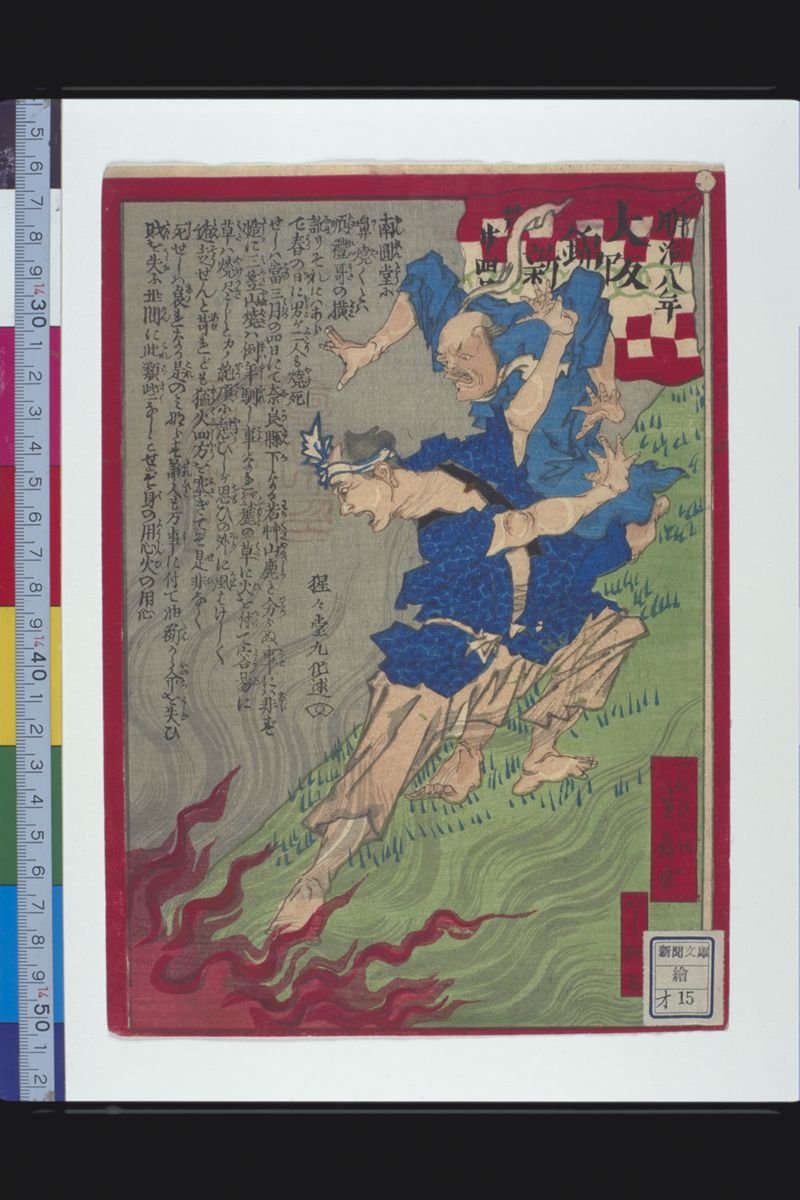
翻刻
明治八年
大阪
錦【絵】
新【聞】
第廿四【号】
南円堂(なんゑんとう)に
嚊(かゝ)焼(や)くとは
順礼歌(じゆんれいうた)の横(よこ)
訛(なま)りそれにはあら
で春(はる)の日(ひ)に男(をとこ)が二人(ふたり)も焼死(やけし)
せしは当(この)三 月(くはつ)の四日にて奈良(なら)県下(けんか)なる若草山(わかくさやま)鹿(しか)と分(わか)らぬ事(こと)には非(あら)ず
慥(たしか)に三笠山焼(みかさやまやき)は例年(まいとし)馴(なれ)し事(こと)なれば麓(ふもと)の草(くさ)に火(ひ)を付(つけ)て容易(ようゐ)に
草(くさ)は焼尽(やけつき)じとかの絶頂(ぜつてう)に憩(やすら)ひしが思(をも)ひの外(ほか)に風(かせ)はけしく
遁走(とんそう)せんと苛(あせ)れども猛火(もうくわ)四方(しほう)を塞(ふた)ぎてぞ是非(ぜひ)なく
死(し)せしは哀(あわ)れなり是(これ)のみならす誰人(たれひと)も万 事(し)に付て油 断(たん)から命(いのち)を失(うしな)ひ
財(たから)を失(うしな)ふ世 間(けん)に此類(これら)些(すく)なしとせず身(み)の用心(ようじん)火(ひ)の用心
猩々堂九化述
小信改二代
貞信画
いし和板
現代語訳
明治八年 大阪錦絵新聞 第二十四号
「南円堂に嚊(かか)焼く」とは、御詠歌(順礼歌)の言葉のなまり――いや、そうではなくて、本当に春の日に男が二人も焼け死んだのである。それは今年三月四日のこと、奈良県下の若草山でのできごとで、「鹿(しか)と分からぬ」などという曖昧な話ではない。
たしかに三笠山(若草山)の山焼きは毎年恒例のことであるから、麓の草に火をつけて、まさかそう簡単に草が焼け尽きることもあるまいと、あの山の頂上で休んでいたところ、思いのほか風が激しく吹きつのった。逃げ出そうと焦ったけれども、猛火が四方をふさいでしまい、どうすることもできずに焼け死んでしまったのは、まことに哀れなことである。
これに限らず、誰であれ何事につけても、油断から命を失い、財産を失うということは、世間にこうした例が少なくない。身の用心、火の用心。
猩々堂九化(しょうじょうどうきゅうか)述
小信改め二代 貞信 画
いし和 板(版元)
英語訳
Meiji 8 [1875]. Osaka Nishiki-e Shimbun, No. 24
"At Nan'endō the wife goes up in flames" — that is only a slurred rendering of the pilgrims' hymn. But no; this time it is no play on words: on a spring day two men were actually burned to death. It happened on the fourth day of the third month of this year, on Mount Wakakusa in Nara Prefecture — and there is nothing "unclear as a deer" about it (the facts are certain).
To be sure, the burning of Mount Mikasa (Wakakusa) is a yearly custom, and so, having set fire to the grass at the foot of the mountain, the two men supposed the grass could not possibly burn itself out so quickly and settled down to rest on the very summit. But the wind blew up far more fiercely than they expected. They struggled frantically to escape, yet the raging flames blocked them on all four sides, and there was nothing for it — they perished in the fire. A pitiful thing indeed.
Nor is this the only such case: whoever one may be, and in whatever matter, one may lose one's life or one's property through a moment's carelessness, and examples of this sort are by no means rare in the world. Take care of yourself; take care with fire.
Related by Shōjōdō Kyūka
Konobu, now Sadanobu II, painted this
Published by Ishiwa