翻刻
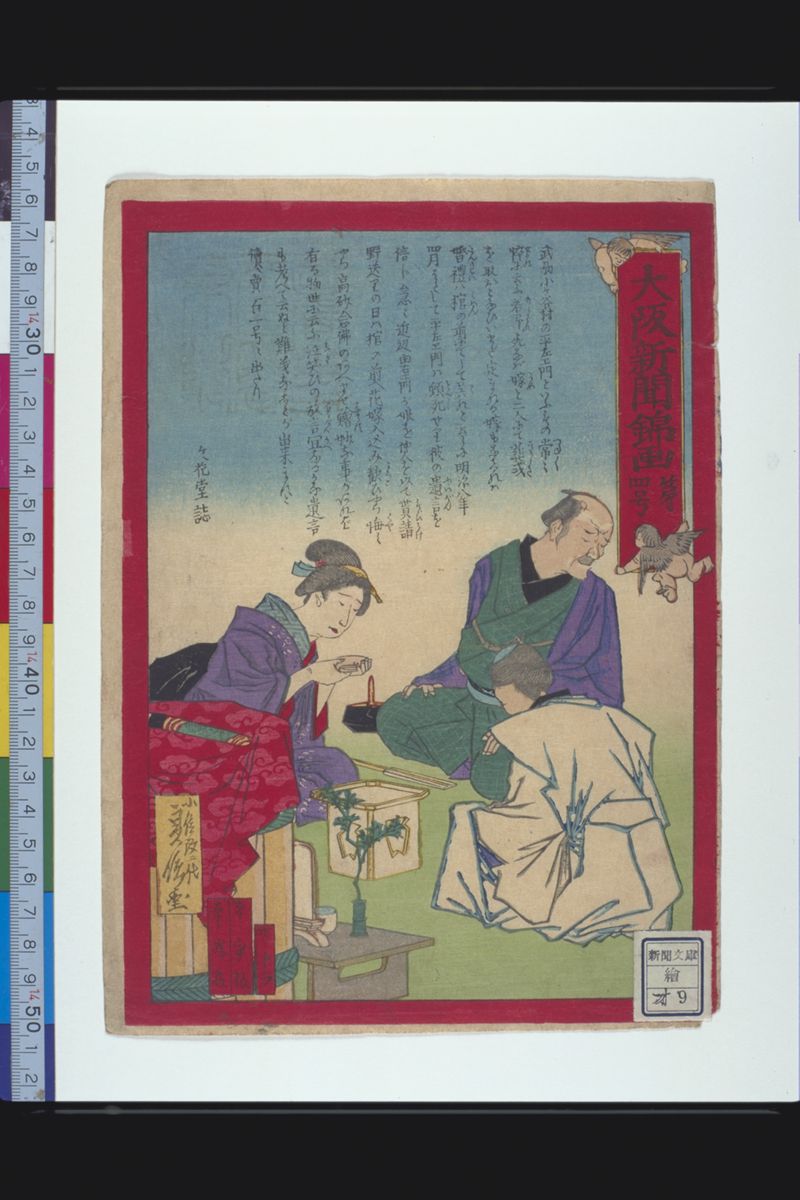
大阪新聞錦画 《割書:第|四号》
武州小ヶ谷村の平左ヱ門といふもの常々(つね〳〵)
倅(せかれ)に云ふ 若(もし)予(われ)死なば嫁(よめ)と二人にて葬式(そうしき)
を取おこなひいまだ定まれる嫁もなけれは
婚礼(こんれい)は棺(くゎん)の前にてして呉(く)れと云しに明治八年
四月はたして平左ヱ門は頓死(とんし)せり彼の遺言(ゆいげん)を
信じ急に近辺由右ヱ門が娘を仲人を以て貰請(もらひうけ)
野送りの日は棺の前へ花嫁入込み歓(よろこ)ひやら悔(くや)み
やら高砂念佛のあへまぜ鱠(なます)妙な事があれば
有る物世に云ふ泣(なき)笑ひの放言(ほうげん)宜(うべ)なるかな遺言
も考へて云ぬと難義なことが出来ますと
読売百一号に出たり
文花堂誌
ホリトラ
本安板
本為板
小信改二代
貞信画
現代語訳
大阪新聞錦画 《割書:第|四号》
武州(武蔵国)小ヶ谷村の平左衛門という者は、常日頃から倅(せがれ)にこう言い聞かせていた。「もし自分が死んだなら、嫁と二人で葬式を執り行ってくれ。まだ決まった嫁もいないのだから、婚礼は棺の前で挙げてくれ」と。
ところが明治八年四月、果たして平左衛門は頓死してしまった。倅は父の遺言を信じ、急ぎ近所の由右衛門の娘を仲人を立てて貰い受け、野辺送りの日には棺の前へ花嫁が入り込んで祝言を挙げた。喜びやら悔やみやら、高砂(婚礼の謡)と念仏とがごちゃまぜの「和えまぜ膾(なます)」の有様。妙なことというものは、あるところにはあるものだ。世に言う「泣き笑い」という言葉も、まことにもっともなことである。遺言もよく考えてから言い残さないと、難儀なことが起こりますよ、と。
読売新聞百一号に出た話である。
文花堂 誌(しる)す
彫(ほり)寅
本安 板
本為 板
小信改め二代
貞信 画
英語訳
Osaka Shimbun Nishiki-e, No. 4
In Ogaya village in Bushū (Musashi Province) there was a man named Heizaemon who was forever telling his son: "When I die, let the funeral be conducted by the two of you — you and your wife. And since you have no wife settled upon as yet, hold the wedding ceremony before my coffin."
Sure enough, in the fourth month of Meiji 8 [1875], Heizaemon died suddenly. The son, taking his father's dying wish in earnest, hastily engaged a go-between and received in marriage the daughter of one Yoshiuemon of the neighbourhood; and on the very day of the funeral procession the bride was brought in before the coffin and the nuptials were performed. Congratulations and condolences, the wedding chant of "Takasago" and the nenbutsu for the dead, all tossed together like a dish of mixed namasu! Strange things do happen where they happen. The common saying about "laughing and crying at once" is well justified indeed. Unless one thinks carefully before leaving one's last words, troublesome things may come to pass.
This appeared in the Yomiuri, No. 101.
Recorded by Bunkadō
Carved by Hori-Tora
Published by Hon'yasu
Published by Hontame
Konobu, now Sadanobu II, painted this