翻刻
【紙面右端】
小信改二代 新町
貞信画 八尾善板
【本文】
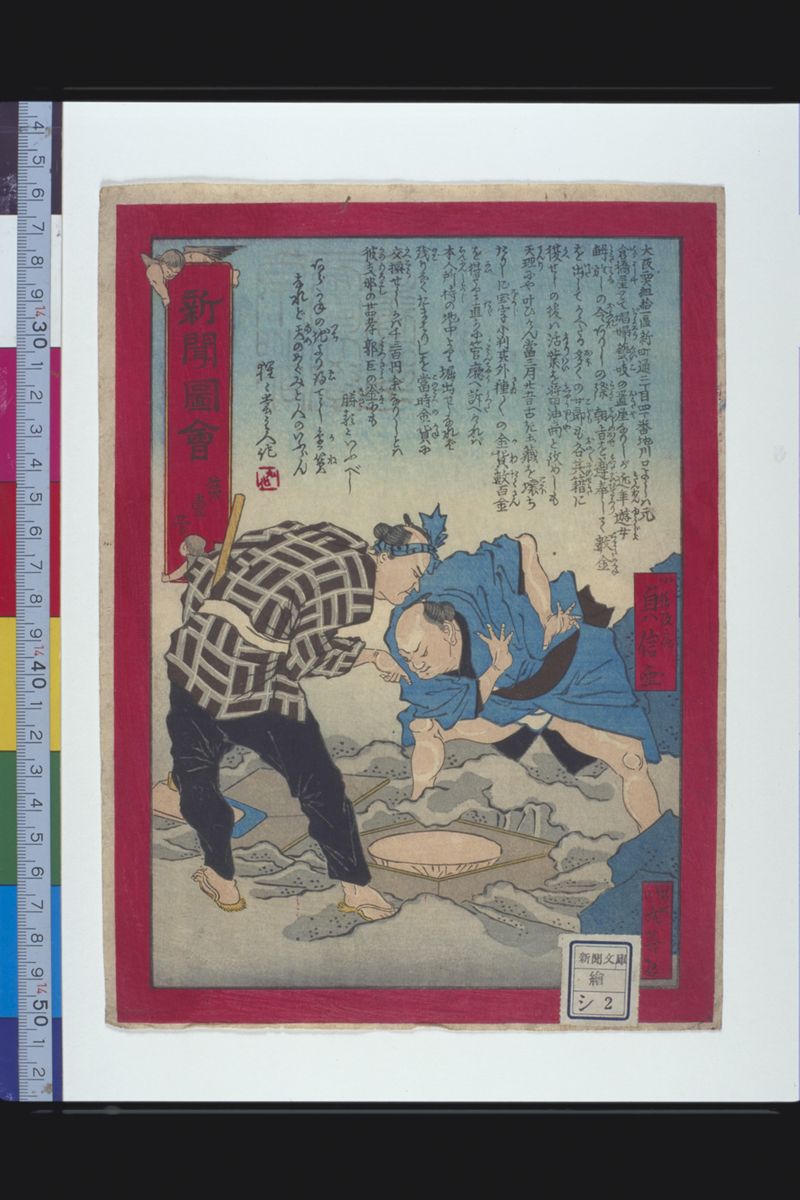
大阪西大組拾一区新町通二丁目四十番地川口よしは元
倉橋屋(くらはしや)とて娼婦(ぢよろう) 芸妓(けいこ)の置屋(おきや)なりしが近年(きんねん) 遊女(ゆうじよ)
解放(ときはな)しの令(おふれ)ありしの際(きわ) 朝旨(てんしのおゝせ)を遵奉(したがひたてまつり)して数金(あまたのかね)
を出(いだ)してかゝへたる 多(おほ)くの女郎(こども)も各(おの〳〵) 其籍(そのせき)に
復(かへ)せしの後は活業(なりはい)を醤油商(しやうゆうや)と改めしも
天理(てんり)にや叶ひけん當三月廿五日古き土蔵を壊(こぼ)ち
たりしに宝字(ほうじ)小判其外 種(さま)〱の金貨(かね) 数百金(たくさん)
を得(ゑ)たり直(たゞ)ちに官庁(くわんちやう)へ訴(うつた)へければ
本人(ほんにん) 所持(しよじ)の地中より 掘出せしなれば
残(のこ)りなくたまわりしを當時(このごろの) 金貨(かね)に
交換(かへこと)せしかば千三百円余なりしとは
彼(かの) 支那(もろこし)の廿四孝 郭巨(くわつきよ)の釜(かま)にも
勝(まさ)るといふべし
あらかねの地(つち)より得(ゑ)てし金貨(かね)
なれど天(あめ)のめぐみと人のいふらん
猩々堂主人記 印
新聞図会 第
壹
号
現代語訳
【紙面右端】
小信改め 二代貞信 画 新町 八尾善 板
【本文】
大阪西大組十一区・新町通二丁目四十番地、もと川口新町(かわぐちよしわら)にあった倉橋屋(くらはしや)は、娼妓(じょろう)・芸妓(げいこ)を抱える置屋であったが、近年、遊女解放の御触れ(芸娼妓解放令)が出された際、天子様の御趣旨に従い奉り、多額の金を出して抱えていた大勢の女たち(かかえ子)も、それぞれ元の戸籍に復させた。その後は商売を醤油屋と改めたが、それが天の道理にかなったのであろうか、今年三月二十五日、古い土蔵を取り壊したところ、宝字小判をはじめさまざまな金貨、数百両を掘り出した。ただちに役所へ届け出たところ、本人の所持する土地の地中から掘り出したものであるから、残らず下げ渡された。これを当時(現在)の通貨に交換したところ、千三百円余りになったという。かの中国(もろこし)の二十四孝、郭巨(かくきょ)が掘り当てた黄金の釜(かま)にもまさるというべきである。
あらかねの 地(つち)より得てし 金貨(かね)なれど
天のめぐみと 人のいふらん
猩々堂主人 記〔印〕
新聞図会 第壱号
英語訳
[Right margin]
Drawn by Sadanobu II, formerly Konobu Shinmachi: published by Yao Zen
[Main text]
At No. 40, Shinmachi-dōri 2-chōme, Eleventh Ward, West Great Division of Osaka, there was a house called the Kurahashiya, formerly of the Kawaguchi Yoshiwara pleasure quarter, which kept courtesans and geisha as an *okiya* (indenture house). In recent years, when the edict emancipating the licensed prostitutes was issued, the proprietor reverently obeyed the Imperial will and restored to their own family registers every one of the many girls whom he had taken in at the cost of a great deal of money. Thereafter he changed his trade and became a soy-sauce merchant.
Perhaps because this accorded with the Way of Heaven, on the twenty-fifth day of the Third Month of this year, when he pulled down an old storehouse, he unearthed several hundred *ryō* in gold — "Hō"-character koban and various other gold coins. He at once reported this to the government office, and since it had been dug up from beneath land that he himself owned, the whole of it was granted to him. When exchanged into the currency of the present day, it is said to have amounted to more than 1,300 yen. Truly this may be said to surpass even the pot of gold found by Guo Ju, one of China's Twenty-four Paragons of Filial Piety.
Though the gold was gained from the rough-ore earth,
people will surely call it the blessing of Heaven.
Recorded by the Master of Shōjōdō 〔seal〕
Shimbun Zue (Illustrated News), No. 1