翻刻
新聞圖會 《割書:第八| 号》
小信改二代
貞 信 画
八尾善板
盲人蛇(めくらへび)におぢすと
いふ諺(ことはざ)にあらで盗賊にも
屈(くつ)せざる大丈夫はヒン〳〵【貧々か】菴
と号し三味の曲弾に名を
得し人にして通称(つうしやう)生久卜
一郎当四月十一日玉江橋
北詰にて三人の賊車前を
ふさき既に衣服を奪(はぐ)へき
の所卜一一言を発して予が
如き貧民(ひんみん)の衣服売代なすともいさゝかの価
なるべし今我衣服を奪ふをゆるせば吾活業(わがなりはひ)たる
一曲を汝等(なんぢら)が耳に施べしと流石(さすが)の暴徒理言に伏し
奥ある事と思ひしにや軈(やが)て調らべを乞けるにぞ得手の
練(れん)曲 弾(だん)じければ其妙音にや感じたりけん手を空(むなしく)して
かへる而已(のみ)かは円貨廿銭を卜一に与へ去しとぞ
正情道九化記
現代語訳
新聞図会 第八号
小信改め 二代貞信 画
八尾善 板
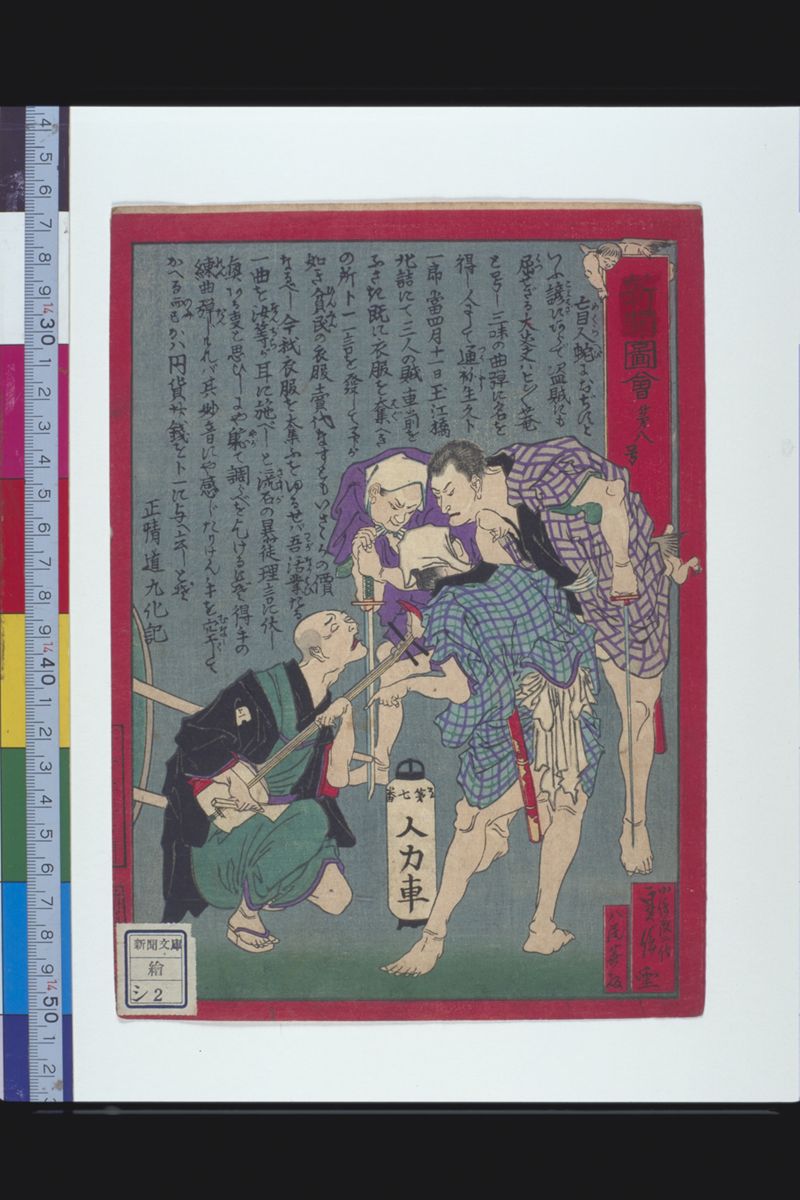
「盲(めくら)蛇におじず」という諺(のように無知ゆえの向こう見ず)ではなく、盗賊にも屈しなかった真の大丈夫(ますらお)がいる。号を貧々庵(ひんひんあん)といい、三味線の曲弾(きょくびき)で名を得た人で、通称を生久卜一郎(いくひさ ぼくいちろう)という。
今年四月十一日、玉江橋の北詰で、三人の賊が車の前に立ちふさがり、今にも衣服を剝ぎ取ろうとした。そのとき卜一が一言、
「私のような貧乏人の衣服など、売り払ったところで、いくらの値にもなりますまい。今、私の衣服を奪うのを見逃してくださるなら、私の生業である一曲を、あなた方のお耳にお聞かせいたしましょう」
と言った。さすがの乱暴者どもも、その理にかなった言葉に伏し、何か訳(わけ)のあることかと思ったのであろうか、やがて「では一調べ聞かせよ」と所望した。そこで卜一が得意の練り上げた曲を弾いたところ、その妙なる音色に感じ入ったものか、賊たちは手ぶらで帰っていったばかりか、かえって円貨二十銭を卜一に与えて立ち去ったという。
正情道九化(しょうじょうどうきゅうか) 記
英語訳
Shimbun Zue (Illustrated News), No. 8
Drawn by Sadanobu II, formerly Konobu
Published by Yao Zen
Not in the sense of the proverb "the blind man fears no snake" [i.e. reckless through ignorance], but as a truly stout-hearted man who would not yield even to robbers — such is the person who takes the studio name Hinhin-an ("Hut of Poverty upon Poverty") and who has won fame for his virtuoso playing (*kyokubiki*) of the shamisen; he is commonly known as Ikuhisa Bokuichirō.
On the eleventh day of the Fourth Month of this year, at the northern end of Tamae Bridge, three robbers blocked the way before his vehicle and were on the point of stripping him of his clothes, when Bokuichi spoke up:
"The clothes of a poor man such as myself would fetch but a trifling sum even if you sold them. If you will let me off from having my clothes taken, I shall offer to your ears one piece of music, which is my livelihood."
Even these ruffians were won over by the reasonableness of his words, and thinking, perhaps, that there was something more to it, they presently asked him to strike up a tune. Bokuichi thereupon played a well-practised piece of his own speciality, and, moved as they must have been by its exquisite tones, the robbers not only went off empty-handed but even gave Bokuichi twenty sen in coin before departing.
Recorded by Shōjōdō Kyūka