翻刻
勧善懲悪 官許 錦画新聞【「勧善懲悪」「錦画新聞」は横書き、「官許」は縦書き】
第八号 世の中に何をほり江の三丁目か
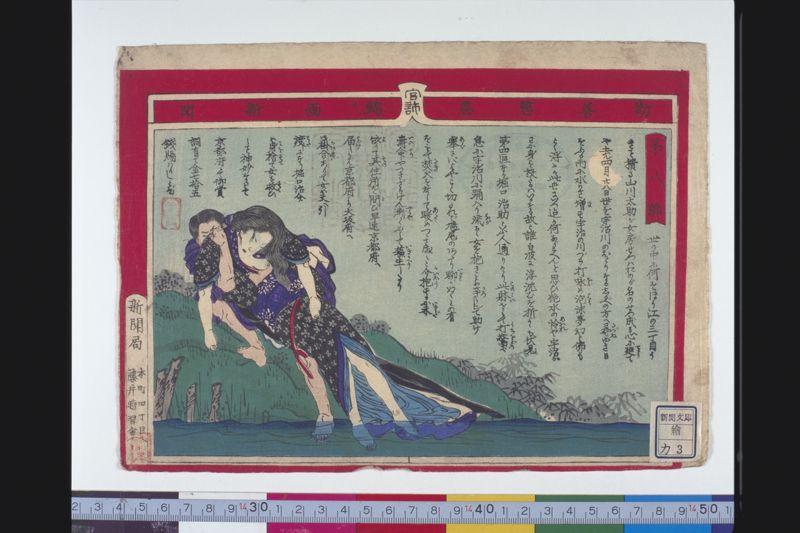
きこと積る山川太助が女房せつはおのが名のせつ成る心に迫(せまり)て
や去ル四月廿八日世を宇治川のほとりなるしるべの方へ尋(たづね)ゆき日
をふる雨に水かさ増(ま)す宇治の川づら打 咏(なが)め泡(はう)沫夢幻と仏も
とく浮たる此世にいつ迄か何ながらへんと思ひ絶水の怜(あはれ)や宇治が
わに身を投たるはいかなる故と誰白波に浮沈むを折よくも伏見
第四区なる堀口治助といふ人通りけり此体(このてい)【躰は体(體)の俗字】をみて打驚(うちをどろ)き
急に宇治川に踊入り流(なが)るゝ女を抱きとめ辛(かろ)うじて助け
挙(あぐ)るにはやこと切たれど鳩尾のあたり聊(いさゝ)かぬくみの有
をみて焚(たき)火をなして暖(あたゝ)めつゝさま〴〵と介抱(かいほう)するに未(いまだ)
寿命(いのち)やつきざりけん漸(やうや)くにして蘓生(いきかへり)したり
依(よ)りて其(その)住所を問(と)ひ早速京都府へ
届(とゞけ)しかば京都府より大阪府へ
御 掛合(かけあひ)ありて女は夫へ引
渡(わた)しになり堀口治介
は身捨(みをすて)て女を救(すく)ひ
しを神妙なりとて
京都府にて御賞
詞有て金七拾五
銭賜りしとぞ
新聞局 《割書:本町四丁目|藤井時習舎》
現代語訳
勧善懲悪 官許 錦画新聞
第八号
「世の中に何を掘り」――その堀江の三丁目、憂きことの積もる「山」ならぬ山川太助、その女房せつは、おのが名のとおり「せつ(切)」なる思いに心迫られ、去る四月二十八日、世を憂しと思いつめて、宇治川のほとりに住む知る辺(知人)のもとを訪ねて行った。
折しも幾日も降りつづく雨で水かさの増した宇治の川面をじっと眺めやり、「泡沫夢幻(うたかたゆめまぼろし)」と仏も説かれるこの浮世に、いつまで生き長らえようかと思いを絶ち、水の哀れやその宇治川に身を投げてしまった。いかなるわけがあってのことか、誰も知らぬ(=白波の)川波に浮きつ沈みつしていたところ、折よく伏見第四区の堀口治助という人が通りかかった。この有様を見て驚き、ただちに宇治川へ躍り込んで、流されてゆく女を抱きとめ、辛うじて助け上げたが、すでに息は絶えていた。しかし鳩尾(みぞおち)のあたりにわずかに温もりが残っているのを見て、焚き火をおこして暖めながら、あれこれと手を尽くして介抱したところ、まだ寿命が尽きていなかったのであろうか、ようやくのことで蘇生した。
そこで女の住所を尋ね、さっそく京都府へ届け出たので、京都府から大阪府へ掛け合いがあって、女は夫のもとへ引き渡された。堀口治助は身を捨てて女を救ったのが神妙であるとして、京都府から御賞詞があり、金七十五銭を賜ったということである。
新聞局 《割書:本町四丁目|藤井時習舎》
英語訳
"Encourage Virtue, Chastise Vice" — Government-Licensed — Brocade-Picture Newspaper
No. 8
"What is there in this world to dig for?" — In Horie 3-chōme (the "hori" of "digging"), there lived one Yamakawa Tasuke, upon whose house sorrows piled up like a mountain (*yama*). His wife Setsu, driven — as her very name suggests — by feelings that were *setsu* (agonizing), grew weary of the world, and on the twenty‑eighth day of the fourth month last she set out to visit an acquaintance who lived on the bank of the Uji River ("Uji" echoing *ushi*, "bitter, wearisome").
Just then the rains had fallen for days on end and the river was swollen. Gazing out over the surface of the Uji, she thought: in this floating world, which the Buddha himself preaches to be but foam, a dream, a phantom, how long should one go on living? And so, all hope cut off, sad as the water itself, she threw herself into the Uji River. For what reason no one knew — like the "white waves" of the stream — she was seen bobbing and sinking in the current, when by good fortune a man named Horiguchi Jisuke, of the Fourth Ward of Fushimi, happened to pass by. Astonished at the sight, he leapt at once into the Uji, caught hold of the woman as she was being swept along, and with great difficulty dragged her out; but by then she had already stopped breathing. Seeing, however, that there was still a faint warmth about the pit of her stomach, he built a fire, warmed her, and tended her by every means he could think of — and, her allotted span not yet being spent, she at last revived.
He then inquired where she lived and reported the matter immediately to the Kyoto Prefectural Office, which communicated with the Osaka Prefectural Office, and the woman was handed back to her husband. Horiguchi Jisuke, for having risked his own life to save the woman — conduct deemed admirable — received a commendation from the Kyoto Prefecture together with a grant of seventy‑five *sen*.
Newspaper Bureau: Fujii Jishū‑sha, Hon‑machi 4‑chōme