翻刻
明治八年
錦画
新聞
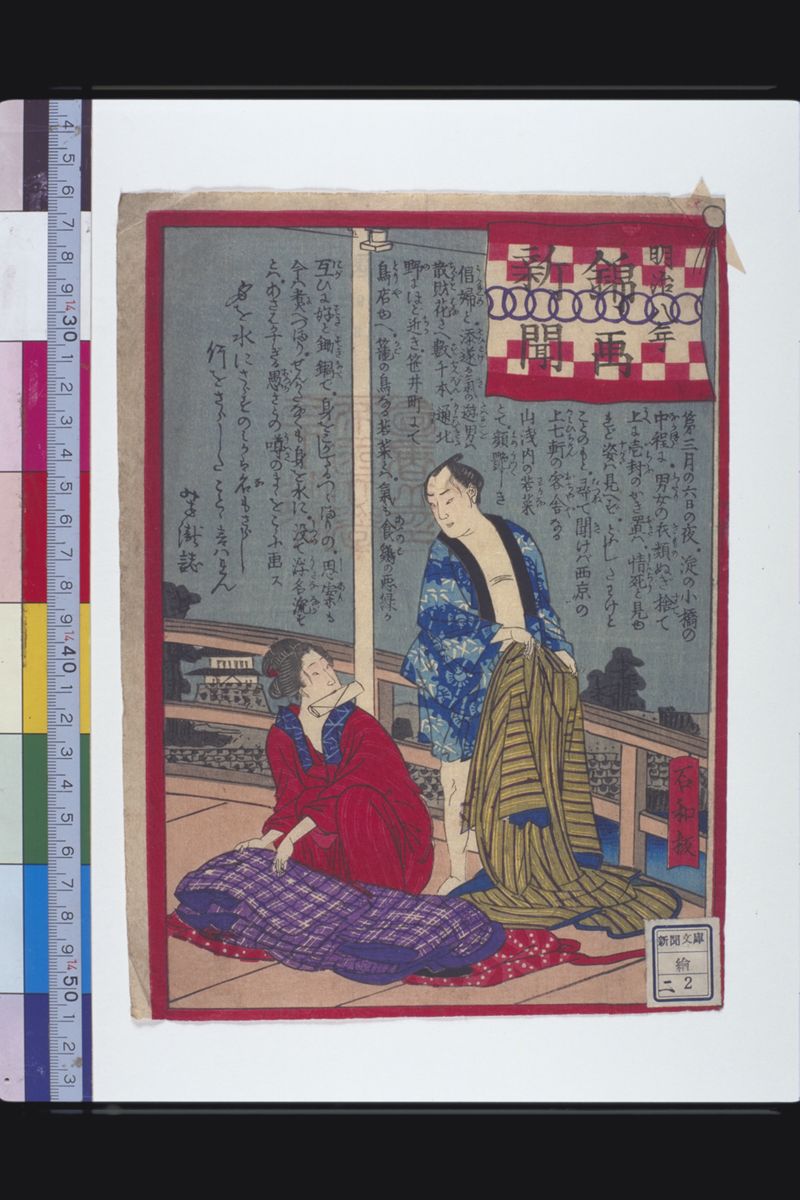
第三月の六日の夜。淀の小橋の 石 和 板
中程(なかほど)に。 男女(ふたり)の衣類(きもの)ぬぎ捨(すて)て
上(うへ)に壱封(いちふ)のかき置(おき)は。 情死(しんぢう)と見ゆ
れど姿(すがた)は見へず。とふしたわけと
ことのもと。 尋(たつね)て聞(き)けば西京の
上七軒(かみひちけん)の客舎(おちやや)なる
山浅内の若菜(わかな)
とて。 顔艶(みめうつく)しき
倡婦(うかれめ)と。 添遂(そひとげ)る気(き)の遊男(たはれを)は
散財花(ちらすはな)さへ数千本(すせんぼん)。 通北(かよひきた)
野(の)にほど近(ちか)き。 笹井町にて
鳥店(とりや)ゆへ。 籠(かご)の鳥なる若菜とは。気も食鶏(あいのこ)の悪縁か
互(たが)ひに好(すき)と鋤鍋(すきなべ)で。身をこがしたるつゞまりの。 思案(しあん)も
今は煮(に)へつまり。せんかたなくも身を水に。 没(しつめ)て浮名流(うきななが)す
とは。あさはかすぎる愚(おろか)さとの噂(うはさ)のまゝをこゝに画ス
身を水にさらすのみかは名(な)もさらし
行をさらしたことゝ言はれん
芳瀧誌
現代語訳
明治八年 錦絵新聞
(版元・石和板)
三月六日の夜のこと。淀の小橋の真ん中あたりに、男女二人分の着物が脱ぎ捨ててあり、その上に一通の書き置きが載せてあった。どう見ても心中としか思えないが、当人たちの姿は見えない。いったいどういうわけかと、事の起こりを尋ね聞いてみると――
女は西京(京都)上七軒のお茶屋「山浅内」の若菜といって、器量のすぐれた遊女。その若菜と添い遂げようと思い詰めた遊び人の男は、彼女のために数千本もの花(=揚代・散財)を惜しまず通いつめた男で、北野にほど近い笹井町の鳥屋(鶏肉屋)である。籠の鳥である若菜と、鳥屋の男――「気も合い」の「合いの子(鶏)」とでもいうべき悪縁か。互いに「好き」と「鋤鍋(すき焼き鍋)」ではないが、思いに身を焦がしたあげく、思案もいまや煮えつまって(行き詰まって)、どうしようもなく身を水に沈め、浮名を流したという。あまりに浅はかな愚かさだ――という噂のままを、ここに絵に描いた次第である。
身を水にさらす(晒す)ばかりか、名までも晒し、その行い(品行)まで晒してしまったことよ、と人には言われることだろう。
芳瀧しるす
英語訳
Meiji 8 (1875). Nishiki-e Shinbun (Colour-print News). Published by Ishiwa.
On the night of the sixth day of the third month, in the middle of Yodo no Kobashi bridge, the clothes of a man and a woman were found cast off, with a single farewell letter laid on top of them. It looked for all the world like a love suicide, yet the two themselves were nowhere to be seen. Wondering what could have happened, we inquired into the origins of the affair, and learned the following:
The woman was Wakana of the teahouse Yamaasa-uchi in Kamishichiken, in Saikyō (Kyoto) — a courtesan of striking beauty. The playboy who had set his heart on being united with her was a man who had lavished "several thousand blossoms" (i.e., money) upon her in his visits, a poultry dealer of Sasai-chō, close by Kitano. Wakana, a "bird in a cage," and a bird-seller: a "crossbred fowl" match of well-suited temperaments — or was it an ill-starred bond? Each "liked" (suki) the other — like a "suki-nabe" (sukiyaki pot) — and they burned with longing until at last their plans, too, boiled dry; with nowhere left to turn, they sank themselves in the water and left only their names afloat as gossip. Far too shallow a folly, people say — and we have here drawn the rumour just as it is told.
Not only did they expose (sarasu) their bodies to the water — they exposed their names as well, and their conduct too, so people will surely say.
Recorded by Yoshitaki.