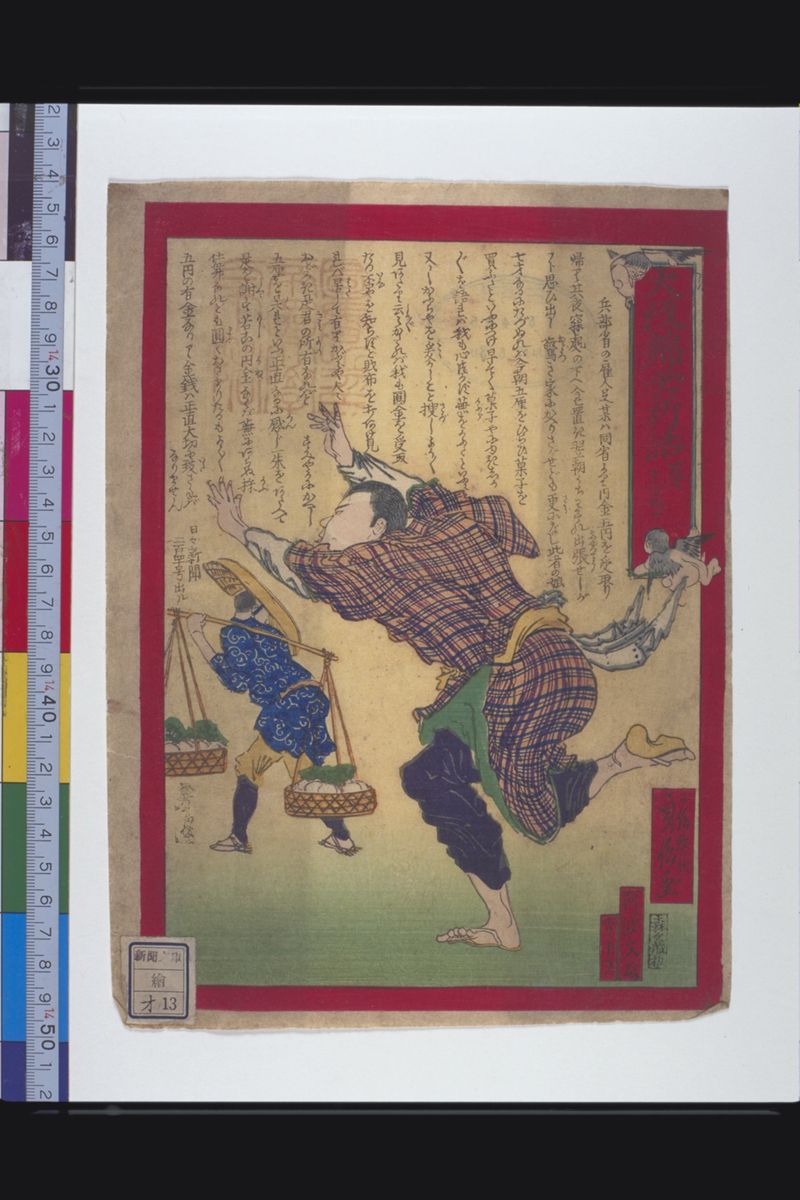
翻刻
大阪錦画新話 第十二号
小信改二代
貞信画
森文蔵板
阿波文板
ホリトラ
兵部省の雇人足某は同省より円金五円を受取り
帰り其夜寐処の下へ入れ置き翌朝うちわすれ出張(しゆつてう)せしが
フト思ひ出し驚(おどろ)き家にかへりさがせども更(さら)になし此者の娘
七才なるにたづぬれば今朝五厘をひらひ菓子を
買ふたといふにつけ早そく菓子やにゆきしか
〴〵を語れば我も心つかず蕪(かぶら)をかふたといふに
又〳〵かふらやを爰(ここ)かしこと捜(さが)しよう〳〵
見あたり云々(しか〴〵)かたれば我も円金を受取
たる否(いな)やを知らずと財布を打あけ見
れば果(はた)して有りかぶらや大に
おどろき是 君(きみ)の所有(もの)なればと すみやかにかへし
五厘を呉(く)れといふ正直なるに感(かん)じ一朱をあたへて
是を謝(しゃ)す若(もし)この円金(かね)なくば蕪にあらぬ株(かぶ)
仕舞なれども円(まる)くおさまりたるもよく〳〵
五円の有金なりアヽ金銭は正直大切に致(いた)さねば
なりません
日々新聞
二百四十号出ル
現代語訳
大阪錦画新話 第十二号
小信改め二代
貞信 画
森文蔵 板(版元)
阿波文 板(版元)
ホリトラ(彫師「寅」)
兵部省の雇い人足である某は、同省から円金(金貨)五円を受け取って帰り、その夜、寝床の下に入れておいた。ところが翌朝それをうっかり忘れて出張(仕事に出かけること)してしまった。ふと思い出して驚き、家に帰って探したが、まったく見つからない。この者の娘は七歳であったが、尋ねてみると「今朝、五厘を拾ったので菓子を買った」という。そこで早速菓子屋へ行ってしかじかと事情を話すと、菓子屋も「自分も気づかず、その銭で蕪(かぶら)を買った」という。それでまたまた蕪屋をここかしこと捜し歩き、ようやく見つけ出して事情を語ったところ、蕪屋も「自分は円金を受け取ったかどうか覚えがない」と言って財布を開けて見ると、果たしてその金貨が入っていた。蕪屋は大いに驚き、「これはあなたのものですから」と、すみやかに返して「五厘だけください」と言った。その正直さに感心して、(人足は)一朱を与えてこれに礼をした。
もしこの金貨が出てこなかったら、蕪ではないが「株仕舞」(すべて台無し・おしまい)になっていたところである。それが円(まる)くおさまったのも、よくよく(幸運な)五円の持ち金であったというべきだ。ああ、金銭は正直に、大切に扱わなければなりません。
日々新聞 二百四十号に出る
英語訳
Osaka Nishiki-e Shinwa (New Tales in Osaka Brocade Pictures), No. 12
Konobu, now the second-generation
Sadanobu, artist
Published by Mori Bunzō
Published by Awabun
Engraved by Hori Tora
A certain day-labourer employed by the Hyōbushō (Ministry of Military Affairs) received a five-yen gold coin from the ministry and took it home, putting it away under his bedding that night. The next morning, however, he clean forgot about it and went off to work. Suddenly remembering, he took fright, hurried home and searched — but the coin was nowhere to be found. He had a daughter of seven, and when he questioned her she said, "This morning I picked up five rin and bought sweets with it." He went at once to the confectioner and explained the matter, whereupon the confectioner said, "I never noticed either — I used that coin to buy turnips." So off he went again, hunting here and there for the turnip seller, and at last found him and told him the whole story. The turnip seller said, "I have no idea whether I took in a gold coin or not," and opened his purse — and there, sure enough, it was. Greatly astonished, he said, "Since this belongs to you," and promptly handed it back, asking only for his five rin. Moved by such honesty, the labourer gave him one shu as a token of thanks.
Had this gold coin never turned up, it would have been — no turnip (kabu), but a "kabu-shimai," a complete ruin. That it was all settled so roundly (en, a pun on "yen") was thanks indeed to that lucky five yen he had on hand. Ah, money must be handled honestly and with care!
Nichinichi Shimbun, No. 240