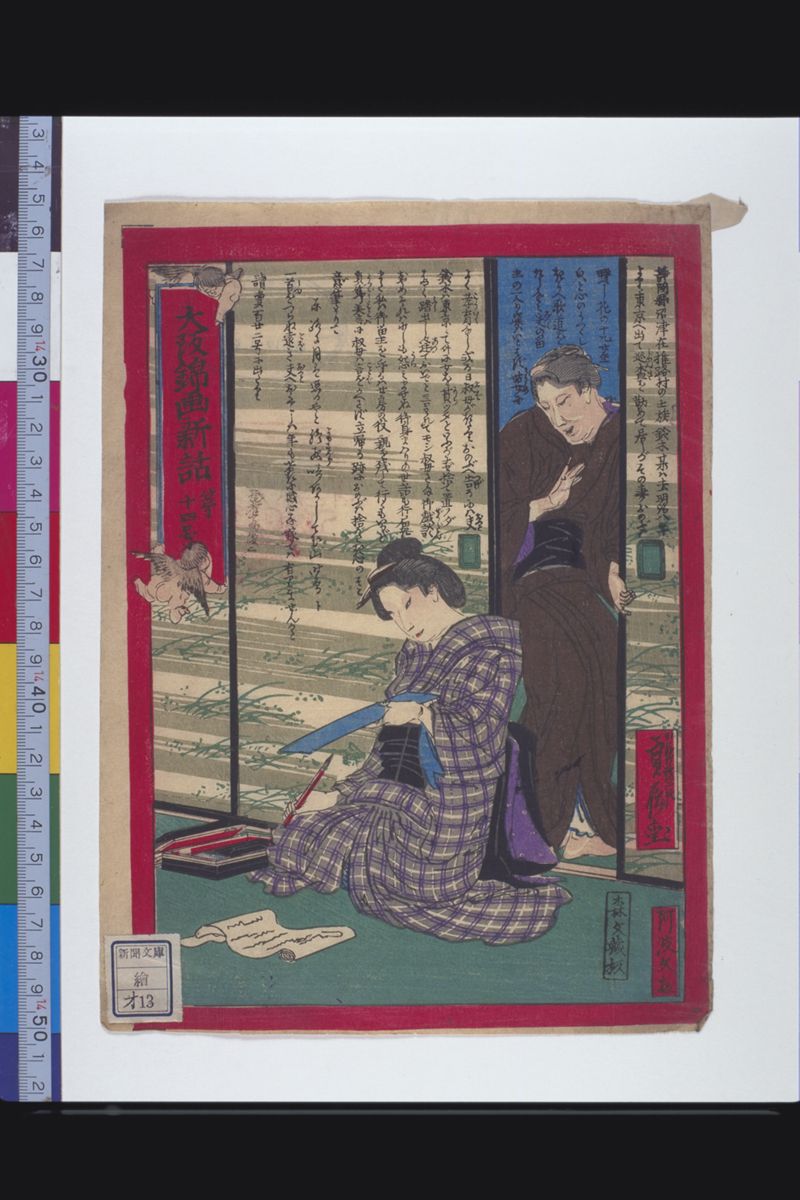
翻刻
小信改二代 阿波文板
貞 信 画 森文蔵板
静岡県沼津在推路村の士族鈴木某は去明治八年
より東京へ出て巡査(じゆんさ)を勤めて居しがその妻おのぶと
の【野?】へし花の十九廿年
㒵と心のうつくし
きうへ歌道を
たしなみ夫(おつと)の留
主の一人り寝はいとはず姑女(しうとめ)に
よく孝育(こういく)なし或る日 叔母(おば)がきたりおのぶへ告(つげ)るには夫(おつと)
鈴木は東京にて外に女を貰(もら)ツタといふがナゼ捨て置ノダ
はやく踏(ふみ)出し逢(あつ)ておいでと言われてモシ叔母さま御 戯談(ぜうだん)
おやめそれは少しも怨(うら)みませぬ御身まはりの世話も行届き
また私は御留主を守るは女房の役親を残して行くもいかゞと
貞節美言(うつくしことば)に叔母は言(ことば)をかへさず立帰る跡におのぶは捨がたき心のそこ
意(い)筆とりて
東路に月は照るやと終夜(よもすがら)啼あかしてむ山時鳥 ト
一 首(しゆ)をつらね遠(とを)き夫(おつと)へおくりしは年も若きに感心な嫁では有りませんかと
読売百廿二号に出たり 筆者高田俊二
大阪錦画新話 《割書:第 |十四号》
現代語訳
小信改め二代 貞信 画 阿波文 板 森文蔵 板
静岡県沼津在、椎路(しいじ)村の士族・鈴木某は、去る明治八年より東京へ出て巡査を勤めていたが、その妻おのぶは、咲きにおう花のような十九、二十歳の年ごろ、顔かたちも心も美しいうえに歌道をたしなみ、夫の留守中のひとり寝もいとわず、姑によく孝養を尽くしていた。
ある日、叔母がやって来ておのぶに告げるには、「夫の鈴木は東京で外に女を囲ったというではないか。なぜそのまま捨て置くのだ。早く出かけて行って、会っておいで」と言われた。するとおのぶは、「もし叔母さま、ご冗談はおやめください。そのことは少しも恨んでおりません。(そのお方のおかげで)夫の身のまわりの世話も行き届いておりましょうし、また私が留守を守るのは女房の役目、親を残して行くのもいかがなものかと存じます」と答えた。その貞節な美しい言葉に、叔母は言い返す言葉もなく帰って行った。
その後、おのぶは、なお捨てきれぬ心の底の思いを筆に託して、
東路に月は照るやと終夜(よもすがら)啼きあかしてむ山時鳥(やまほととぎす)
(東国の空に月は照っているだろうかと思いながら、山ほととぎすのように、私は一晩中鳴き明かすことにしよう)
と一首を詠み連ね、遠く離れた夫のもとへ送ったという。年も若いのに、感心な嫁ではありませんか、と読売新聞百二十二号に出ていた。
筆者 高田俊二
大阪錦画新話 第十四号
英語訳
Drawn by Sadanobu II, formerly Konobu Published by Awabun Published by Mori Bunzō
A certain Suzuki, a shizoku (former samurai) of Shiiji village near Numazu in Shizuoka Prefecture, had gone up to Tokyo in the eighth year of Meiji (1875) and was serving there as a policeman. His wife, Onobu, was a blossom in full bloom of nineteen or twenty years, beautiful in both face and heart; moreover she had a taste for the way of poetry, did not resent sleeping alone during her husband's absence, and served her mother-in-law with exemplary filial devotion.
One day an aunt came and said to Onobu: "They say your husband Suzuki has taken another woman in Tokyo. Why do you leave the matter alone? Set out at once and go see him!" To this Onobu replied, "Please, Auntie, no more of such jesting. I bear him not the slightest grudge for that. Thanks to her, his personal needs are no doubt well looked after; and besides, guarding the house in his absence is a wife's duty, and it would hardly do to leave his parent behind and go off." At these chaste and beautiful words the aunt had nothing to say in reply, and went home.
After she had gone, Onobu took up her brush to give voice to the feelings she still could not cast off, and composed this poem:
"Is the moon shining, I wonder, over the eastern road? — Like the mountain cuckoo, I shall cry the whole night through till dawn."
This she sent to her far-off husband. Young though she is, is she not an admirable wife! — so it was reported in the Yomiuri, No. 122.
Written by Takada Shunji
Osaka Nishiki-e Shinwa (New Tales in Osaka Brocade Pictures), No. 14