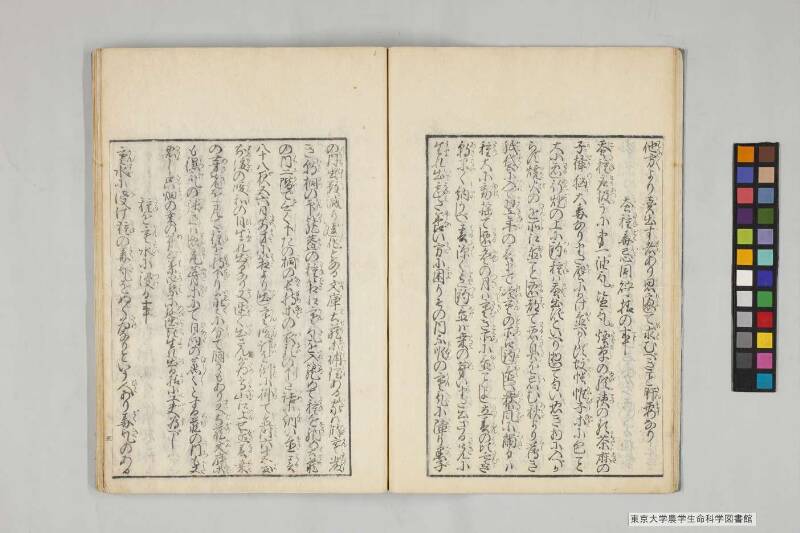
翻刻
【右丁】
他方(わき〳〵)より賣出す者(もの)あり思慮(しりよ)して求(もと)むべきこと肝要(かんよう)なり
蚕種(こたね)毒忌(どくいみ)同貯様の事(こと)
蚕種(こたね)取扱(とりあつか)うに㐧一。油気。塩気。煙草(たばこ)の類(るい)。銕(てつ)の類。茶(ちや)。麻(あさ)の
子(み)。樟脳(せうのう)。大毒なりまた壁(かべ)にかけ置(おく)べからず蚊帳(かてう)帷子(かたびら)等(など)に包こと
大に悪(わる)し行燈(あんどう)の上に釣(つり)し種(たね)は蚕(かいこ)出ずといへり惣じて匀い悪き物に入べか
らず燒火(たきび)の近所(きんじよ)え置(おく)こと悪(わる)し都(すべ)て悪臭(わるくさき)を忌(い)む秋(あき)より薄(うす)き
紙袋(かみふくろ)に入(いれ)て翌年(よくねん)の春まで《振り仮名:冷寒|れいかん|すゞしき》の所(ところ)え釣(つる)し置(おく)べし《振り仮名:■風|あらきかぜ》#1觸(あた)るは
種(たね)大に動揺(ゆれ)て悪(わる)し冬(ふゆ)の月(つき)は寒(さむ)き所(ところ)に置(おく)ことよし立春(りつしゆん)の頃(ころ)寒(さむ)き
朝(あさ)早(はや)く納(しま)うべし春(はる)深(ふか)く迄(まで)釣(つる)し置(おけ)ば桒(くわ)の芽(め)いまだ出ざる先(さき)に
生(うま)れ出(いで)甚(はなは)だ養(やしな)い方(かた)に困(こま)りその内ふ順(じゆん)の寒気(かんき)に障(さわ)り黒子(くろこ)
【左丁】
の内(うち)虫数(むしかず)減(へ)り《振り仮名:違作|いさく|ちかひ》となる文庫(ふんこ)土藏(どぞう)等(など)補理(しつらひ)ある家(いゑ)は餘寒(よかん)厳(きびし)
き朝(あさ)桐(きり)の印籠蓋(いんろうぶた)の種箱(たねばこ)え寒気(かんき)を入籠(いれこめ)めて種(たね)を納(をさ)め土藏蔵(どぞう)
の内(うち)二階(にかい)で無(な)く下(し)たの桐(きり)の長持等(なかもちなど)の衣類(いるい)の下(し)た詰(つめ)に納(しま)い置(をき)春(はる)
八十八/夜(や)五六日/前方(まへかた)に箱(はこ)より出(いだ)し寒暖計(かんだんけい)を側(そば)に掛(かけ)て置時(おくとき)六十五/度(ど)
前後(まゑうしろ)の暖和(だんわ)の日(ひ)生(うま)れ出(いづ)るなり又(また)遅(おそ)く出(いだ)さんが為(ため)高山(たかやま)え上(のぼ)せ置(おき)春(はる)桒(くわ)
の芽先(めさき)を見(み)て種(たね)を持下(もちくだ)り家々(いゑ〳〵)に分(わけ)て飼(か)うもあり又(また)土藏(どぞう)文庫(ぶんこ)等(など)
も濕気(しつけ)の強(つよ)きは悪(わる)し瓦葺等(かわらふきなど)にて日向(ひなた)の蒸々(むし〳〵)とする藏(くら)の内(うち)も又(また)
悪(わる)し只(たゞ)畑(はたけ)の桒(くわ)の芽(め)三葉(みつは)四葉(よつは)に延出(のびいで)し頃(ころ)生(うま)れ出(いづ)る様(よう)に工夫(くふう)為(す)べし
種(たね)を寒水(かんすい)に浸(つけ)る事
寒水(かんすい)に浸(つ)け種(たね)の毒気(どくき)をぬく為(ため)なりという人(ひと)あり毒気(どくき)のある
現代語訳
【右丁】
他の地方から売り出す者もあるので、よく考えて求めることが肝要である。
蚕種の毒忌と同貯蔵の事
蚕種を取り扱うのに第一に忌むべきは、油気、塩気、煙草の類、鉄の類、茶、麻の実、樟脳で、これらは大毒である。また壁にかけて置いてはならず、蚊帳や帷子などに包むことも大変悪い。行燈の上に吊るした種は蚕が出ないと言われている。総じて匂いの悪い物に入れてはならず、焚き火の近所に置くことも悪い。すべて悪臭を忌む。秋から薄い紙袋に入れて翌年の春まで冷涼な所に吊るして置くべきである。荒風が触れるのは種が大いに動揺して悪い。冬の月は寒い所に置くことが良い。立春の頃、寒い朝早く納めるべきである。春深くまで吊るして置けば桑の芽がまだ出ない先に生まれ出て、甚だ養い方に困り、その間に時ならぬ寒気に障り黒子
【左丁】
の内の虫数が減り、不作となる。文庫や土蔵等の設備がある家は余寒厳しき朝、桐の印籠蓋の種箱に寒気を入れ込めて種を納め、土蔵の内の二階ではなく下の桐の長持などの衣類の下、詰めに納めて置く。春八十八夜の五六日前頃に箱より出し、寒暖計を側に掛けて置く時、六十五度前後の暖和の日に生まれ出るのである。また遅く出させるために高山に上げて置き、春の桑の芽先を見て種を持ち下り、家々に分けて飼うこともある。また土蔵や文庫等も湿気の強いのは悪い。瓦葺等で日向の蒸し暑い蔵の内もまた悪い。ただ畑の桑の芽が三葉四葉に延び出した頃に生まれ出るように工夫すべきである。
種を寒水に浸ける事
寒水に浸けて種の毒気を抜くためだという人もある。毒気のある
英語訳
【Right Page】
There are those who sell from other regions as well, so it is essential to consider carefully when purchasing.
Regarding Taboos and Storage of Silkworm Eggs
When handling silkworm eggs, the first things to avoid are: oil vapors, salt vapors, tobacco and similar substances, iron objects, tea, hemp seeds, and camphor - these are highly toxic. Also, they should not be hung on walls, and wrapping them in mosquito nets, summer clothing, etc. is very bad. It is said that eggs hung above oil lamps will not hatch. Generally, they should not be placed near anything with bad odors, and placing them near fires is bad. All foul odors should be avoided. From autumn, place them in thin paper bags and hang them in cool places until the following spring. Exposure to harsh winds causes the eggs to shake greatly, which is harmful. During winter months, it is good to place them in cold locations. Around the beginning of spring (Risshun), store them early on cold mornings. If left hanging until late spring, they will hatch before the mulberry buds emerge, causing great difficulty in feeding, and during this period they may be affected by unseasonable cold, reducing the number of larvae in the clusters
【Left Page】
and resulting in poor harvests. Houses with facilities like document boxes and storehouses should, on mornings with severe lingering cold, seal the cold air into paulownia seed boxes with fitted lids and store the seeds in the lower sections of paulownia chests among clothing, not on the second floor of storehouses. When removed from boxes 5-6 days before the 88th night after the beginning of spring, with a thermometer placed nearby, they will hatch on warm days around 65 degrees. Some also place them on high mountains to delay hatching, then bring the seeds down when observing mulberry bud tips in spring, distributing them to various households for rearing. Storehouses and document boxes with excessive moisture are also bad. Storehouses with tile roofs that become hot and humid in sunny locations are also bad. Simply devise methods so they hatch when mulberry buds in the fields extend to three or four leaves.
Soaking Seeds in Cold Water
Some people say this is to remove toxic vapors from the seeds by soaking them in cold water. Those with toxic vapors