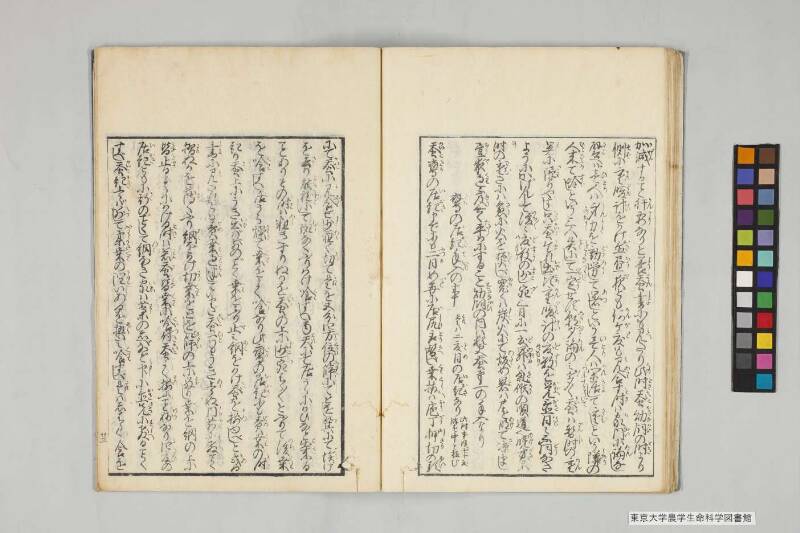
翻刻
【右丁】
加減(かげん)すること肝要(かんよう)なりと養蚕書(ようさんしよ)にも見(みへ)たり此時(このとき)蚕(かいこ)幼飼(をさなかい)の時(とき)より
側(そば)に寒暖計(かんだんけい)をかけ置(おき)昼夜(ちうや)とも《振り仮名:何ヶ度|なんがど》も見合(みあわ)す時(とき)は家内(かない)に論(ろん)なし
譬(たと)へば壱人(ひとり)は身力(しんりよく|みのちから)を動労(どうろう|はたらきつからし)して暑(あつ)しという壱人(ひとり)は閑居(かんきよ|しづかにすわりいて)して寒(さむ)しという隣(となり)の
人(ひと)来(きたり)て冷(すゞ)しという三人 異(こと)にして一定(いちぜう)せず朝夕(あさゆう)論(ろん)のみ多(おゝ)く蚕(かいこ)は暫時(ざんじ)の寒(かん)
《振り仮名:暑|し□》#1に障(さわ)りやすし只(たゞ)蚕(かいこ)生(うま)れ出(いで)し頃(ころ)寒暖計(かんだんけい)の度数(どすう|めもり)を覚置(おぼへおき)日々(ひゞ)ふ同(どう)なき
ようにかげんして後々(のち〳〵)度数(どすう|めもり)の少(すこ)し宛(づゝ)三日に一 度(ど)昇(のぼる)は気候(きかう)の順道也 暁方(あけがた)不
時の寒(さむ)さには急(きう)に火を焚(たく)べし寛(ゆる)くは炭(すみ)火にて煖(あたゝ)め暑(しよ)は戸を明(あけ)て涼(さ)まし
昼夜(ちうや)過(くわ)ふ及(きう)無く平(たいら)かにすること幼飼(をさながひ)の内は猶更蚕第一の手入なり
鷹(たか)の居起手入(いおきていれ)の事《割書:是(これ)は二 度目(どめ)の居起(いおき)なり《割書:此時寒暖七十度|餘を中と極む》》
蚕(かいこ)鷹(たか)の居起(いおき)までにも二日(ふつか)め毎(ごと)に居尻(いしり)取替(とりかへ)べし桑拵(くわこしらへ)は庖丁(ほうてう)押切(おしきり)の類(るい)
【左丁】
にて蚕(かいこ)に見合(みあわ)せ少(すこ)し粗(あら)く切(きり)て是(これ)を又五分四 方位(ほうくらい)の篩(ふるい)にてとをし箕(み)にて埃(ごみ)け
を去(さ)り能程(よきほど)にして斑(むら)なくふりかけ喰(くわ)すへし雨 天(てん)にて居(い)うらにかひなと出来(でき)る
ことありその時(とき)は粗(あら)きすりぬかを蚕(かいこ)の上に少(すこ)し《振り仮名:宛|つ□》#2はら〳〵とふりて後(のち)桑(くわ)
を喰(くわ)すへし居(い)うら燥(かわき)て桑(くわ)をよく喰(くう)なり此 鷹(たか)の居起(いおき)にも責桑(せめくわ)の時(とき)
起り蚕(こ)上にうき出(いで)ば前のごとく桑(くわ)をふり止(や)み網(あみ)をかけ《振り仮名:蚕|かい□》#3を揃(そろ)ゆべしと或(あ)る
書(しよ)に見(みへ)たれども責桑(せめくわ)過半(くわはん)していまだ蚕(かいこ)一(ひと)ッもうき上(あか)らぬ内(うち)前(まへ)に教(をしへ)ことく
摺(すり)ぬかを薄(うす)くふり網(あみ)をかけ切桑(きりくわ)をとをし篩(ふるい)の上に留(とま)りし桑(くわ)を網の上に
皆(みな)止(とま)るようにかける時(とき)は若蚕(わかこ)皆(みな)桑(くわ)に喰付(くいつき)蚕(かいこ)よく揃(そろ)ふこと妙(めう)なり四度(よたひ)の
居起(いおき)ともに斯(かく)のごとくして網(あみ)なき家(いゑ)は藁(わら)のしべなど印(しるし)に置(おき)先(さき)に教(をしへ)ることく
すべし蚕(かいこ)起(をき)上らば別(へつ)して柔桑(やわらかきくわ)の潤(うるを)いあるを撰(ゑら)み喰(くわ)すべし是(これ)は志はらく食を
現代語訳
【右丁】
加減することが肝要なりと養蚕書にも見えたり。この時、蚕幼飼いの時より側に寒暖計を掛け置き、昼夜とも何度も見合わす時は家内に論なし。
例えば一人は身体を動かし働いて疲れて暑しという。一人は静かに座っていて寒しという。隣の人来たりて涼しいという。三人異にして一定せず。朝夕論のみ多く、蚕は短時の寒暑に障りやすし。ただ蚕生まれ出でし頃、寒暖計の度数を覚え置き、日々同じなきようにかげんして、後々度数の少しずつ三日に一度昇るは気候の順道なり。暁方不時の寒さには急に火を焚くべし。緩やかには炭火にて暖め、暑しは戸を開けて涼まし、昼夜過不及なく平らかにすること、幼飼いの内はなおさら蚕第一の手入れなり。
鷹の居起手入れの事《割書:これは二度目の居起なり。この時寒暖七十度余を中と極む》
蚕鷹の居起までにも二日目毎に居尻取り替えるべし。桑拵えは包丁押切の類
【左丁】
にて蚕に見合わせ少し粗く切りて、これを又五分四方位の篩にて通し、箕にて埃塵を去り、良き程にして斑なく振りかけ食わすべし。雨天にて居場にカビなど出来ることあり。その時は粗きすり糠を蚕の上に少しずつぱらぱらと振りて後、桑を食わすべし。居場乾きて桑をよく食うなり。この鷹の居起にも責桑の時起こり、蚕上に浮き出でば前の如く桑を振り止み、網を掛け蚕を揃うべしとある書に見えたれども、責桑過半していまだ蚕一つも浮き上がらぬ内、前に教うる如く摺り糠を薄く振り網を掛け、切桑を通し篩の上に留まりし桑を網の上に皆留まるようにかける時は、若蚕皆桑に食い付き蚕よく揃うこと妙なり。四度の居起ともにかくの如くして、網なき家は藁の芯など印に置き、先に教うることく すべし。蚕起き上がらば別して柔らかき桑の潤いあるを選び食わすべし。これはしばらく食を
英語訳
[Right page]
Proper adjustment is essential, as can be seen in silkworm cultivation books. At this time, from the young silkworm rearing period, hang a thermometer nearby and check it many times day and night - then there will be no arguments in the household.
For example, one person works hard, moving their body and becomes hot from fatigue. Another person sits quietly and feels cold. A neighbor comes and says it's cool. The three differ and there is no consistency. There are many arguments morning and evening, but silkworms are easily affected by brief periods of cold or heat. Simply remember the thermometer reading when the silkworms are first born, adjust so it's not the same daily, and later having the temperature rise gradually once every three days is the natural way of climate. For unexpected cold at dawn, quickly light a fire. For gradual warming, use charcoal fire to warm, and when hot, open doors to cool. Keeping it moderate day and night without excess or deficiency is the most important care for silkworms, especially during young rearing.
On caring for the hawk stage molting {{Side note: This is the second molting. At this time, maintain around seventy degrees as the standard}}
Even until the silkworms reach the hawk stage molting, change their bedding every two days. For mulberry preparation, use kitchen knives,押切, and similar tools
[Left page]
to cut according to the silkworms' size, cutting somewhat coarsely, then sift this through a screen of about five-bu square, remove dust and debris with a winnowing basket, and sprinkle evenly without unevenness for feeding. In rainy weather, mold may develop in their living area. At such times, sprinkle coarse rice bran lightly over the silkworms, then feed mulberry leaves. The living area will dry and they will eat the mulberry well. During this hawk stage molting, the "責桑" period also occurs, and when silkworms float up to the surface, stop sprinkling mulberry as before and cover with nets to align the silkworms, as seen in certain books. However, when 責桑 is more than half done but not a single silkworm has yet floated up, sprinkle rice bran thinly as taught before, cover with nets, and arrange so that the mulberry leaves that remained on the sifting screen all stay on top of the net - then all young silkworms will attach to the mulberry and align wonderfully. Do likewise for all four moltings. Houses without nets should use straw cores as markers and follow the previous instructions. When silkworms wake up, especially select soft, moist mulberry leaves for feeding. This is because they temporarily abstain from food