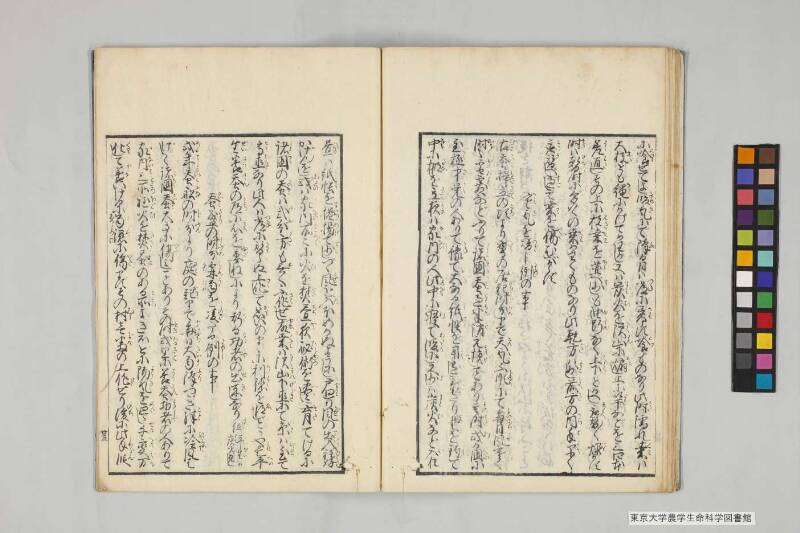
翻刻
【右丁】
に喰(くわ)せてよし暖気(たんき)にて降(ふ)る日は常(つね)に異(かわ)らす喰(くう)ものなり此 時(とき)濡れ桑(くわ)は
大 枝(えだ)とも縄(なわ)にかけてかわかし又は炭火(すみひ)を沢山(たくさん)に煽(おこ)し上に竿(さを)なとを三四本
差亘(さしわた)しその上に枝桑(えたくわ)を並(なら)べ少(すこ)しも油断(ゆだん)なく上下(うへした)とかへし取替(とりかへ)〳〵燥(かわ)かす
時(とき)は暫時(ざんじ)に多(おゝ)くの桑(くわ)かわくものなり此乾 方(かた)は少(すこ)し前方(まへかた)の内手(うつて)早(はや)く
取替(とりかへ)るべし過(すご)して桑(くわ)を傷(いた)むべからず
寒気(かんき)を凌(しのぎ)し例(ためし)の事
古(むかし)蚕(かいこ)掃立(はきたて)の頃(ころ)より鷹(たか)の居起時分(いおきじぶん)まで天気(てんき)ふ順(じゆん)にて毎日(まいにち)風寒(かぜさむ)く
時々(おり〳〵)雪霰(ゆきあられ)などふりて諸国(しよこく)蚕(かいこ)過半(くわはん)消(き)え損(そんせ)しことあり其時(そのとき)或(あ)る國(くに)に
至極(しごく)才覚(さいかく)の人ありて豫(かね)て大(おゝき)なる紙帳(してう)を用意(ようい)し置(おき)たり是(これ)を釣(つり)て
中(なか)に棚(たな)を立(たて)夜(よる)は家内(かない)の人 此中(このなか)に寝(ね)て暖(あたゝか)にし又 少( すこ)しは炭火(すみび)など入(い)れ
【左丁】
昼(ひる)は紙帳(してう)を捲揚(まくりあげ)て少(すこ)しづゝ風(かぜ)を入(いれ)ほめかぬようにし戸廻(とまわ)り風(かぜ)の出入(でいり)程好(ほどよく)
かげんをし或(あるひ)は家内(かない)所々(ところ〴〵)に火(ひ)を焚(たき)昼夜(ちうや)秘術(ひじゆつ)を盡(つく)し育(そた)てけるに
諸国(しよこく)の蚕(かいこ)は弐分方(にぶかた)も無(な)くふ作(さく)せし故(ゆゑ)桑(くわ)は沢山(たくさん)下直(げじき)にて糸(いと)は至(いたつ)て
高直(こうぢき)なり此人は常(つね)に替(かわ)らぬ上 作(さく)して思(おも)いのまゝに利徳(りとく)を得(ゑ)しとかや是(これ)平(へい)
生(ぜい)養蚕(ようさん)の道(みち)に心(こゝろ)を委(ゆだ)ねしにより斯(かゝ)る功者(こうしや)の出来(いてき)しなり但(たゞし)《割書:平生(へいせい)は|炭火(すみひ)悪し》
蚕(かいこ)盛(さかり)の時分(じぶん)霖雨(りんう|ながあめ)を凌(しのぎ)たる例(ためし)の事
或年(あるとし)蚕(かいこ)舩(ふな)の時分(じぶん)より庭(にわ)の起(おき)まで毎日(まいにち)大雨(たいう)降(ふり)つゞき殊(こと)に冷風(ひやかぜ)は
げしく諸国(しよこく)蚕(かいこ)大きに傷(いた)みしことありその時(とき)或里(あるさと)に養蚕(ようさん)功者(こうしや)の人ありて
家内(かない)三所程(みところほど)火(ひ)を焚(たき)蚕(かいこ)のある所(ところ)よきほどに陽気(ようき)を廻(めぐ)らし千變万(ぜんへんばん)
化(くわ)して養(やしな)いけるに雨湿(うしつ|あめしつけ)に傷(いた)まずその村(むら)壱 番(ばん)の上 作(さく)せり後(のち)に此 手段(しゆだん)
現代語訳
【右丁】
に食わせてよし。暖気にて降る日は常に変わらず食うものなり。この時濡れ桑は大枝とも縄にかけて乾かし、又は炭火を沢山に起こし上に竿などを三四本差し渡し、その上に枝桑を並べ少しも油断なく上下と返し取り替え々々乾かす時は暫時に多くの桑乾くものなり。この乾かし方は少し前方のうち手早く取り替えるべし。過ごして桑を傷むべからず。
寒気を凌いだ例の事
昔、蚕掃き立ての頃より鷹の居起時分まで天気不順にて毎日風寒く、時々雪霰などふりて諸国蚕過半消え損ずることあり。その時或る国に至極才覚の人ありて予て大なる紙帳を用意し置いたり。これを吊りて中に棚を立て、夜は家内の人この中に寝て暖かにし、又少しは炭火など入れ
【左丁】
昼は紙帳を捲り上げて少しづつ風を入れ膨らかぬようにし、戸廻り風の出入り程好く加減をし、或いは家内所々に火を焚き、昼夜秘術を尽くし育てけるに、諸国の蚕は二分方も無く不作なりし故、桑は沢山下直にて糸は至って高直なり。この人は常に変わらぬ上作して思いのままに利得を得しとかや。これ平生養蚕の道に心を委ねしにより斯かる功者の出来たりなり。但し《割書:平生は炭火悪し》
蚕盛りの時分霖雨を凌いだ例の事
或る年蚕舩の時分より庭の起きまで毎日大雨降り続き、殊に冷風激しく諸国蚕大きに傷みしことあり。その時或る里に養蚕功者の人ありて、家内三所程火を焚き、蚕のある所よきほどに陽気を廻らし、千変万化して養いけるに雨湿に傷まず、その村一番の上作せり。後にこの手段
英語訳
[Right page]
...feeding is fine. On warm rainy days, feed the usual amount. At this time, hang wet mulberry branches with large branches and all on ropes to dry, or light plenty of charcoal fires and stretch three or four poles across the top, arrange the branch mulberry on them, and without any negligence, constantly turn them over and replace them - when drying this way, large quantities of mulberry will dry in a short time. For this drying method, replace them quickly while still somewhat fresh. Do not let them sit too long and damage the mulberry.
An example of surviving cold weather
Long ago, from the time of silkworm hatching until the hawk molting period, the weather was unfavorable with daily cold winds, and occasionally snow and hail fell, causing more than half the silkworms in various provinces to die. At that time, there was a very clever person in a certain province who had prepared large paper curtains in advance. He hung these up and built shelves inside, had family members sleep inside at night to keep it warm, and also placed some charcoal fires inside.
[Left page]
During the day, he rolled up the paper curtains to let in a little air so it wouldn't become stuffy, carefully controlled the air circulation around the doors, and sometimes lit fires in various places throughout the house, employing secret techniques day and night to raise them. Since silkworms in other provinces had almost complete crop failure, mulberry was abundant and cheap while silk thread commanded very high prices. This person achieved consistently good harvests as usual and gained profits as desired. This skilled expert emerged because he had devoted his life to the way of silkworm cultivation. However {{Side note: Normally charcoal fires are harmful}}
An example of surviving prolonged rain during the silkworms' peak period
One year, from the ship stage of silkworms until the garden stage, heavy rain fell continuously every day, and particularly cold winds were severe, greatly damaging silkworms throughout the provinces. At that time, there was a silkworm cultivation expert in a certain village who lit fires in about three places in his house, circulated warm air appropriately where the silkworms were located, and raised them with countless variations and adaptations. They were not damaged by the rain and dampness, and he achieved the best harvest in that village. Later, this method...