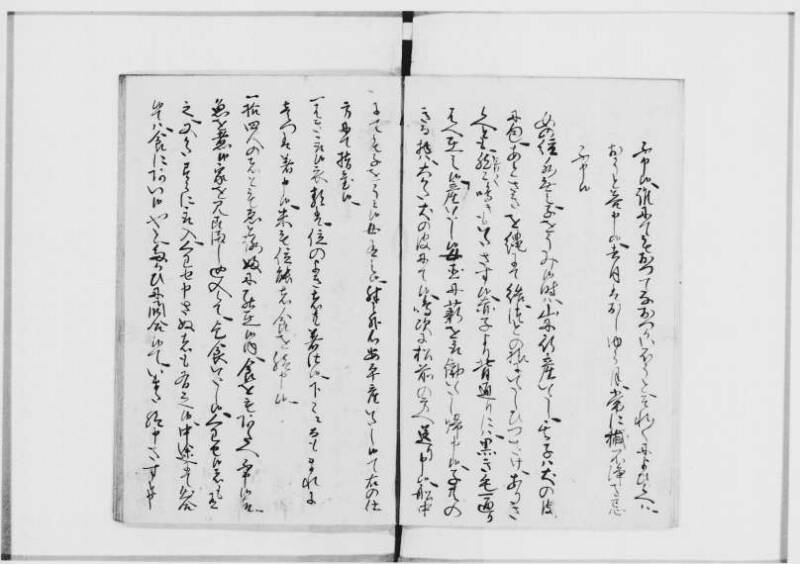
翻刻
【右丁】
不申候、誰にてもおつてなおつかいほうと、それ〳〵によひ候へは、
おうと答申候、去月はおしゆら月、常に穢不浄を忌
不申候
女の経水無之、子をうみ候時は、山に行産いたし、其子は犬の皮
に包、あとさきを縄にて結、つとの様にいたしひつさけ、ありき
候へとも、然々(シカ〳〵)鳴 ̄キもいたさす候、赤子より背通 ̄リには、黒き毛一通り ̄リ
はへ在之候、産いたし候女直に薪を取働いたし帰申候、子共の
きる物は、大かた犬の皮にて候、島次に松前の方へ送 ̄リ申候、船中
【左丁】
にても子をうみ候女有之候、殊之外心安平産いたし候て右の仕
方にて指置候、
一はき取候衣類は、位のよき者共着仕候、下々 ̄ニ而もまれに
壱つは着申候、米も位能者食を給申候、
一拾四人の者ともゑとろふに罷在候内、食をもあたへ不申候故、
魚を煮候家を見すまし込入候て、乞食いたし候、くわせ候者も有
之、又かたすらに取入、くわせ申さぬ者も有之候、中途にて出合
候ては食にあい候やと、たかひに問合候て、いまた給申さすと申
現代語訳
【右丁】
(誰かを呼ぶことを)申さなかった。誰であっても「おつてなおつかいほう」と、それぞれ呼べば、「おうと」と答えて申した。先月は「おしゆら月」であり、常には穢れや不浄を忌み嫌うことはしない。
女性は月経がなく、子を産む時は山へ行って出産し、その子は犬の皮に包み、前後を縄で結んで、包みのようにして背負って歩くが、それでも(赤子は)泣き声を立てない。赤子の頃から背中には、黒い毛が一筋生えている。出産した女性はすぐに薪を取りに行き、働いて帰ってくる。子供の着るものは、大方犬の皮である。(子供は)島々を経て松前の方へ送られてくる。船の中
【左丁】
でも子を産む女がいたが、格別に楽々と安産をして、右に記した方法で(子を)置いておいた。
一、剥ぎ取った衣類は、身分の良い者たちが着用する。身分の低い者でも、まれに一着は着ることがある。米も身分の高い者は食事として与えられる。
一、十四人の者たちが択捉(えとろふ)に滞在している間、食事を与えられなかったため、魚を煮ている家を見定めて入り込み、物乞いをした。食べさせてくれる者もあり、また意地悪く取り込んで食べさせない者もあった。途中で出会っては「食事にありつけたか」と互いに問い合わせ、「まだいただいていない」と申した。
英語訳
[Right folio]
(No one called out.) Whoever it was, if one called out "otsutenaotsukaihou," they would answer "outo." The previous month was called "oshiyura-tsuki," and ordinarily they do not avoid or shun impurity or uncleanliness.
Women have no menstrual cycle. When giving birth, they go to the mountains to deliver, and the child is wrapped in dog skin, tied front and back with rope like a bundle, and carried on the back as they walk about — yet even so, the infant does not cry. From infancy, a line of black hair grows along the child's back. The woman who has given birth immediately goes to collect firewood, works, and returns home. Children's clothing is mostly made of dog skin. The children are sent through the islands toward Matsumae. Even aboard ships,
[Left folio]
there were women who gave birth, doing so with remarkable ease and comfort, and the child was left in the manner described above.
One: The clothing that was stripped off is worn by those of higher status. Even those of lower status occasionally wear one garment. Rice is also given as food to those of higher rank.
One: During the time the fourteen people remained on Etorofu, as no food was given to them, they would identify houses where fish was being boiled, enter, and beg for food. Some people fed them, while others selfishly took (food) inside and refused to feed them. When they met each other partway, they would ask one another, "Have you found anything to eat?" — to which the reply was, "Not yet."