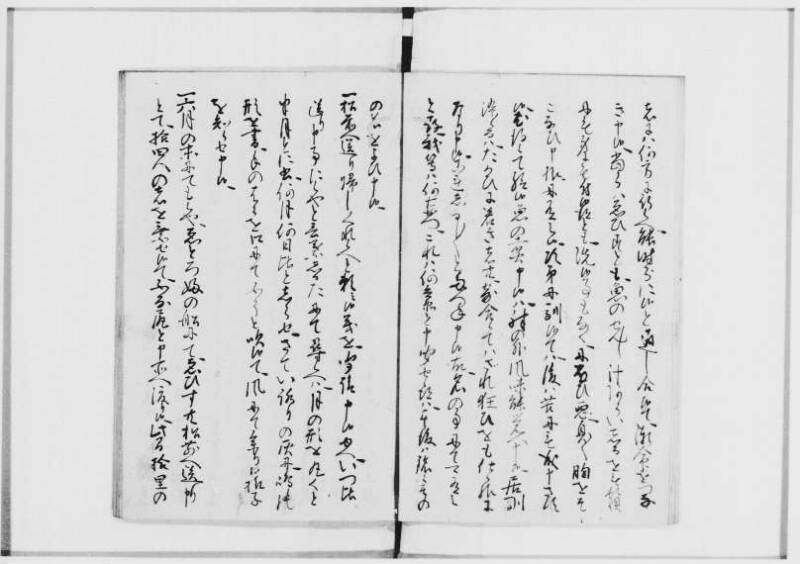
翻刻
【右丁】
者には何方に行候へ、能時分に候と通し合候て、漸命をつな
き申候、当分はゑひすとも、魚のせんし汁あらいしるをも鬚
にも身にも付候得とも、洗候事もなく、にほひ悪、息〳〵胸をそ
こなひ申様、に有之候、次第に馴候ては、後は苦にも成申さす
候、尤得候て給候魚の煮申候は、殊の外風味能覚へ申候、居馴
なり申候、これしるし〳〵とたつね申候故、名の事にて可有之
と存、我等は何右衛門、これは何兵衛と申聞せ候得は、其後は銘々その
【左丁】
の名をよひ申候、
一松前へ送 ̄リ帰しくれ候へと頼 ̄ミ候義を、聞請申候ゆへ、いつ頃
送 ̄リ申事に候やと言葉しかたにて尋候へは、月の形を丸くと
半月とに書、何月何日頃としらせ、さていろりの灰に、嶋の
形を書、手のはらを口にてふうと吹候て、風にて参り候様子
を知らせ申候、
一六月の末にても候や、ゑとろふの船にて、ゑひす共松前へ送 ̄リ申
とて、拾四人の者を乗せ候て、ふな尻と申所へ渡り候、此間拾里の
現代語訳
【右丁】
(食事にありつけた)者には「どこに行けばよいか、良い頃合いだ」と互いに知らせ合って、ようやく命をつないだ。当初は蝦夷たちと共に、魚の煎じ汁や洗い汁が髭にも体にも付いても、洗うこともなく、臭いがひどく、息をするたびに胸が悪くなるような思いがしたが、次第に慣れてくると、後にはさほど苦にもならなくなった。もっとも、いただいた魚の煮たものは、格別においしく感じられた。(蝦夷たちと)居馴れてくると、(彼らが)「これは何というものか」「これは何というものか」と尋ねてきたので、名前のことであろうと思い、「我々は何右衛門、これは何兵衛と申す」と聞かせたところ、その後は(蝦夷たちが)それぞれその
【左丁】
名前を呼ぶようになった。
一、松前へ送り返してくれるよう頼んだことを(蝦夷たちが)聞き入れてくれたので、「いつ頃送ってもらえるのか」と身振り手振りで尋ねたところ、月の形を丸く(満月)と半月の形に書いて、何月何日頃と知らせ、さらに囲炉裏の灰に島の形を描き、手のひらを口で「ふう」と吹いて、風に乗って行く様子を知らせてくれた。
一、六月の末の頃であったか、択捉の船にて、蝦夷たちが松前へ送るとのことで、十四人の者を乗せて、「ふな尻」と申す所へ渡った。この間(の距離は)十里の
英語訳
[Right folio]
Those who had found food would pass word along — "Go to such-and-such a place; now is a good time" — and in this way they barely managed to sustain their lives. At first, while among the Ainu, even when the broth and washing-water from boiled fish got into their beards and on their bodies, they did not wash it off, and the stench was so terrible that every breath felt as though it might ruin their stomachs. But as they gradually grew accustomed to it, it ceased to bother them much at all. Indeed, the boiled fish they received to eat tasted remarkably flavorful to them. As they grew accustomed to living among (the Ainu), the latter began asking "What is this called? What is this called?" — thinking it must be a matter of names, the castaways answered, "I am Naniemon, and this one is called Nanibee," whereupon thereafter the Ainu
[Left folio]
called each of them by their respective names.
One: When the Ainu agreed to hear out the request that they be sent back to Matsumae, the castaways asked through gestures and expression, "About when will you send us?" The Ainu drew the shape of a full moon and a half-moon, indicating the approximate month and day, and then drew the shape of the island in the hearth ashes, and blew on the palm of their hand with their mouth — "fuu" — conveying the manner in which they would travel by wind.
One: It must have been toward the end of the sixth month when the fourteen people were loaded onto an Etorofu vessel, with the Ainu saying they would send them to Matsumae, and they crossed over to a place called "Funashiri." The distance between these two places is ten ri (approx. 40 km)...